

Long Now Manual for Civilization · Fiction, science fiction, general · Fiction
Perdido Street Station by China Miéville — Summary, Key Ideas & Quotes
2000710 pages✦ 3-min Big ideas★ 4.0 (24)
Rate it
Beneath the towering bleached ribs of a dead, ancient beast lies New Crobuzon, a squalid city where humans, Re-mades, and arcane races live in perpetual fear of Parliament and its brutal militia. The air and rivers are thick with factory pollutants and the strange effluents of alchemy, and the ghettos contain a vast mix of workers, artists, spies, junkies, and whores. In New Crobuzon, the unsavory deal is stranger to none—not even to Isaac, a brilliant scientist with a penchant for Crisis Theory. Isaac has spent a lifetime quietly carrying out his unique research. But when a half-bird, half-human creature known as the Garuda comes to him from afar, Isaac is faced with challenges he has never before fathomed. Though the Garuda's request is scientifically daunting, Isaac is sparked by his own curiosity and an uncanny reverence for this curious stranger. While Isaac's experiments for the Garuda turn into an obsession, one of his lab specimens demands attention: a brilliantly colored caterpillar that feeds on nothing but a hallucinatory drug and grows larger—and more consuming—by the day. What finally emerges from the silken cocoon will permeate every fiber of New Crobuzon—and not even the Ambassador of Hell will challenge the malignant terror it invokes . . . A magnificent fantasy rife with scientific splendor, magical intrigue, and wonderfully realized characters, told in a storytelling style in which Charles Dickens meets Neal Stephenson, Perdido Street Station offers an eerie, voluptuously crafted world that will plumb the depths of every reader's imagination.
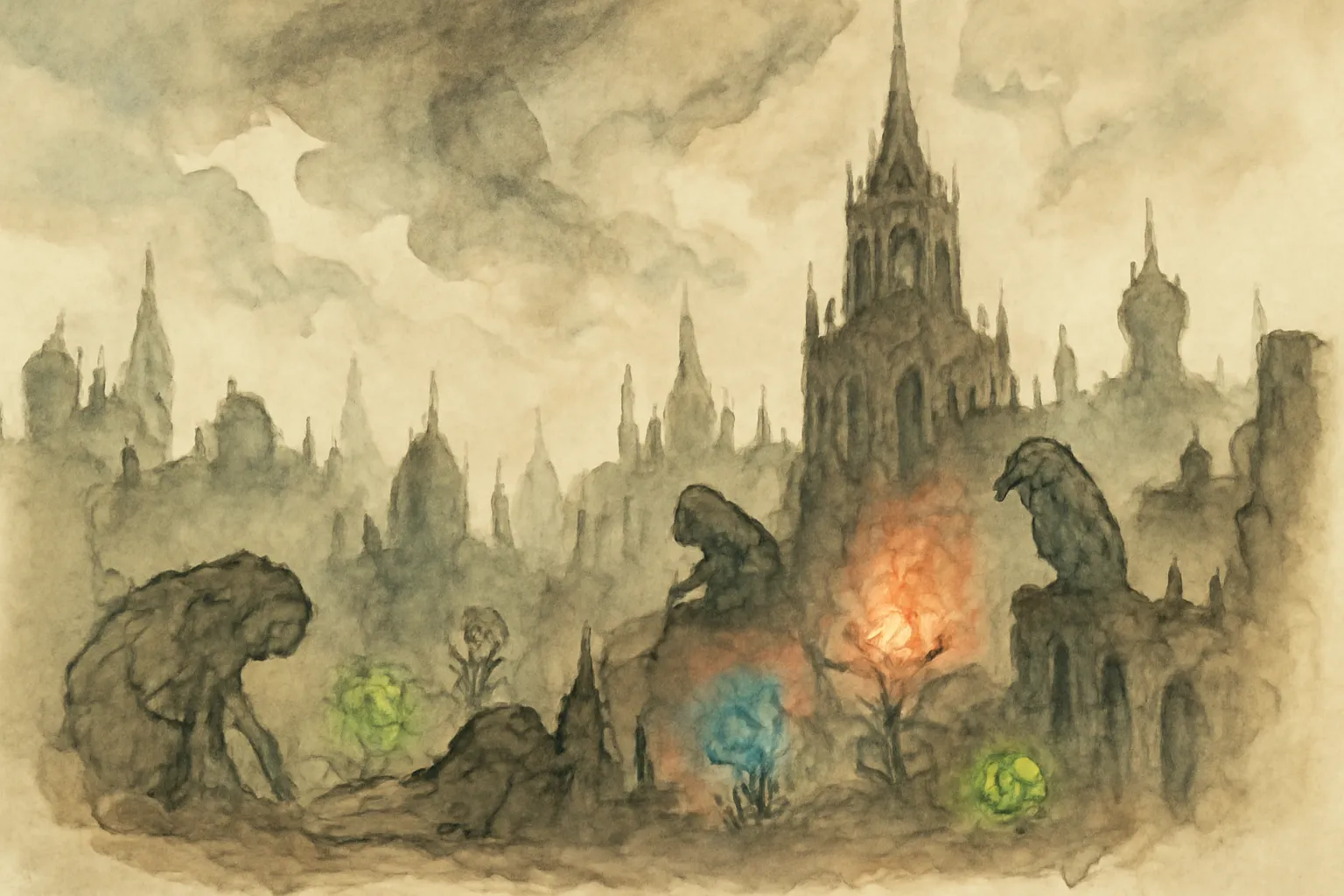
New Crobuzon is more than a backdrop; it is a character in its own right, pulsing with life, corruption, and danger. Miéville crafts a city that reflects the chaos and complexity of real urban centers, with its diverse inhabitants, political machinations, and constant tension between progress and decay. The city’s architecture, social hierarchies, and even its criminal underworld are rendered with such detail that readers become immersed in its grime and grandeur, forcing them to confront the ways environment shapes identity and morality.
Perdido Street Station is obsessed with the concept of hybridity—biological, social, and cultural. The city’s population includes humans, insectoid khepri, amphibious vodyanoi, and the Remade—beings forcibly altered as punishment. Through these characters, Miéville explores themes of alienation, prejudice, and the struggle for agency in a society that commodifies and exploits difference. The Garuda’s quest for lost flight and the Remade’s suffering become metaphors for the search for selfhood in a hostile world.
“He wondered what it would be like to be a hero, to have a destiny, to be chosen by the gods. He wondered how it would feel to be special.”
“The city was a vast organism, a body composed of bodies.”