Romance · Fiction
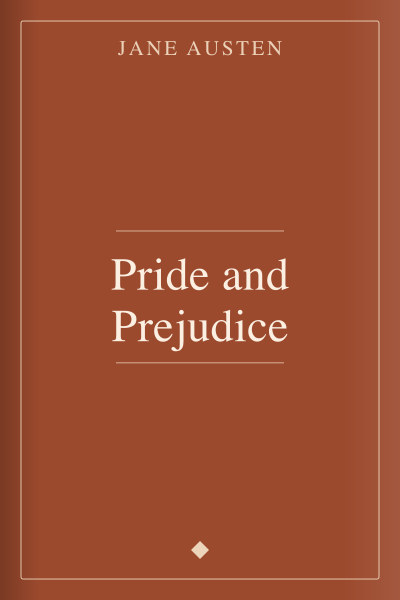
Pride and Prejudice by Jane Austen — Summary, Key Ideas & Full Text
404 pages61 chapters8h 7m read5h 46m speed read✦ 9-min Big ideasFree · no account
Rate it
Pride and Prejudice explores the complexities of love, class, and individual agency in a society constrained by rigid social structures
In the world of Regency England, where marriage is often viewed as a financial transaction rather than an emotional union, Jane Austen's 'Pride and Prejudice' delves into the lives of the Bennet sisters as they navigate societal expectations, personal desires, and the intricate dance of courtship. Through the lens of Elizabeth Bennet, the spirited protagonist, readers are invited to reflect on the nature of love, the folly of first impressions, and the importance of self-awareness. The novel meticulously examines the impact of social class on relationships and the growth of its characters as they confront their prejudices and misconceptions. By weaving humor with sharp social commentary, Austen crafts a timeless narrative that resonates with themes of independence, integrity, and the quest for genuine connection.
Jane Austen's 'Pride and Prejudice' is more than a romantic tale; it is a nuanced exploration of societal norms, individual agency, and the transformative power of love. Through the lives of the Bennet sisters, Austen critiques the constraints of class and gender, prompting readers to reflect on the complexities of human relationships. The character development of Elizabeth and Darcy, marked by their journey from misjudgment to understanding, serves as a profound reminder of the importance of self-awareness and open communication. By addressing themes of pride, prejudice, and the societal pressures to conform, Austen crafts a narrative that remains relevant in contemporary discussions about love and identity. Ultimately, 'Pride and Prejudice' encourages readers to look beyond surface appearances to discover the deeper truths that define our connections with others.
“It is a truth universally acknowledged, that a single man in possession of a good fortune, must be in want of a wife.”
“I cannot quite agree with you there.”
“If I can but see one of my daughters happily settled at Netherfield, said Mrs. Bennet to her husband, and all the others equally well married, I shall have nothing to wish for.”
Jane Austen has 9 works free to read on Lumina, including Emma, Love and Freindship [sic], Mansfield Park
All 9 books by Jane Austen →
![Love and Freindship [sic] cover](https://phjwossjnjjokynbvrst.supabase.co/storage/v1/object/public/books/covers/love-and-freindship-sic.jpg)