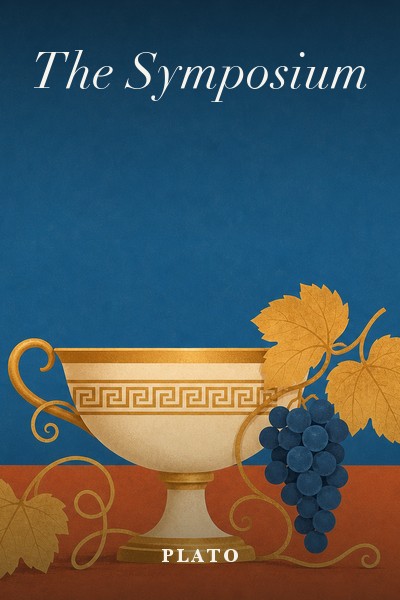

At a drinking party, Athens’ finest minds take turns defining love — Plato’s witty, profound dialogue on Eros.
Read full overviewShow less›
In 'The Symposium,' Plato presents a rich tapestry of philosophical dialogues centered around the nature of love, articulated through a series of speeches at a banquet. This work serves as a cornerstone of Western thought, exploring not only romantic love but also a higher, intellectual love that transcends the physical realm. Through the voices of notable characters, including Socrates and Diotima, readers are invited to contemplate the essence of love and its role in personal and societal development. The dialogue also sheds light on the interplay between love and beauty, the human condition, and the pursuit of wisdom. By engaging with these timeless ideas, readers can better understand the multifaceted nature of love and its significance in their own lives.
The Symposium serves as a profound exploration of love, weaving together themes of beauty, wisdom, and the human experience. Through the dialogues of its characters, Plato invites readers to reflect on the transformative potential of love, urging a deeper understanding of its role in personal growth and societal advancement. The work encourages individuals to embrace love not only as a physical attraction but as a multifaceted force that can inspire creativity, foster intellectual connections, and promote social harmony. Ultimately, the Symposium presents love as a journey—a path toward higher truths and a deeper appreciation of existence, reminding us of its enduring significance in our lives.

- 1The Power of Love as a Creative Force
- 2Diotima's Ladder of Love
- 3Love as a Mediator Between Mortals and the Divine
- 4The Nature of True Wisdom
- 5The Role of the Lover and the Beloved
A glimpse inside

In the Symposium, love is depicted not merely as a desire for physical intimacy but as a powerful impetus for creativity and intellectual pursuit. Read moreIn the Symposium, love is depicted not merely as a desire for physical intimacy but as a powerful impetus for creativity and intellectual pursuit. This idea is vividly expressed through the character of Phaedrus, who argues that love inspires individuals to achieve great deeds, particularly in the context of honor and valor. He suggests that lovers are willing to engage in noble acts for the sake of their beloved, demonstrating that love can compel individuals to transcend their limitations. This perspective is echoed throughout the dialogue, showing that love can lead to the creation of art, philosophy, and even societal advancements. The speeches collectively highlight that love's true essence lies in its ability to elevate individuals and foster a shared journey toward greater understanding and beauty. Show less
Diotima, a priestess, introduces the metaphor of a ladder to illustrate the ascent of love from physical attraction to the appreciation of divine beauty. Read moreDiotima, a priestess, introduces the metaphor of a ladder to illustrate the ascent of love from physical attraction to the appreciation of divine beauty. This concept is pivotal, as it outlines a structured path that lovers can follow. Initially, one starts with the love of a single body, which eventually leads to the love of all bodies. From there, the lover progresses to the love of souls, emphasizing intellectual and emotional connections. The final steps involve the appreciation of abstract beauty and ultimately the love of the Form of Beauty itself, an eternal and unchanging ideal. This metaphor encapsulates the transformative potential of love, suggesting that true love transcends the physical and propels individuals toward higher truths. Diotima's teachings encourage a holistic understanding of love as a journey rather than a destination. Show less
Read the full text — free
About the author
Frequently asked
Worlds to get lost in
Take Lumina everywhere
Read offline, listen to AI summaries, speed-read, and sync your progress across devices — free on iPhone.
Download for iPhone