Philosophy
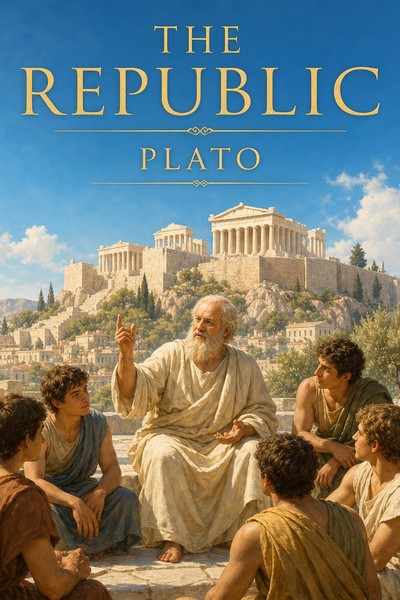
The Republic by Plato — Summary, Key Ideas & Full Text
393 pages10 chapters7h 53m read5h 36m speed read✦ 8-min Big ideasFree · no account
Rate it
Plato's 'The Republic' is a profound exploration of justice, the ideal state, and the nature of the human soul
In 'The Republic', Plato tackles the fundamental questions of justice, morality, and the ideal society through a series of dialogues led by Socrates. This classic work not only lays the groundwork for Western philosophy but also challenges readers to reflect on their own beliefs about justice, governance, and the nature of happiness. As Socrates engages in discussions with various interlocutors, the text delves into the complexities of human nature, the role of the philosopher, and the structure of an ideal state. Readers will gain insights into the philosophical foundations of justice, the importance of education, and the potential dangers of different political systems—making 'The Republic' a timeless guide to understanding the relationship between individual virtue and societal well-being.
Plato's 'The Republic' is not just a philosophical treatise; it is a profound exploration of the nature of justice, the ideal state, and the human soul. Through engaging dialogues and rich allegories, Plato invites readers to reflect on their own beliefs and the structures of society that shape their lives. The text challenges us to consider the implications of justice in both personal and political realms, advocating for a harmonious balance between individual virtue and collective well-being. By emphasizing the importance of education, the role of the philosopher, and the dangers of various political systems, 'The Republic' remains a relevant and essential work for anyone seeking to understand the complexities of human nature and the pursuit of a just society. Its enduring legacy continues to inspire discussions on ethics, governance, and the meaning of a fulfilling life.
Plato has 5 works free to read on Lumina, including Apology, Phaedo, Phaedrus
All 5 books by Plato →