

Historic bridges · History · Fiction
The Bridge on the Drina by Ivo Andrić — Summary, Key Ideas & Quotes
1946378 pages✦ 3-min Big ideas★ 4.2 (6)
Rate it
A critically acclaimed novel, first published in 1945, describing historic and social events centring on a bridge across the River Drina at Visegrad in modern day Bosnia Herzegovina, originally built by the ruling Grand Vizier of Turkey. For almost four hundred years this bridge is crucial to the social life and wealth of the town’s citizens and equally vital to first the Turkish Empire and then the Austro-Hungarian Empire. Eventually Bosnia-Herzegovina becomes a republic in the new Yugoslavia, free for the first time in hundreds of years.
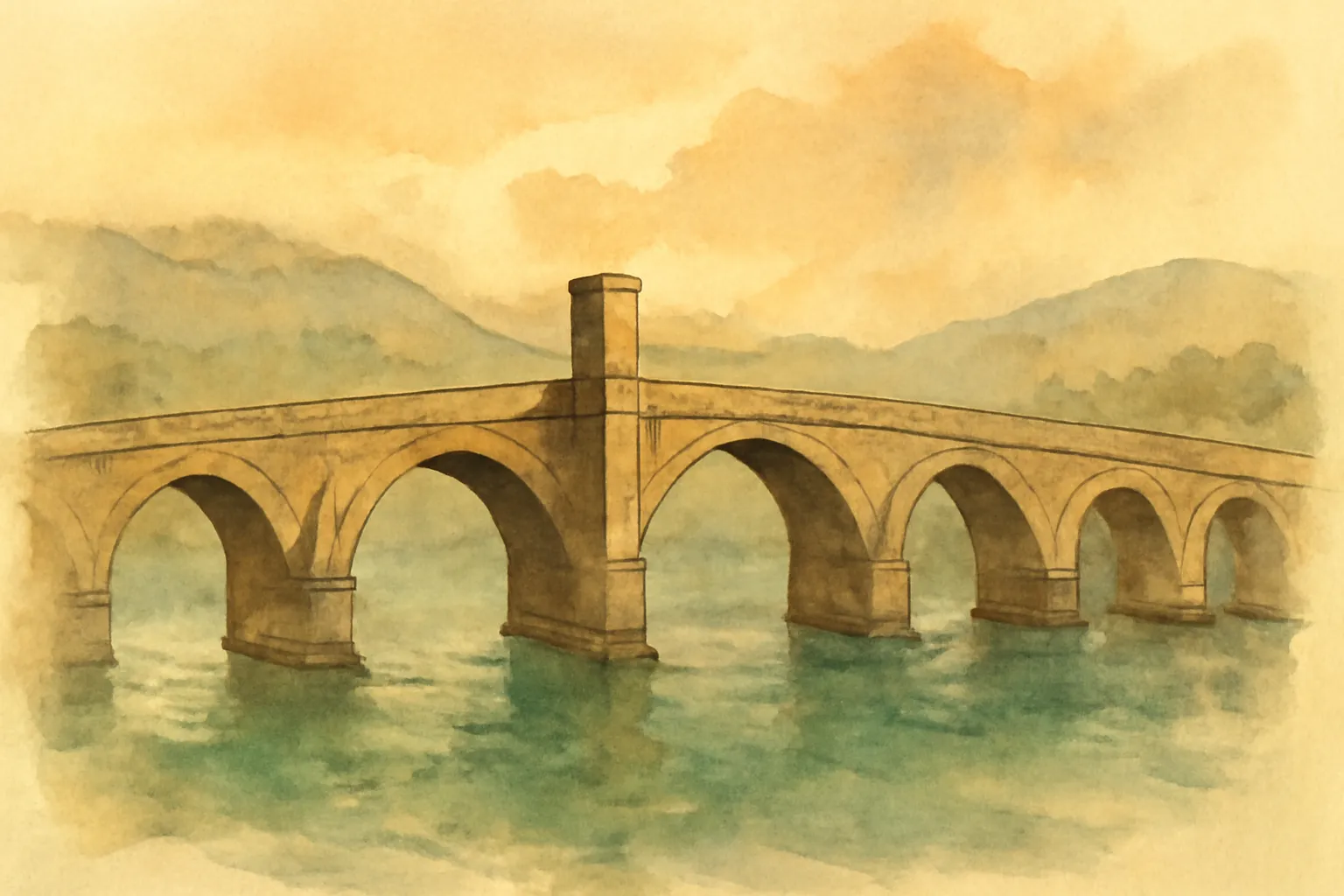
The Mehmed Paša Sokolović Bridge is more than a backdrop; it’s a silent observer and symbol of continuity amid upheaval. Built by the Ottomans in the 16th century, the bridge stands through centuries of conquest, rebellion, and modernization. Its endurance contrasts with the fleeting nature of human life and political regimes, suggesting that while rulers and empires come and go, the physical and cultural landmarks of a place bear witness to the deeper currents of history.
Andrić foregrounds the suffering and resilience of ordinary people living under imperial rule. The bridge’s construction begins with an act of violence—a child taken as tribute—and its history is marked by executions, forced labor, and oppression. Yet, the bridge also becomes a site of daily life, commerce, and connection, showing how people adapt, endure, and sometimes resist the powers that shape their world.
“For days and nights the town was alive with talk about the bridge.”
“On the bridge life goes on, without beginning and without end.”