1.The Bridge as Witness and Symbol
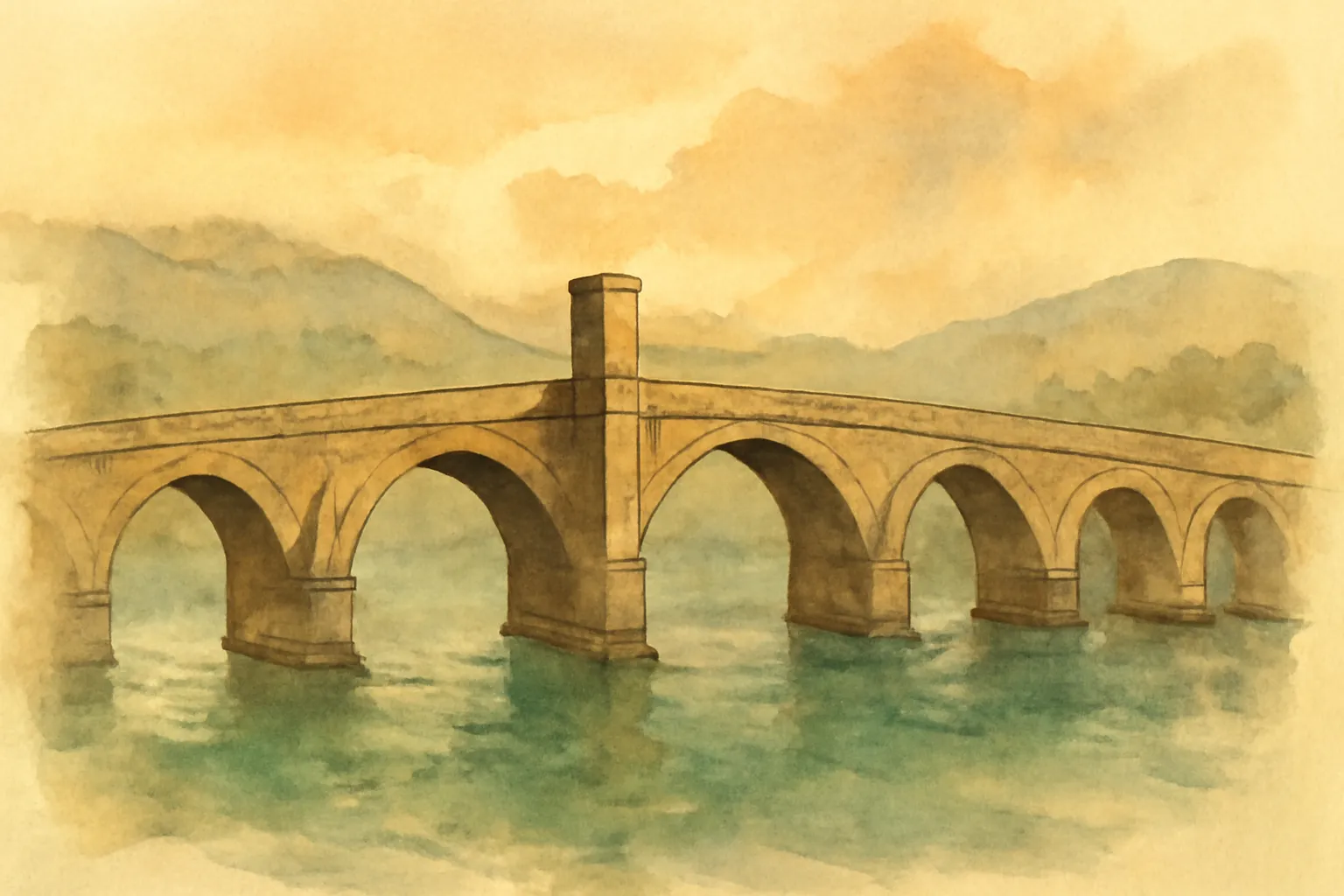
The Mehmed Paša Sokolović Bridge is more than a backdrop; it’s a silent observer and symbol of continuity amid upheaval. Built by the Ottomans in the 16th century, the bridge stands through centuries of conquest, rebellion, and modernization. Its endurance contrasts with the fleeting nature of human life and political regimes, suggesting that while rulers and empires come and go, the physical and cultural landmarks of a place bear witness to the deeper currents of history.
2.The Human Cost of Empire
Andrić foregrounds the suffering and resilience of ordinary people living under imperial rule. The bridge’s construction begins with an act of violence—a child taken as tribute—and its history is marked by executions, forced labor, and oppression. Yet, the bridge also becomes a site of daily life, commerce, and connection, showing how people adapt, endure, and sometimes resist the powers that shape their world.
3.Identity and Division
The novel explores the complex, often fraught coexistence of Bosniaks, Serbs, Turks, and others in Višegrad. The bridge physically links the two sides of the river, but social, religious, and ethnic divides persist. Andrić shows how external forces—Ottoman, then Austro-Hungarian—both exacerbate and sometimes blur these divisions, highlighting the fragility and resilience of communal identity in a multi-ethnic society.
4.The Passage of Time and the Nature of Change
Spanning nearly four centuries, the novel illustrates how time transforms both people and places. Generations pass, customs change, and the meaning of the bridge shifts with each era. Andrić’s panoramic approach invites readers to reflect on the slow, often invisible processes by which history is made, and how the present is always layered with the past.
5.The Tragedy and Irony of Progress
Modernization arrives in Višegrad with the Austro-Hungarians, bringing railways and new ideas. But progress is double-edged: it disrupts traditional life and brings new forms of violence and alienation. The bridge, once a marvel, becomes just another crossing, and the community’s sense of meaning is challenged. Andrić explores the irony that what is called progress often entails loss as well as gain.
6.Memory, Storytelling, and Survival
The novel’s structure—episodic, filled with legends and anecdotes—mirrors the way communities remember and make sense of their past. Storytelling becomes a means of survival, a way to preserve identity and dignity amid uncertainty. The bridge’s stories, passed down through generations, are as vital as the stone itself.