
medical history · social sciences · history
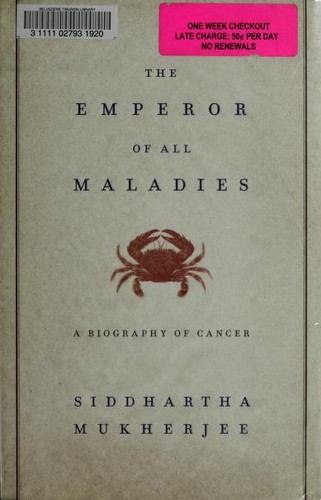
The Emperor of All Maladies by Siddhartha Mukherjee, Nessa Carey — Summary, Key Ideas & Quotes
2010582 pages✦ 3-min Big ideas★ 4.1 (12)
Rate it
The Emperor of All Maladies: A Biography of Cancer is a book written by Siddhartha Mukherjee, an Indian-born American physician and oncologist. Published on 16 November 2010 by Scribner, it won the 2011 Pulitzer Prize for General Non-Fiction.

Mukherjee frames cancer not simply as a disease, but as an ancient adversary intertwined with human history. He traces references to cancer back to antiquity, demonstrating that our struggle with it is as old as civilization itself. By contextualizing cancer within the broader sweep of medical history, the book reveals how each era’s understanding of the disease reflects its prevailing scientific and cultural attitudes. This historical perspective underscores the persistent, evolving nature of the battle against cancer.
A major theme is the shifting landscape of cancer treatment—from radical surgeries and early chemotherapy to targeted therapies and immunology. Mukherjee details the personalities, breakthroughs, and setbacks that shaped oncology, showing how treatments often emerged from a mix of scientific insight, desperation, and even hubris. He highlights both the progress and the limits of medicine, emphasizing that each advance often brings new challenges and ethical dilemmas.
“Cancer is an expansionist disease; it invades through tissues, sets up colonies in hostile landscapes, and resists death.”
“To confront cancer is to encounter a parallel species, one perhaps more adapted to survival than even we are.”