

Ethics · Asceticism · Good and evil
The Genealogy of Morals by Friedrich Nietzsche — Summary, Key Ideas & Quotes
1887193 pages✦ 3-min Big ideas★ 4.2 (12)
Rate it
On the Genealogy of Morals (1887) is a book about the history of ethics and about interpretation. Nietzsche rewrites the former as a history of cruelty, exposing the central values of the Judaeo-Christian and liberal traditions - compassion, equality, justice - as the product of a brutal process of conditioning designed to domesticate the animal vitality of earlier cultures. The result is a book which raises profoundly disquieting issues about the violence of both ethics and interpretation.
Nietzsche questions moral certainties by showing that religion and science have no claim to absolute truth, before turning on his own arguments in order to call their very presuppositions into question. The Genealogy is the most sustained of Nietzsche's later works and offers one of the fullest expressions of his characteristic concerns. This edition places his ideas within the cultural context of his own time and stresses the relevance of his work for a contemporary audience.
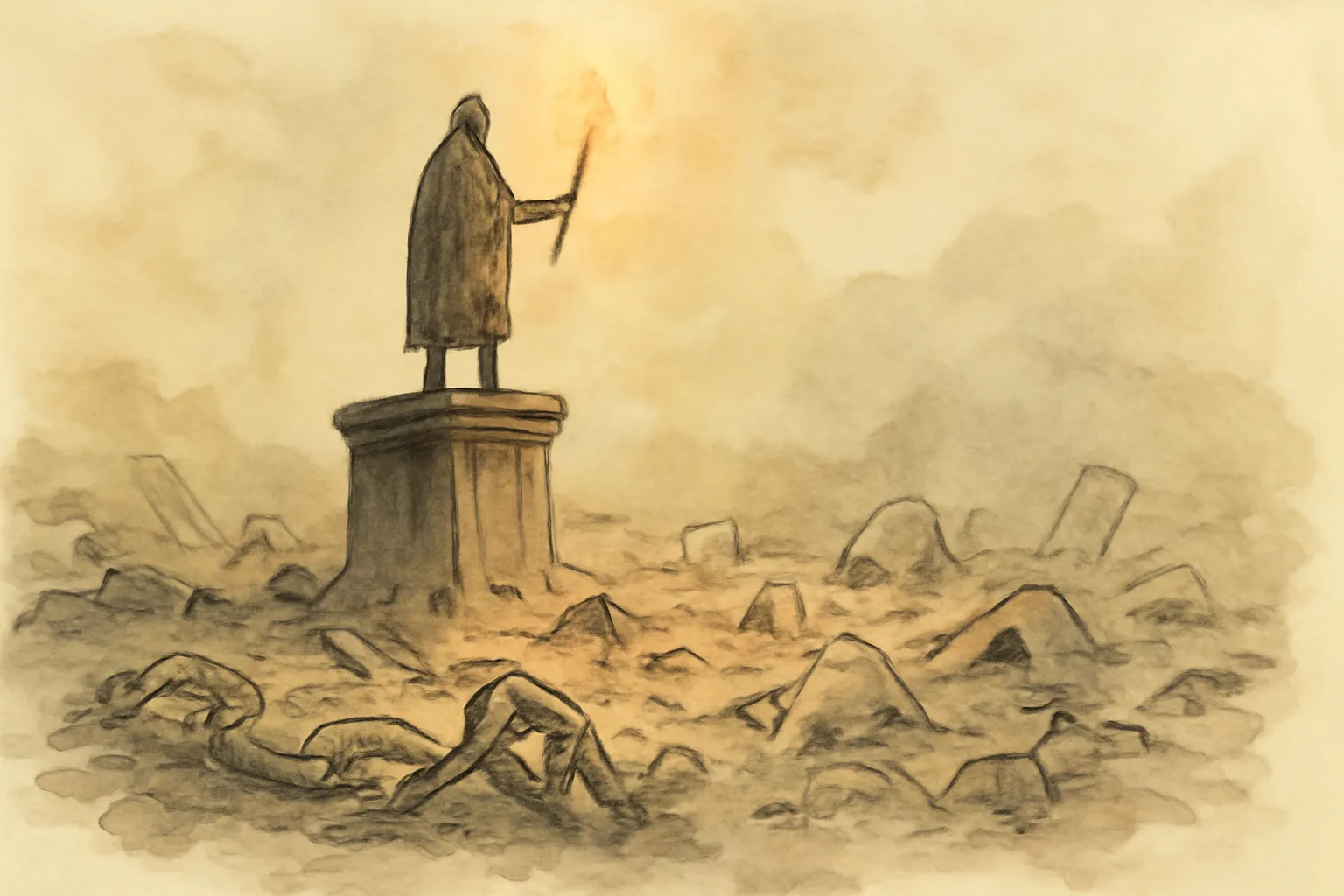
Nietzsche argues that our moral values are not universal truths but the result of specific historical developments. He traces how what we now consider 'good' and 'evil' emerged from the power dynamics between different social groups, especially the ruling aristocracy and the oppressed. By exposing morality as a contingent product of history, Nietzsche invites us to question the supposed objectivity and timelessness of our ethical standards.
A central theme is Nietzsche’s distinction between 'master morality' and 'slave morality.' Master morality, originating with the powerful, values strength, pride, and nobility. In contrast, slave morality arises among the oppressed, who revalue their weakness as virtues like humility and compassion. Nietzsche provocatively suggests that much of Western morality, especially Christian ethics, is a form of slave morality—a covert assertion of power by the weak.
“To talk about 'justice' as it is now: to do so is to talk about a certain state of affairs which is the result of a struggle between unequal powers.”
“What is bad?—Everything that is born of weakness.”
“Whoever fights monsters should see to it that in the process he does not become a monster.”
