Labor camps · Depressions · Labor camps in literature
The Grapes of Wrath by John Steinbeck — Summary, Key Ideas & Quotes
1939544 pages✦ 3-min Big ideas★ 3.9 (109)
Rate it
Steinbeck’s classic novel of the Great Depression is as vivid now as ever. The story focuses on a family of Oklahoma sharecroppers, farmers who work another man’s land for a share of the crops. Driven from their home by drought and poverty they take to the road in a battered old truck and make their way to California to look for work. When they arrive they find hundreds of others like them being forced to work for breadline wages. they begin working as fruit pickers, strike-breakers replacing the people who have been trying to establish a union but their consciences force them to leave.
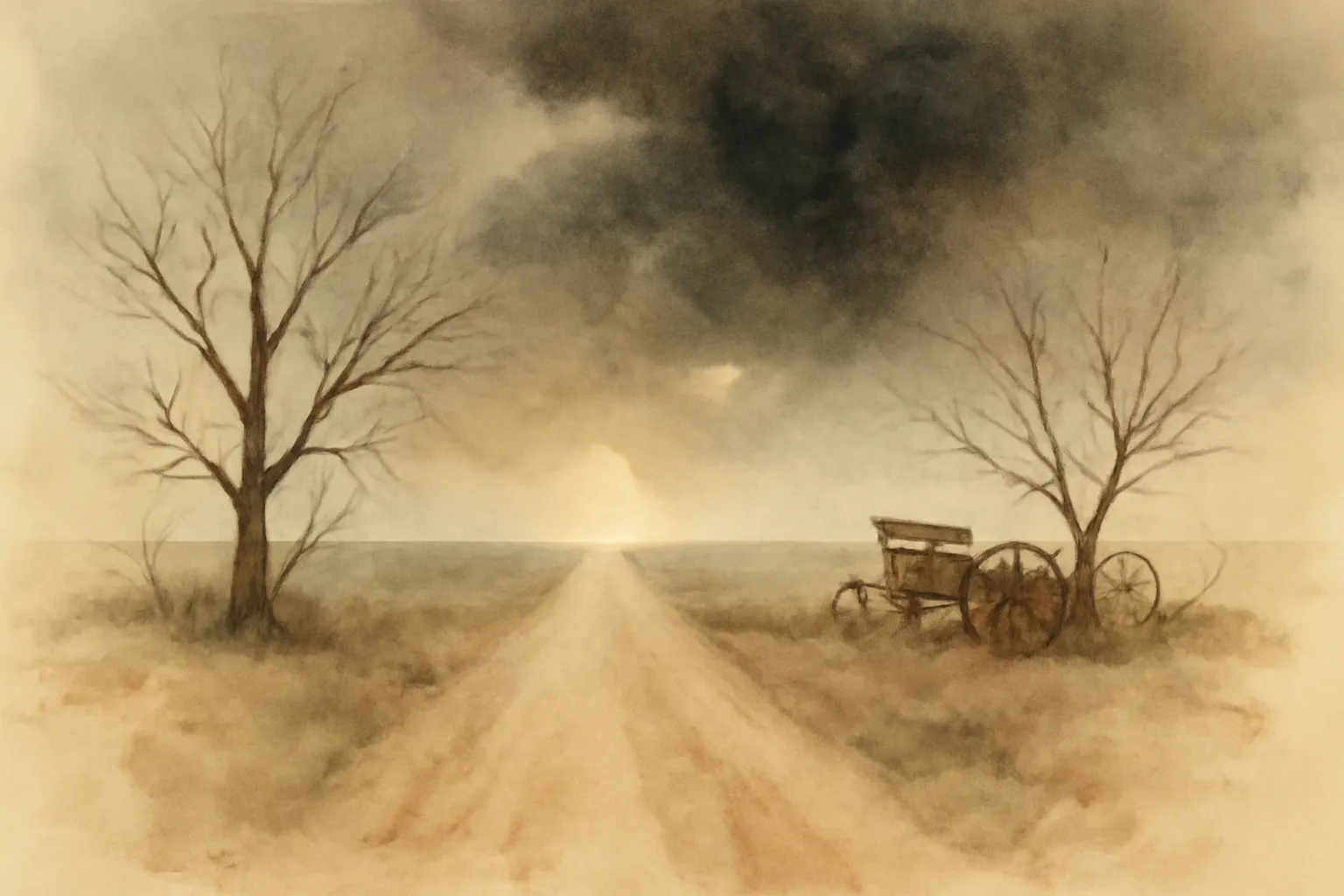
Steinbeck’s novel vividly portrays the devastation wrought by the Great Depression and the Dust Bowl, focusing on the Joad family as they are uprooted from their Oklahoma farm. Their journey westward is not just a physical migration, but a harrowing odyssey through poverty, hunger, and exploitation. The book personalizes the statistics of the era, showing how economic forces beyond their control strip families of their homes, livelihoods, and dignity, forcing them to reinvent themselves in a hostile world.
At its core, the novel is about the strength and adaptability of family. The Joads’ unity is repeatedly tested by loss and hardship, yet they persist in supporting one another. As the story progresses, Steinbeck expands the idea of ‘family’ to include the broader community of migrants, suggesting that survival depends on solidarity and collective action rather than individualism.
“Wherever they's a fight so hungry people can eat, I'll be there.”
“I’ll be all around in the dark. I’ll be everywhere—wherever you can look.”
“And the little screaming fact that sounds through all history: repression works only to strengthen and knit the repressed.”