

Man-woman relationships, fiction · Sko nlitteratur · Fiction
The Hunchback of Notre-Dame by Victor Hugo — Summary, Key Ideas & Quotes
1831436 pages✦ 3-min Big ideas★ 4.1 (45)
Rate it
In fifteenth-century Paris, a disfigured man named Quasimodo, who was abandoned as an infant in the cathedral of Notre-Dame and now lives in its bell tower, must come to the aid of a beautiful gypsy girl named Esmeralda after she repels the advances of the cruel archdeacon Don Claude Frollo.
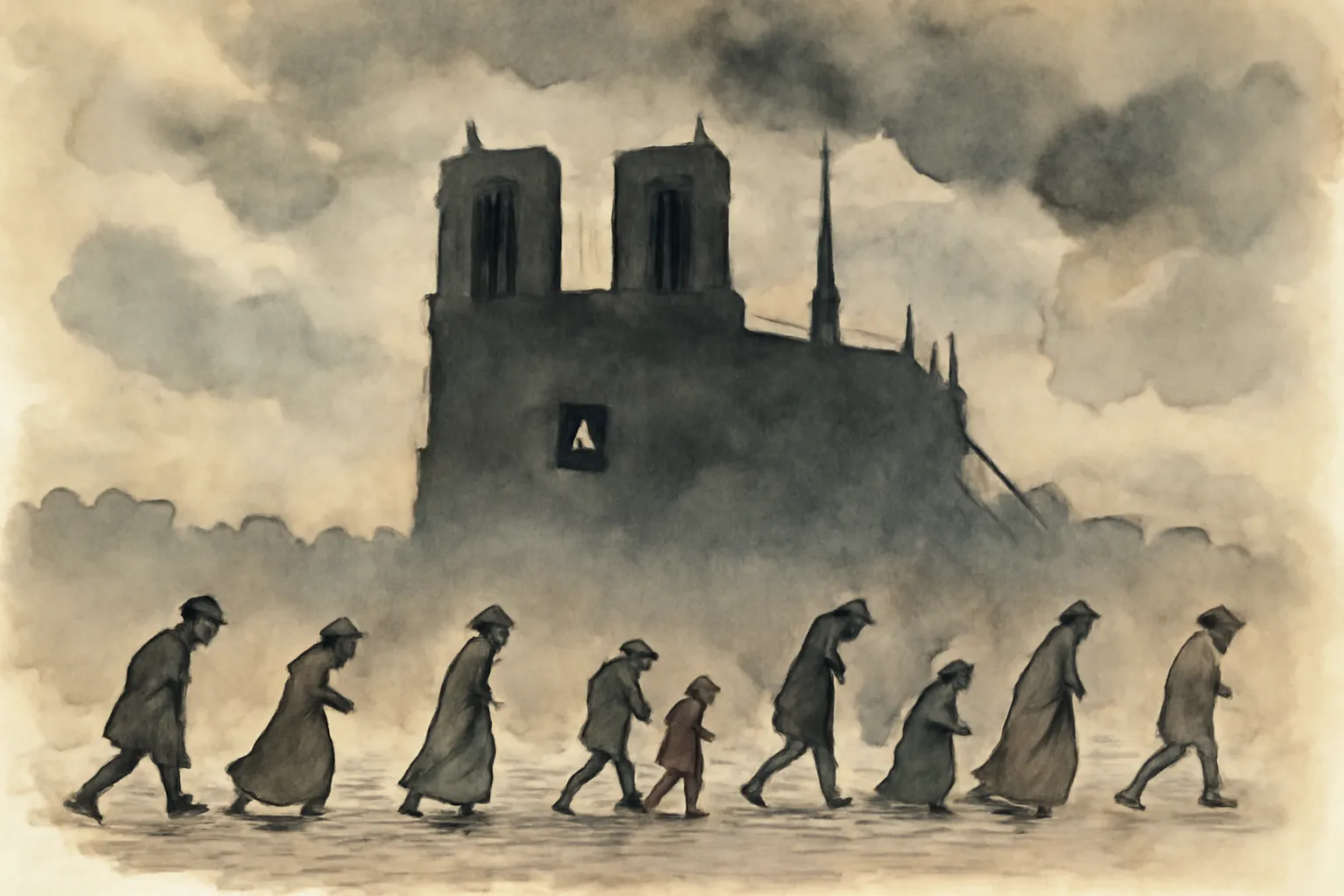
Hugo turns the idea of beauty inside out, challenging readers to question appearances. Quasimodo, physically deformed but capable of deep love and loyalty, is contrasted with characters whose outward beauty masks inner corruption. The novel asks: who is truly monstrous, the outcast or the society that shuns him? This tension drives the emotional core of the story and reveals how superficial judgments can lead to cruelty and injustice.
The book exposes the rigid hierarchies and prejudices of 15th-century Paris. Esmeralda, a Romani dancer, and Quasimodo, the bell-ringer, are both marginalized by a society that fears difference. Hugo critiques the institutions—church, law, and mob—that perpetuate exclusion and violence, showing how societal norms can crush individual dignity and hope.
“Love is like a tree: it grows by itself, roots itself deeply in our being and continues to flourish over a heart in ruin.”
“The greatest products of architecture are less the works of individuals than of society.”
“Nothing makes a man so adventurous as an empty pocket.”