Long Now Manual for Civilization · Biolinguistics · Language and languages
The Language Instinct by Steven Pinker — Summary, Key Ideas & Quotes
1994513 pages✦ 3-min Big ideas★ 3.9 (10)
Rate it
From the Preface... I have never met a person who is not interested in language. I wrote this book to try to satisfy that curiosity. Language is beginning to submit to that uniquely satisfying kind of understanding that we call science, but the news has been kept a secret. For the language lover, I hope to show that there is a world of elegance and richness in quotidian speech that far outshines the local curiosities of etymologies, unusual words, and fine points of usage. For the reader of popular science, I hope to explain what is behind the recent discoveries (or, in many cases, nondiscoveries) reported in the press: universal deep structures, brainy babies, grammar genes, artifically intelligent computers, neural networks, signing chimps, talking Neanderthals, idiot savants, feral children, paradoxical brain damage, identical twins separated at birth, color pictures of the thinking brain, and the search for the mother of all languages. I also hope to answer many natural questions about languages, like why there are so many of them, why they are so hard for adults to learn, and why no one seems to know the plural of Walkman.
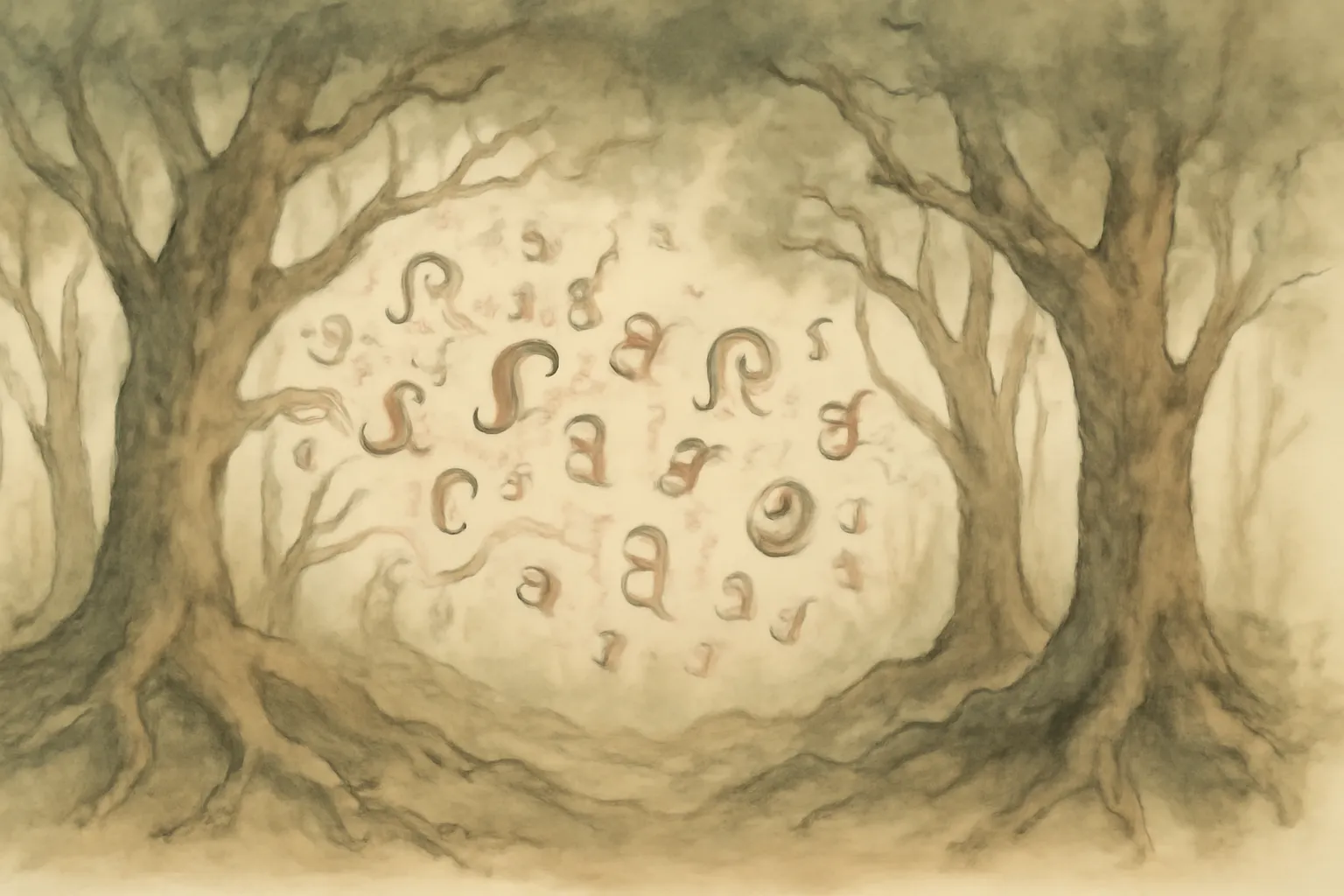
Pinker’s central thesis is that language is not a cultural invention but a biological adaptation—an instinct shaped by evolution. He argues that just as spiders spin webs, humans are born with a mental blueprint for acquiring language. This innate capacity explains why children across cultures learn complex grammar rapidly and without formal instruction, and why all human languages share deep structural similarities.
Drawing on Noam Chomsky’s theory, Pinker contends that all human languages are underpinned by a universal grammar—a set of structural rules hardwired into the brain. This explains why children can generate sentences they’ve never heard before and why certain grammatical patterns are common across unrelated languages. Universal grammar is presented as evidence for the biological roots of language.
“Language is a complex, specialized skill, which develops in the child spontaneously, without conscious effort or formal instruction.”
“As you are reading these words, you are taking part in one of the wonders of the natural world.”