Mechanical Hound · girl next door · Long Now Manual for Civilization
Fahrenheit 451 by Ray Bradbury — Summary, Key Ideas & Quotes
1953190 pages✦ 3-min Big ideas★ 4.0 (443)
Rate it
Fahrenheit 451 is a 1953 dystopian novel by American writer Ray Bradbury. Often regarded as one of his best works, the novel presents a future American society where books are outlawed and "firemen" burn any that are found. The book's tagline explains the title as "'the temperature at which book paper catches fire, and burns": the autoignition temperature of paper. The lead character, Guy Montag, is a fireman who becomes disillusioned with his role of censoring literature and destroying knowledge, eventually quitting his job and committing himself to the preservation of literary and cultural writings. The novel has been the subject of interpretations focusing on the historical role of book burning in suppressing dissenting ideas for change. In a 1956 radio interview, Bradbury said that he wrote Fahrenheit 451 because of his concerns at the time (during the McCarthy era) about the threat of book burning in the United States. In later years, he described the book as a commentary on how mass media reduces interest in reading literature. In 1954, Fahrenheit 451 won the American Academy of Arts and Letters Award in Literature and the Commonwealth Club of California Gold Medal. It later won the Prometheus "Hall of Fame" Award in 1984 and a "Retro" Hugo Award, one of a limited number of Best Novel Retro Hugos ever given, in 2004. Bradbury was honored with a Spoken Word Grammy nomination for his 1976 audiobook version.
Also contained in: - 451° по Фаренгейту: Рассказы - 451° по Фаренгейту: повести и рассказы - Works
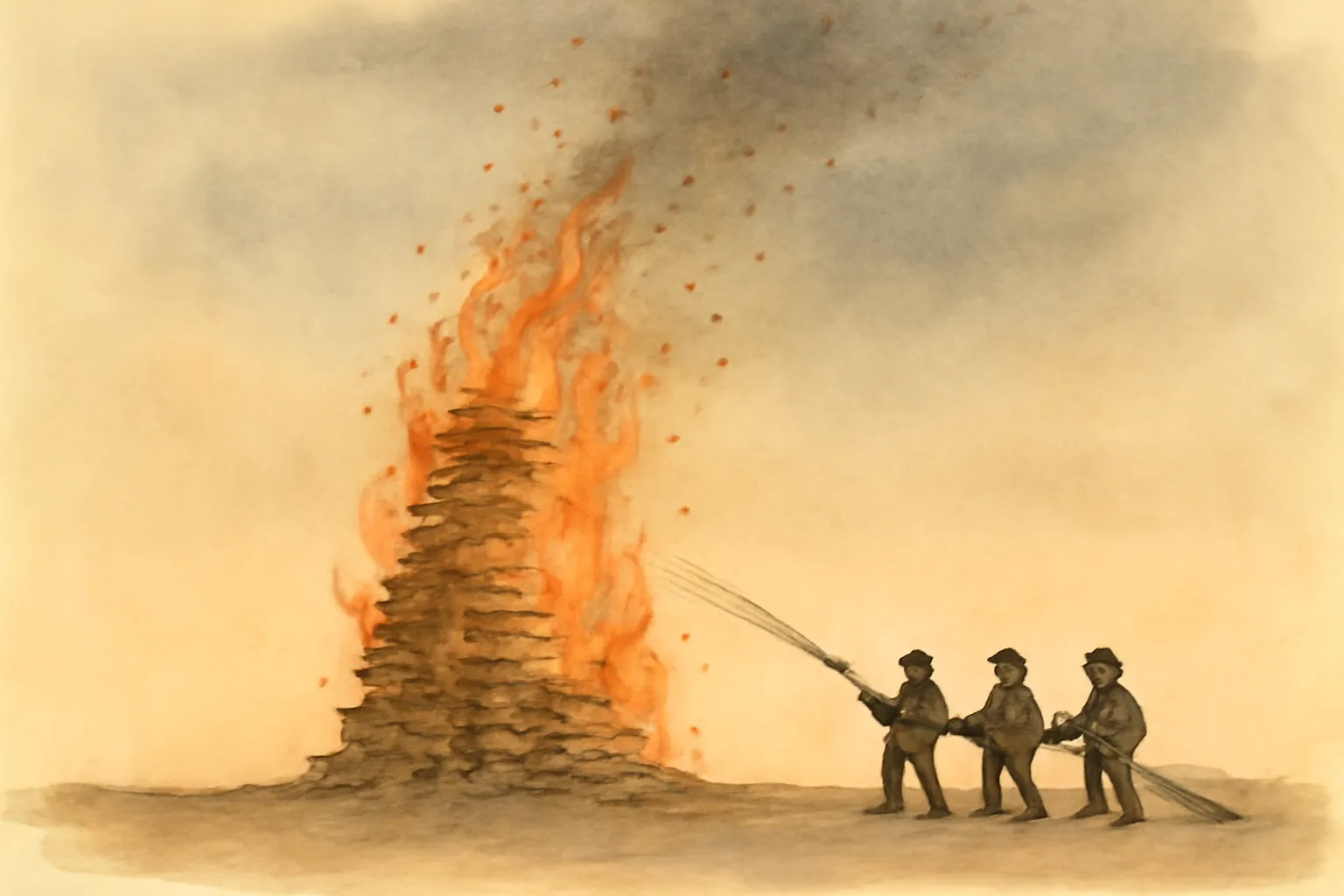
At its core, the novel warns of a society where the suppression of books leads to the erosion of critical thinking and individuality. By outlawing literature, the government doesn’t just eliminate words on paper—it erases the diversity of ideas, histories, and perspectives that books preserve. Bradbury’s firemen, tasked with burning books, symbolize institutional forces that fear dissent and complexity, preferring a population that is docile and easily managed.
Bradbury anticipates a world saturated with shallow entertainment, where television and fast-paced media distract citizens from meaningful engagement with reality. The novel’s inhabitants are bombarded by screens and empty chatter, leaving them emotionally and intellectually numb. This critique of media’s ability to pacify and manipulate remains strikingly relevant in the age of smartphones and social media.