

Origin · Methodology · Fossil hominids
The Last Neanderthal by G. J. Sawyer, Viktor Deak, Esteban Sarmiento, Richard Milner — Summary, Key Ideas & Quotes
2007256 pages✦ 3-min Big ideas
Rate it
"This book tells the story of human evolution, the epic of Homo sapiens and its colorful precursors and relatives. The story begins in Africa, six to seven million years ago, and encompasses twenty-two known human species, of which Homo sapiens is the sole survivor. Illustrated with spectacular, three-dimensional scientific reconstructions portrayed in their natural habitat - the result of creative collaboration between physical anthropologist G.J. Sawyer of the American Museum of Natural History and paleoartist Viktor Deak, in consultation with experts from around the world - the book is both a guide to extinct human species and an astonishing hominid family photo album."--BOOK JACKET.
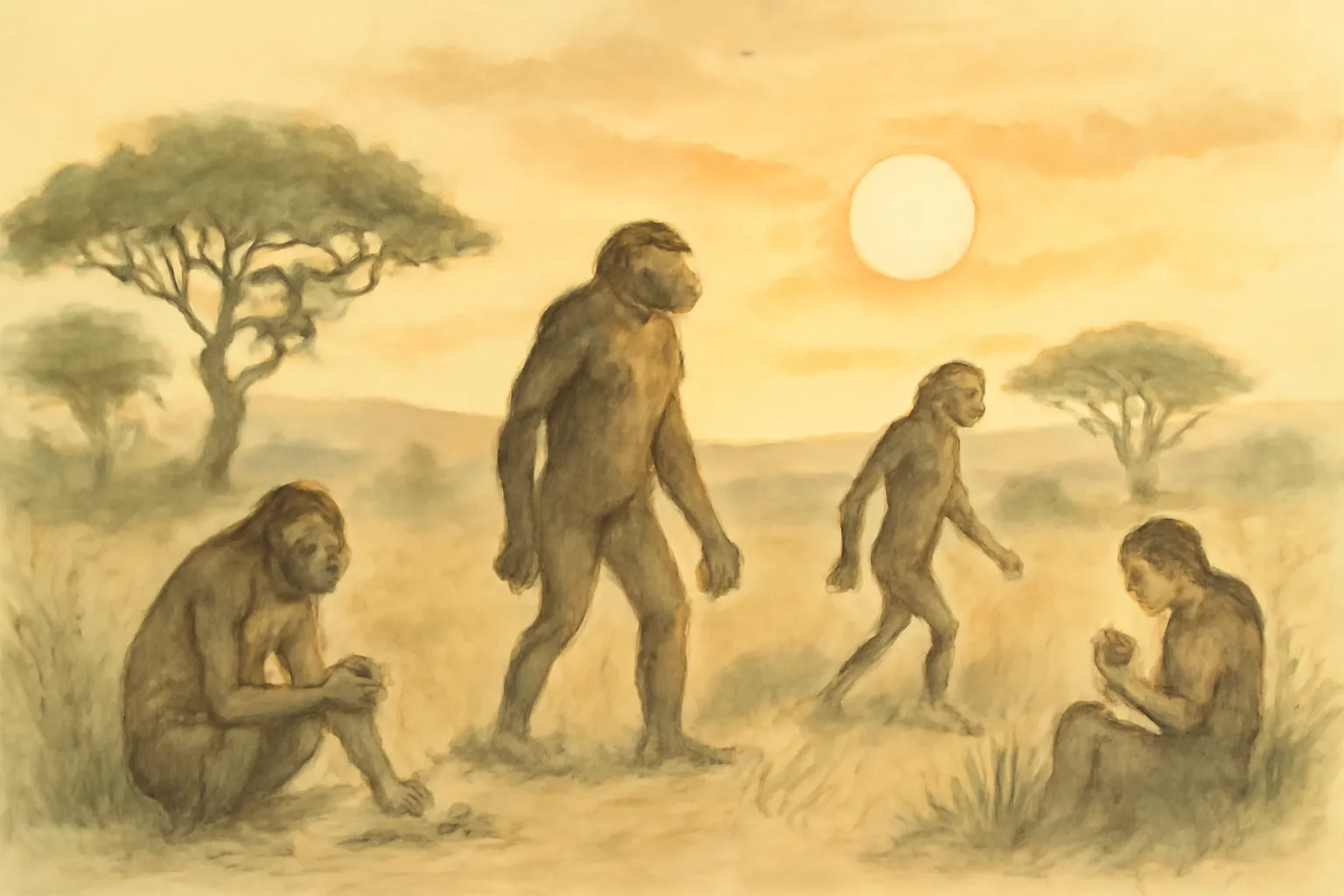
Central to the book is the concept of the 'family album'—a detailed, illustrated catalog of twenty-two known human species. Each species is presented not just as a fossil or a name, but as a reconstructed being placed within its environmental and evolutionary context. This approach humanizes our extinct relatives, making their existence tangible and relatable, and invites readers to see themselves as part of a much larger, intricate family history.
Sawyer and Deak's collaboration bridges science and art, using forensic reconstruction techniques to bring ancient hominids to life. The book argues that visualizing these species is crucial for understanding their adaptations, diversity, and the evolutionary pressures they faced. This method also challenges the reader to confront their own preconceptions about what it means to be 'human.'