

Hydrogen bomb · History · Audiocassettes
The Making of the Atomic Bomb by Richard Rhodes — Summary, Key Ideas & Quotes
1995736 pages✦ 3-min Big ideas
Rate it
In this work of history, science and politics, Richard Rhodes, the Pulitzer Prize-winning author of The Making of the Atomic Bomb, tells for the first time the secret story of how and why the hydrogen bomb was made; traces the path by which "the Bomb", the supreme artifact of twentieth-century science and technology, became the defining issue of the Cold War; and reveals how close the world came to nuclear destruction before the United States and the former Soviet Union learned the lesson of nuclear stalemate - a stalemate, Rhodes makes clear, that forced the superpowers to tenuous truce for more than four decades, in the end bankrupting and destroying the Communist state and foreclosing world-scale war. From the day in September 1941 when the first word of Anglo-American atomic-bomb research arrived in Moscow via Soviet espionage to the week of the 1962 Cuban missile crisis when Curtis LeMay goaded President Kennedy to attack the USSR with everything in the US arsenal, this book is full of unexpected - and sometimes hair-raising - revelations based on previously undisclosed Soviet as well as US sources.
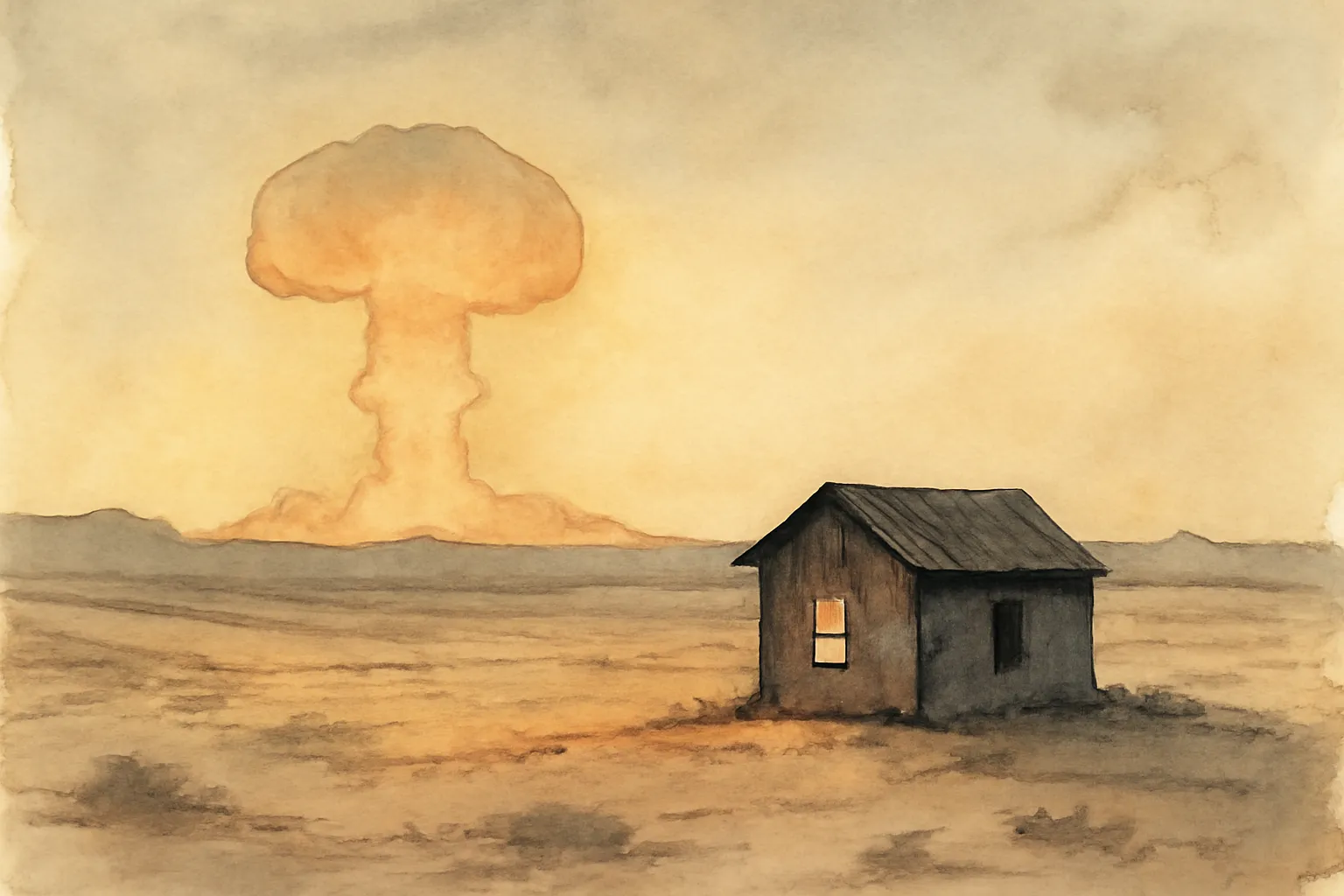
Rhodes demonstrates how the atomic bomb was not just a scientific breakthrough, but the product of a unique convergence of intellectual ambition, political urgency, and global conflict. He traces the evolution of physics from the early twentieth century, showing how discoveries in quantum mechanics and nuclear fission were propelled—and sometimes distorted—by the pressures of war. The book reveals how scientists, often driven by curiosity or humanitarian ideals, became entwined with military and political agendas, ultimately reshaping the trajectory of modern history.
Central to Rhodes’s narrative are the individual scientists, engineers, and political figures whose choices and personalities shaped the bomb’s creation. He delves into the lives of figures like Robert Oppenheimer, Niels Bohr, and Enrico Fermi, exploring their motivations, doubts, and ethical struggles. By humanizing these actors, Rhodes invites readers to grapple with the moral ambiguities of scientific progress and the burden of responsibility that comes with world-changing discoveries.
“The physicists have known sin; and this is a knowledge which they cannot lose.”
“It is a story without end.”