

satire · humor · Politicians
The Master and Margarita by Mikhail Bulgakov — Summary, Key Ideas & Quotes
1966436 pages✦ 3-min Big ideas★ 4.2 (98)
Rate it
*The Master and Margarita* (Russian: Мастер и Маргарита) is a novel by Mikhail Bulgakov, written in the Soviet Union between 1928 and 1940. The story concerns a visit by the devil and his entourage to the officially atheist Soviet Union. The devil, manifested as one Professor Woland, challenges the Soviet citizens' beliefs towards religion and condemns their behavior throughout the book. *The Master and Margarita* combines supernatural elements with satirical dark comedy and Christian philosophy, defying categorization within a single genre. Many critics consider it to be one of the best novels of the 20th century, as well as the foremost of Soviet satires. A censored version, with several chapters cut by editors, was published posthumously in Moscow magazine in 1966–1967 by his widow Elena Bulgakova. The manuscript was not published as a book until 1967, in Paris. A samizdat version circulated that included parts cut out by official censors, and these were incorporated in a 1969 version published in Frankfurt. The novel has since been published in several languages and editions.
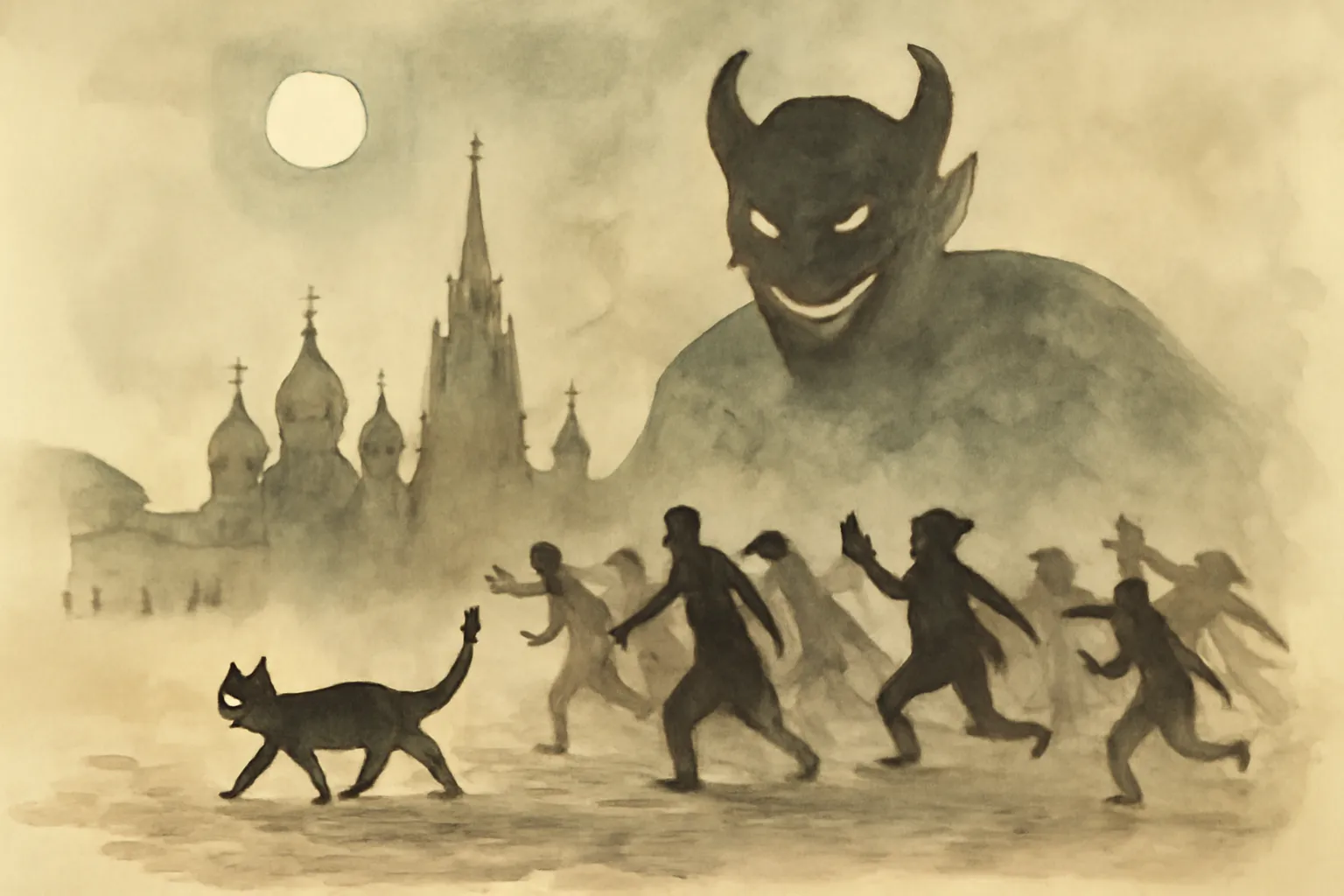
Bulgakov uses the arrival of Woland (the Devil) and his bizarre retinue to lampoon the absurdities and moral bankruptcy of 1930s Moscow. Through supernatural chaos—talking cats, vanishing bureaucrats, and magical currency—he exposes the hypocrisy, fear, and opportunism bred by an authoritarian, atheist regime. The novel’s humor and grotesquery highlight how official ideology distorts reality, encouraging readers to question conformity and the cost of suppressing spiritual life.
At the heart of the novel is the Master, a persecuted writer whose banned novel about Pontius Pilate mirrors Bulgakov’s own struggles with censorship. The story explores how art can be both a source of transcendence and a target for destruction under repressive systems. The Master’s journey, and the magical intervention of Margarita, affirm the enduring power of creativity and imagination to resist tyranny and redeem the human spirit.
“Manuscripts don't burn.”
“Cowardice is the most terrible of vices.”
“Everything will turn out right, the world is built on that.”