

Japan, fiction · Young women, fiction · Fiction, general
The Old Capital by Yasunari Kawabata — Summary, Key Ideas & Quotes
1962169 pages✦ 3-min Big ideas
Rate it
This novel tells the story of Chieko, the adopted daughter of a Kyoto kimono designer, Takichiro, and his wife, Shige. Since her youth, Chieko has been told that she was kidnapped as a baby by the couple in a moment of profound desire. When she is twenty, however, she learns that she was actually a foundling, abandoned by her real parents. Still, the love and affection Takichiro and Shige have given her satisfy her heart and she has no desire to seek out her biological parents--until she makes a startling discovery before the altar of Yasaka shrine. This work was specifically cited by the Nobel committee as one of the three novels for which the author was awarded the Nobel Prize for Literature in 1968.
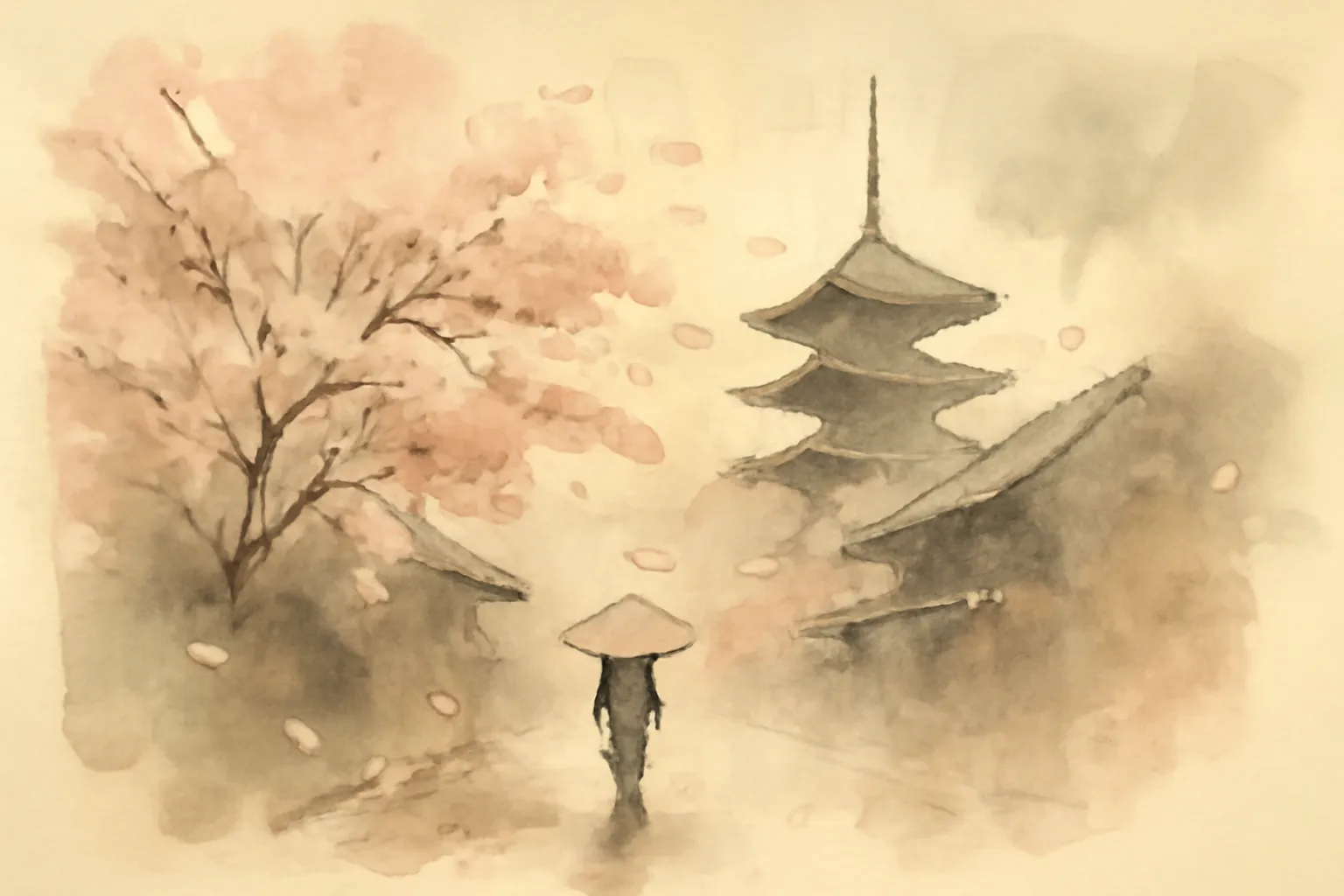
Chieko’s sense of self is inextricably linked to Kyoto, a city where ancient customs and festivals are woven into daily life. The novel uses Kyoto’s changing seasons and rituals—the cherry blossoms, the Gion Festival, the quiet of old temples—to mirror Chieko’s internal journey. Her personal search for origin is paralleled by the city’s own struggle to preserve its identity amid modernization, suggesting that who we are is shaped as much by our environment and heritage as by our blood.
Kawabata complicates the idea of family by presenting Chieko as a foundling, raised by loving adoptive parents yet haunted by the mystery of her birth. The revelation that she was not kidnapped but abandoned destabilizes her sense of belonging, prompting a quiet existential crisis. The novel explores whether love and nurture can outweigh biological ties, and how the boundaries of family are often blurred, especially in a culture that values both lineage and chosen bonds.
“How sad it is that we give up on people who are just like us.”
“The heart of a person, after all, is not something that can be understood so easily.”