

The Scarlet Letter reveals the profound struggles of sin, guilt, and identity in a repressive Puritan society
Read full overviewShow less›
Nathaniel Hawthorne's 'The Scarlet Letter' offers a piercing exploration of the human condition through the lens of sin and its consequences. Set against the backdrop of a strict Puritan community, the novel follows Hester Prynne, a woman branded by society for her act of adultery, as she navigates the complexities of shame, identity, and redemption. Readers will encounter a rich tapestry of characters, each grappling with their moral dilemmas, and witness how societal judgment can warp personal relationships and self-perception. Through Hester's journey, Hawthorne challenges us to reflect on the nature of sin and the possibility of forgiveness, making this timeless tale as relevant today as it was in the 19th century.
In 'The Scarlet Letter,' Nathaniel Hawthorne masterfully examines the complexities of sin, guilt, and identity through the experiences of Hester Prynne and those around her. The novel serves as a critique of the rigid moral codes of Puritan society, revealing the hypocrisy and lack of compassion that can arise from strict adherence to societal norms. As each character navigates their own struggles, Hawthorne invites readers to reflect on the nature of morality and the possibility of redemption. Ultimately, the book underscores the importance of authenticity, the courage to confront one’s truth, and the transformative power of love and forgiveness, making it a timeless exploration of the human experience.
- 1The Power of the Scarlet Letter
- 2The Role of Sin and Guilt
- 3Puritan Society and Its Hypocrisy
- 4Hester Prynne: A Complex Protagonist
- 5Arthur Dimmesdale: The Tormented Soul
Notable quotes
“‘It lies not in the pleasure of the magistrates to take off this badge,’ calmly replied Hester.”
“‘This man,’ said he, at one such moment, to himself, ‘pure as they deem him,—all spiritual as he seems,—hath inherited a strong animal nature from his father or his mother.’”
“‘The scarlet letter was her passport into regions where other women dared not tread.’”
A glimpse inside

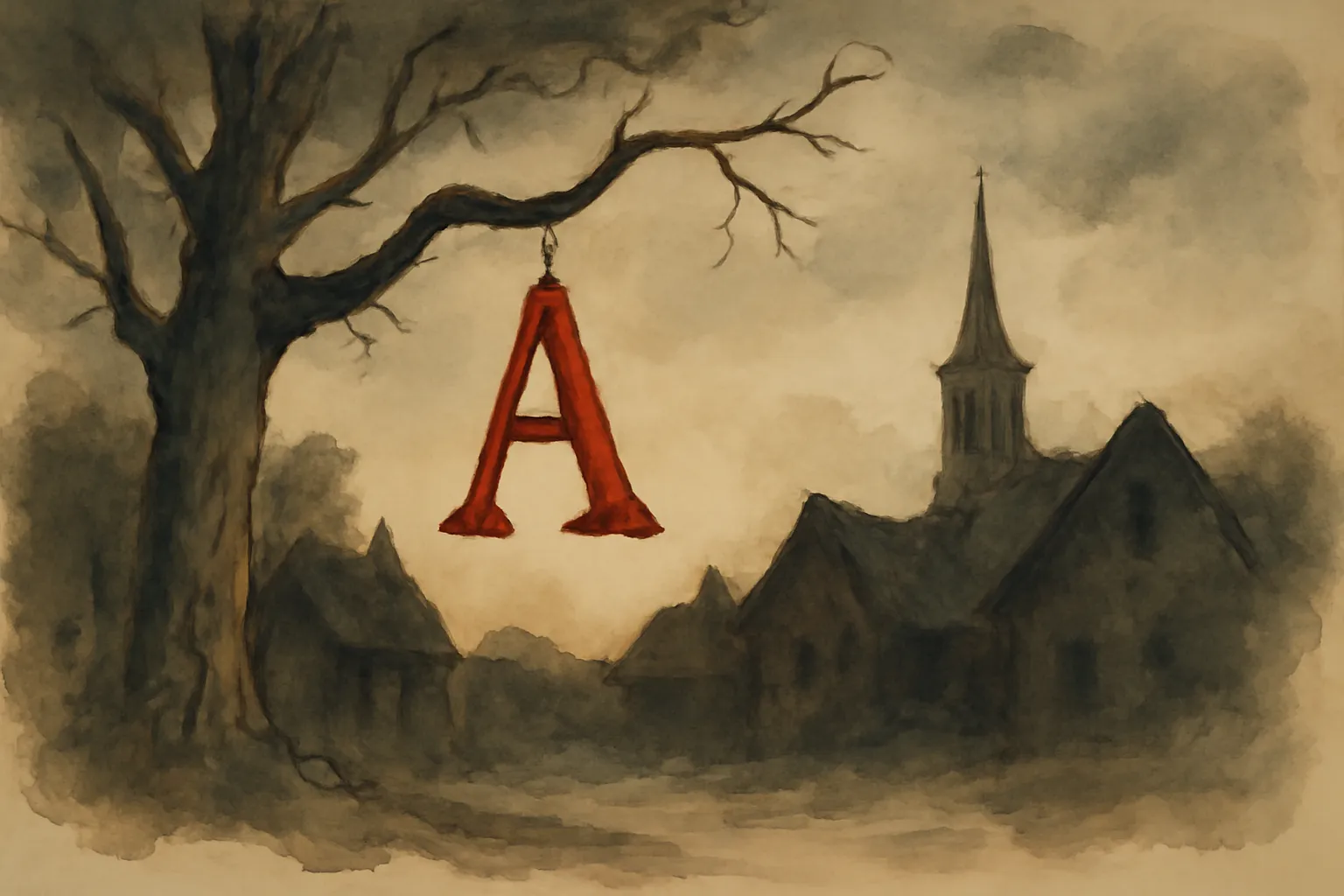
The scarlet letter 'A' that Hester Prynne is forced to wear serves as a powerful symbol throughout the narrative. It represents not only her sin of adultery but also the… Read moreThe scarlet letter 'A' that Hester Prynne is forced to wear serves as a powerful symbol throughout the narrative. It represents not only her sin of adultery but also the societal judgment that accompanies it. Initially, the letter is a mark of shame, branding her as an outcast in the eyes of the Puritan community. However, as the story unfolds, the letter evolves into a complex symbol of identity and resilience. Hester transforms her punishment into a source of strength, using the letter to carve out a new identity that defies societal expectations. She embroiders it beautifully, turning a symbol of shame into one of artistry, which challenges the community's perception of her. This duality of the letter highlights the tension between personal truth and public perception, demonstrating how one’s identity can be shaped by external forces. Ultimately, the letter becomes a mark of Hester’s individuality and defiance against a society that seeks to confine her. Show less
Sin is a central theme in 'The Scarlet Letter,' and Hawthorne delves deeply into the psychological ramifications of guilt. Read moreSin is a central theme in 'The Scarlet Letter,' and Hawthorne delves deeply into the psychological ramifications of guilt. Hester Prynne openly acknowledges her sin, accepting her punishment and the scorn of society. Conversely, her lover, Reverend Arthur Dimmesdale, grapples with his concealed guilt, which festers within him and ultimately leads to his physical and mental deterioration. This disparity illustrates the different ways individuals cope with sin and its consequences. Dimmesdale’s internal conflict manifests in sleepless nights and self-inflicted pain, showcasing how unacknowledged guilt can consume a person from within. As he stands before his congregation, he preaches about sin and redemption, all while hiding his own shameful secret. In contrast, Hester's acceptance of her sin allows her to reclaim her identity and find a sense of peace, albeit in a life marked by societal disdain. Hawthorne suggests that the path to redemption is shaped not by avoidance but by a willingness to confront personal flaws and societal judgment. Show less
Read the full text — free
About the author
Nathaniel Hawthorne has 2 works free to read on Lumina, including The Scarlet Letter
All 2 books by Nathaniel Hawthorne →