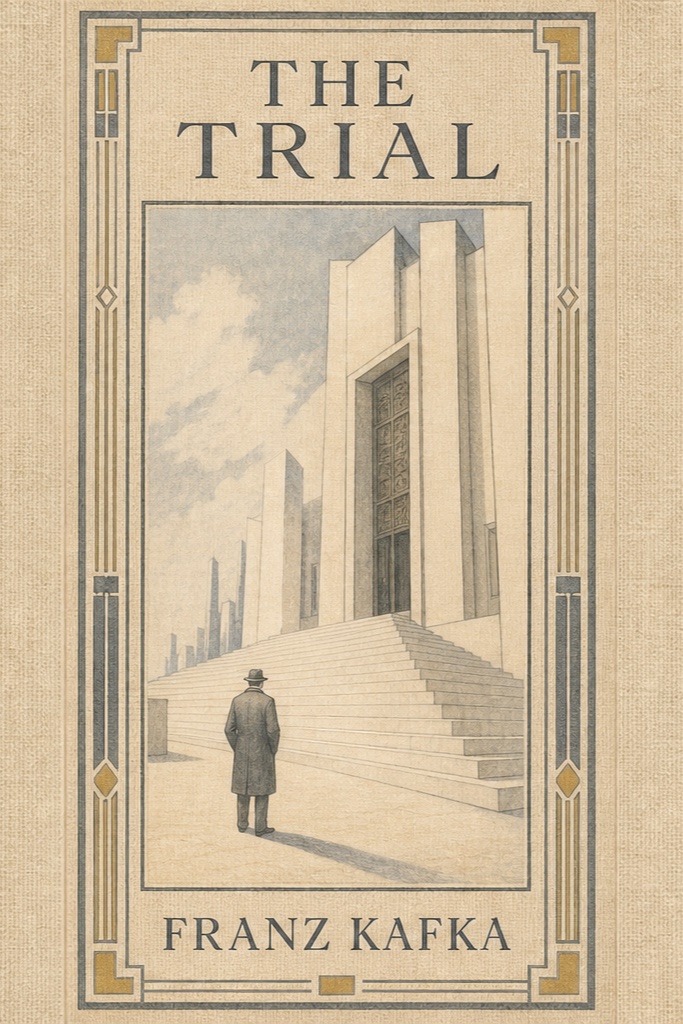

A man is arrested and prosecuted by an unreachable authority for a crime never named — the defining nightmare of modern bureaucracy and guilt.
Read full overviewShow less›
In 'The Trial', Kafka presents a haunting narrative that explores the themes of guilt, alienation, and the incomprehensibility of law. The protagonist, Josef K., finds himself embroiled in a nightmarish legal situation where he is arrested without cause, leading him on a futile quest for justice within an opaque judicial system. As he navigates through a labyrinth of bureaucratic absurdities, K.'s struggle reflects the universal human experience of confronting forces beyond our control. Readers will be drawn into a surreal world that mirrors the anxieties of modern existence, prompting reflection on the nature of authority, personal responsibility, and the quest for meaning in a seemingly indifferent universe. Kafka's masterful storytelling not only captivates but also challenges us to consider the implications of a legal system that operates with little regard for individual rights or rationality.
Franz Kafka's 'The Trial' remains a powerful exploration of the human experience in the face of absurdity and alienation. Through the harrowing journey of Josef K., Kafka invites readers to confront the complexities of authority, guilt, and the search for meaning in a bewildering world. The novel's themes resonate deeply in contemporary society, where individuals often grapple with bureaucratic systems that seem indifferent to their struggles. Kafka's masterful storytelling not only captivates but also challenges us to reflect on our own experiences of isolation and the quest for justice. Ultimately, 'The Trial' serves as a timeless reminder of the fragility of human existence and the relentless pursuit of understanding in an often chaotic universe.
- 1The Absurdity of Bureaucracy
- 2Isolation and Alienation
- 3The Nature of Guilt
- 4The Futility of Resistance
- 5The Illusion of Control
Notable quotes
“Who are you?”
“It is not possible.”
“I want neither to stay here nor to be spoken to by you until you've introduced yourself.”
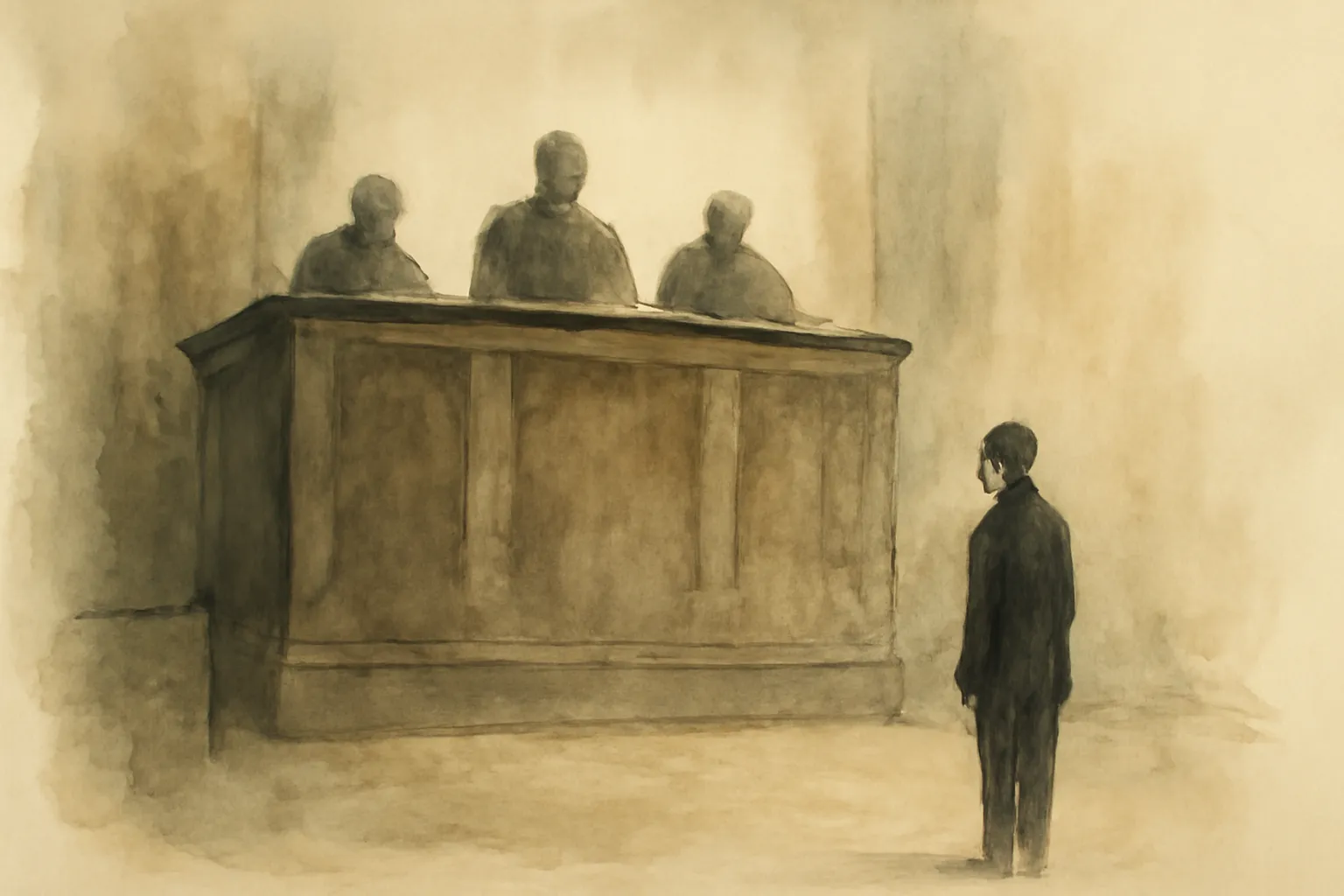
A glimpse inside

Kafka's portrayal of the legal system in 'The Trial' is emblematic of the absurdity inherent in bureaucratic institutions. From the outset, Josef K. Read moreKafka's portrayal of the legal system in 'The Trial' is emblematic of the absurdity inherent in bureaucratic institutions. From the outset, Josef K. is informed of his arrest without being told the charges against him, highlighting the arbitrary nature of authority. As he attempts to seek clarity and justice, he encounters a series of officials who offer little more than vague reassurances and convoluted explanations. The surreal interactions K. has with the supervisor and other bureaucrats illustrate how the law can become a tangled web of red tape, where the individual is lost in a sea of impersonal regulations. This absurdity serves to critique not only the legal system but also the broader societal structures that prioritize process over people, leaving individuals feeling powerless and bewildered. Show less
Throughout 'The Trial', Kafka masterfully depicts Josef K.'s profound sense of isolation as he grapples with the inexplicable events surrounding his arrest. Read moreThroughout 'The Trial', Kafka masterfully depicts Josef K.'s profound sense of isolation as he grapples with the inexplicable events surrounding his arrest. Despite being surrounded by people—his landlady, his colleagues, and various officials—K. feels increasingly disconnected from those around him. His interactions often reveal a lack of understanding and empathy, underscoring the alienation that accompanies his plight. For instance, when he tries to reach out to his friend State Attorney Hasterer, he finds that his supposed allies are more concerned with their own interests than with helping him. This pervasive sense of alienation reflects a deeper existential crisis, where K. struggles to find meaning and connection in a world that seems indifferent to his suffering. Kafka's exploration of isolation resonates on a universal level, inviting readers to reflect on their own experiences of loneliness in an increasingly complex society. Show less
Read the full text — free
About the author
Franz Kafka has 2 works free to read on Lumina, including The Metamorphosis.
All 2 books by Franz Kafka →Frequently asked
Worlds to get lost in
Take Lumina everywhere
Read offline, listen to AI summaries, speed-read, and sync your progress across devices — free on iPhone.
Download for iPhone