1.Erasmus's Early Life and Context
Erasmus was born in 1466 in the Low Countries, a region caught between the influences of France and the German Empire. At this time, the Burgundian dukes were consolidating power, leading to a rich cultural milieu that fostered early humanist thought. His early environment, characterized by political intrigue and cultural exchanges, profoundly influenced his intellectual development. Erasmus’s upbringing was marked by the movement of Devotio Moderna, which emphasized personal piety and education as pathways to spiritual growth. He received a classical education that equipped him with a deep appreciation for Latin literature and rhetoric, which would later shape his humanist ideals. His formative years spent in various schools laid the groundwork for his later intellectual pursuits and his eventual role as a humanist scholar and reformer, navigating the complexities of identity and belief in a rapidly changing Europe.
2.Life in the Monastery
Erasmus entered the monastery of Steyn in 1488, a decision that would significantly shape much of his early adult life. Initially, his monastic life provided him with the structure and intellectual stimulation necessary for his studies; however, he soon became disillusioned with the cloistered existence that seemed to stifle his intellectual curiosity. His letters from this period reveal a deep-seated aversion to monastic life, which he would later criticize in his writings. Nevertheless, the friendships he forged with fellow monks fostered an environment of intellectual exchange, allowing him to explore Latin poetry and classical texts. Through the lens of his later regrets, Erasmus reflected on the constraints of monastic life as both formative and frustrating. This tension between institutional expectations and personal aspirations ultimately propelled him toward a life of broader intellectual engagement and reform, as he sought to reconcile his longing for freedom with his commitment to scholarship.
3.The University of Paris and Humanism
Erasmus's time at the University of Paris from 1495 to 1499 was pivotal in shaping his humanist ideals. He encountered a vibrant intellectual environment marked by the clash of scholasticism and the rising tide of humanism, which sought to revive classical learning and promote a more personal engagement with texts. His disdain for the rigidities of scholastic thought pushed him towards a more classical approach to education that emphasized critical thinking and the study of original texts. During this period, he formed connections with prominent humanists like Robert Gaguin, who influenced his understanding of philosophy and literature. The tumultuous atmosphere of the university, characterized by student rowdiness and heated debates, served as a backdrop for his intellectual awakening. This period was also marked by the struggle for intellectual freedom within traditional academic structures, setting the stage for Erasmus's later critiques of dogma and advocacy for a return to the sources of Christian faith, which would become hallmarks of his humanist philosophy.
4.Erasmus's First Stay in England

During his first visit to England from 1499 to 1500, Erasmus experienced a transformative period of personal and intellectual growth. He was introduced to influential figures such as John Colet and Thomas More, who inspired him to pursue more serious theological and educational endeavors. The English court's burgeoning intellectual circles provided a refreshing context for Erasmus, where discussions of reform and the role of education in spiritual life flourished. This exposure to royal patronage and the company of learned men broadened his perspective and deepened his commitment to reforming the Church through education. His interactions with the nobility and rising intellectuals reflected his aspirations to engage with the broader societal issues of his time, transitioning from a poet to a thinker committed to meaningful reform. The experience not only enriched his literary output but also solidified his desire to use his gifts for more substantial purposes, as he began to see education as a vital tool for spiritual and societal transformation.
5.The Praise of Folly: A Masterpiece of Satire
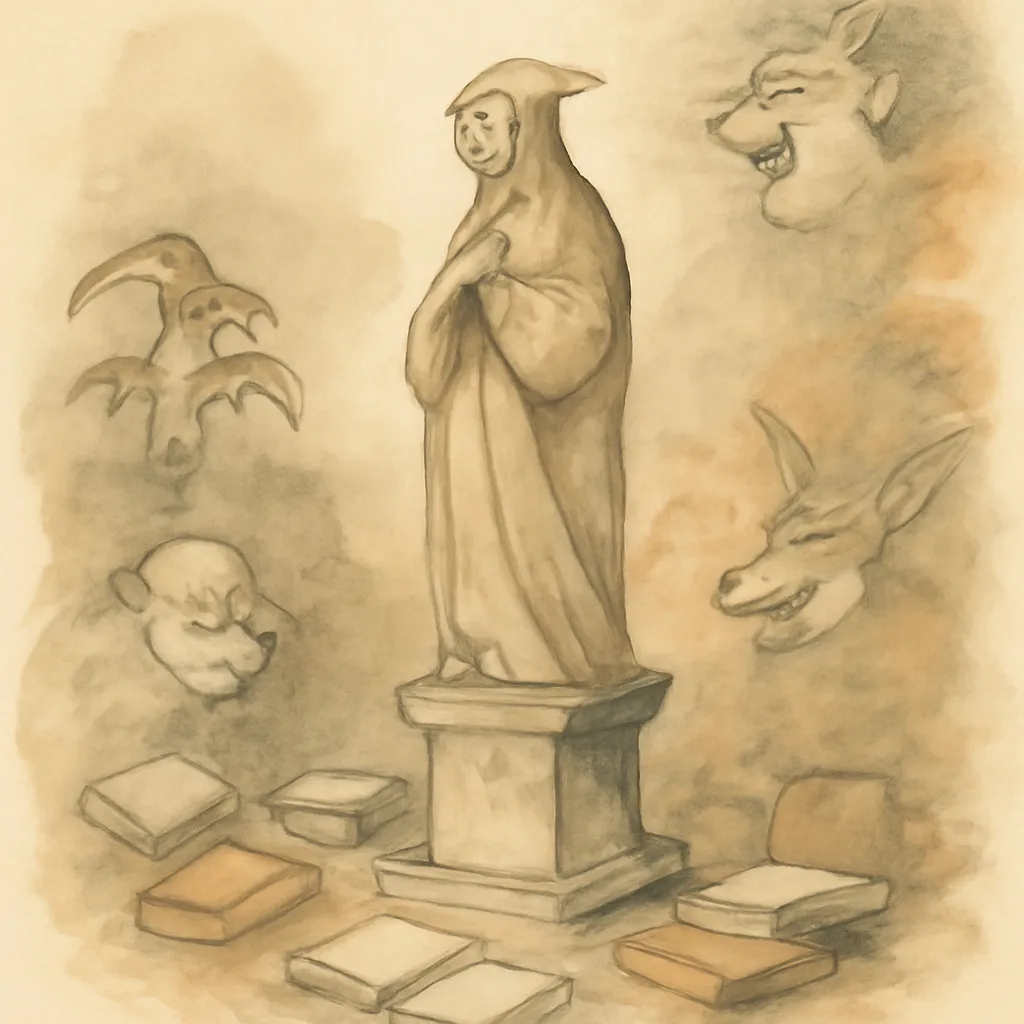
In 1509, Erasmus penned 'Moriae Encomium' or 'The Praise of Folly', a satirical work that critiques societal norms and human behavior with sharp wit and humor. Through the voice of Folly, Erasmus addresses the absurdities of human existence, examining the vanities of scholars, the hypocrisy of the clergy, and the follies of everyday life. Folly, as a character, becomes the lens through which Erasmus analyzes the human condition, arguing that it is folly that keeps the world in motion and gives life its vitality. His contention that lack of folly renders humans unfit for life challenges conventional wisdom, inviting readers to reflect on their own lives and the absurdities of society. The work serves as both a critique of contemporary thought and a celebration of the human spirit's resilience in the face of absurdity, showcasing Erasmus's unique blend of humor and moral insight. The 'Praise of Folly' remains a significant literary achievement, exemplifying how satire can provoke thought and encourage self-reflection.
6.Erasmus's Role as a Humanist

As a prominent humanist, Erasmus sought to democratize knowledge and make classical literature accessible to a broader audience. His work 'Adagia', a collection of proverbs, played a crucial role in this endeavor, elucidating the wisdom of ancient texts for contemporary readers. Unlike his predecessors, who often hoarded knowledge for personal prestige, Erasmus believed in sharing the treasures of classical culture to foster a more educated society. His commitment to education and reform was driven by a genuine love for humanity and a desire to cultivate moral and intellectual virtues. This perspective distinguished Erasmus from other humanists who prioritized personal success over the common good, positioning him as a transformative figure in the Reformation. Erasmus's literary and educational contributions energized the humanist movement, as he endeavored to bridge the gap between classical antiquity and contemporary thought, advocating for a humane and ethical approach to learning.
7.Theological Aspirations and Greek Studies

Erasmus's theological ambitions reached new heights in the early 1500s, as he endeavored to restore Christianity to its purest form. His study of Greek and Hebrew was pivotal in this quest, allowing him to engage directly with biblical texts. Through his work 'Enchiridion Militis Christiani', he emphasized the importance of personal faith and ethical living over dogma and ritualistic practices. His critical approach to scripture challenged the prevailing interpretations of the Church, advocating for a return to the original texts to uncover the core essence of Christianity. Erasmus's scholarly pursuits underscore his belief that education and critical inquiry were essential for genuine spiritual growth and reform. His works not only contributed to the intellectual discourse of his time but also laid the groundwork for future theological debates, asserting that a deeper understanding of the scriptures could lead to a more authentic expression of faith.
8.Erasmus and the Reformation

As the Reformation gained momentum, Erasmus found himself in a precarious position, caught between the emerging Protestant movement and the Catholic Church. His refusal to align himself with either camp stemmed from a desire for moderation and dialogue, advocating for reform without succumbing to division. While he appreciated Luther's critique of ecclesiastical abuses, Erasmus remained critical of the radical reforms that threatened to splinter the Church. His writings, including 'Julius Exclusus', reflected his concerns about theological extremism and the potential for conflict. Erasmus's nuanced stance earned him both admiration and criticism, highlighting his commitment to unity and intellectual discourse in a time of profound division. By rejecting alignment with either side, he positioned himself as a mediator, seeking to encourage dialogue rather than incite further conflict, which showcased his belief in the power of reasoned discussion over dogmatic adherence.
9.Erasmus's Later Years and Legacy
In his later years, Erasmus settled in Basle, where he continued to produce significant works amidst the growing tensions of the Reformation. His correspondence with other scholars and theologians demonstrated his enduring commitment to dialogue and learning. Despite facing opposition from both Catholic and Protestant factions, Erasmus remained steadfast in his belief that education could bridge divides and foster understanding. His legacy as a scholar and reformer is marked by his emphasis on critical thought, ethical living, and the pursuit of knowledge as a means of achieving spiritual enlightenment. Erasmus’s later works and his engagement with various intellectual circles reflect his desire to influence both the Church and broader society positively. His influence extended beyond his lifetime, shaping the intellectual landscape of Europe and inspiring future generations of thinkers, making him a pivotal figure in the history of Western thought.
10.Erasmus's Character and Philosophical Outlook

Erasmus's character was complex, marked by a profound need for purity and a distaste for contention. His intellectual pursuits were driven by a desire for clarity and simplicity, both in thought and expression. This aversion to dogma and formalism influenced his philosophical outlook, leading him to advocate for a return to the roots of Christian faith. However, his sensitivity to criticism and concern for others' opinions often left him in a state of inner conflict. Despite his achievements, Erasmus grappled with feelings of loneliness and dissatisfaction, reflecting the contradictions in his character. These traits not only shaped his personal relationships but also informed his writings, as he sought to reconcile his ideals with the realities of human existence. Ultimately, Erasmus exemplified the struggles of an intellect striving for clarity in a world rife with complexity, making his insights both timeless and resonant with contemporary audiences.