
Erasmus emerges as a pivotal figure of the Reformation, blending humanism with a call for reform in Christianity
Read full overviewShow less›
In 'Erasmus and the Age of Reformation', Johan Huizinga delves into the life and influence of Desiderius Erasmus, a key figure in the intellectual landscape of the sixteenth century. This exploration reveals how Erasmus's humanist ideals intersected with the burgeoning Reformation, shaping religious thought and educational practices. Readers will gain insights into Erasmus's early life, his philosophical musings, and his critical stance on both the Catholic Church and emerging Protestant movements. The book illustrates the complexities of Erasmus's character, his intellectual pursuits, and the tumultuous era in which he lived, offering a nuanced understanding of how he straddled tradition and change. Ultimately, Huizinga positions Erasmus as both a product of his time and a timeless advocate for reason and education in the pursuit of spiritual truth.
Erasmus's life and work encapsulate the spirit of the Renaissance and the challenges of the Reformation. His commitment to education, critical inquiry, and ethical living positioned him as a unique voice in a time of upheaval. While he navigated the complexities of faith and reason, his legacy endures as a testament to the power of humanism in shaping modern thought. As both a scholar and a reformer, Erasmus's influence transcends his era, continuing to resonate in contemporary discussions about knowledge, morality, and the pursuit of truth. Ultimately, his vision for a more enlightened society remains a relevant aspiration in today's world.
- 1Erasmus's Early Life and Context
- 2Life in the Monastery
- 3The University of Paris and Humanism
- 4Erasmus's First Stay in England
- 5The Praise of Folly: A Masterpiece of Satire
Notable quotes
“Folly keeps the world going.”
“Lack of folly makes unfit for life.”
“Confusion of fools and lunatics.”
A glimpse inside

Erasmus was born in 1466 in the Low Countries, a region caught between the influences of France and the German Empire. At this time, the Burgundian dukes were consolidati… Read moreErasmus was born in 1466 in the Low Countries, a region caught between the influences of France and the German Empire. At this time, the Burgundian dukes were consolidating power, leading to a rich cultural milieu that fostered early humanist thought. His early environment, characterized by political intrigue and cultural exchanges, profoundly influenced his intellectual development. Erasmus’s upbringing was marked by the movement of Devotio Moderna, which emphasized personal piety and education as pathways to spiritual growth. He received a classical education that equipped him with a deep appreciation for Latin literature and rhetoric, which would later shape his humanist ideals. His formative years spent in various schools laid the groundwork for his later intellectual pursuits and his eventual role as a humanist scholar and reformer, navigating the complexities of identity and belief in a rapidly changing Europe. Show less
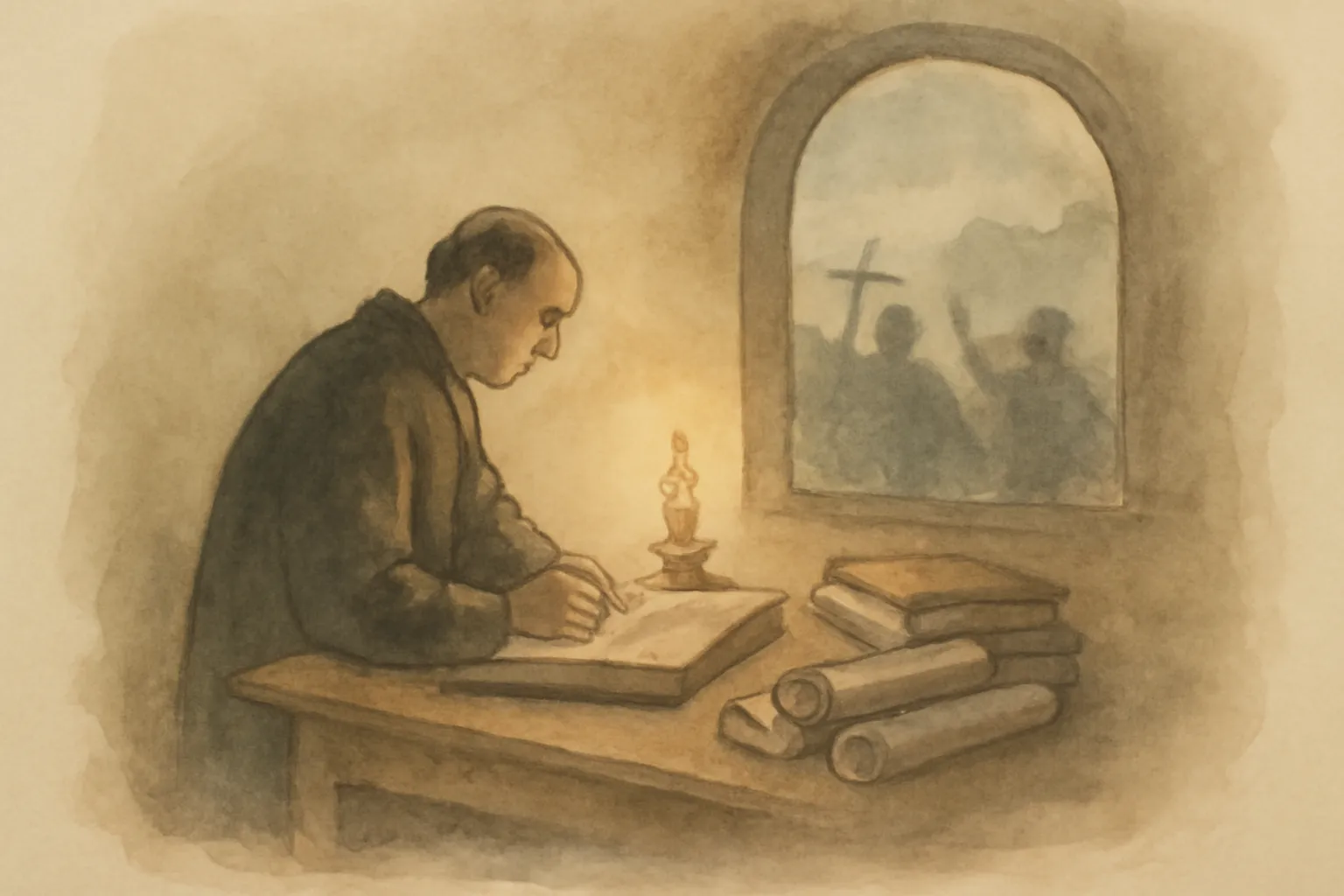
Erasmus entered the monastery of Steyn in 1488, a decision that would significantly shape much of his early adult life. Initially, his monastic life provided him with the… Read moreErasmus entered the monastery of Steyn in 1488, a decision that would significantly shape much of his early adult life. Initially, his monastic life provided him with the structure and intellectual stimulation necessary for his studies; however, he soon became disillusioned with the cloistered existence that seemed to stifle his intellectual curiosity. His letters from this period reveal a deep-seated aversion to monastic life, which he would later criticize in his writings. Nevertheless, the friendships he forged with fellow monks fostered an environment of intellectual exchange, allowing him to explore Latin poetry and classical texts. Through the lens of his later regrets, Erasmus reflected on the constraints of monastic life as both formative and frustrating. This tension between institutional expectations and personal aspirations ultimately propelled him toward a life of broader intellectual engagement and reform, as he sought to reconcile his longing for freedom with his commitment to scholarship. Show less
Read the full text — free
About the author
Read Johan Huizinga's work free on Lumina — the complete text plus an 8-minute summary and key ideas, no account needed