1.History as Lived Experience
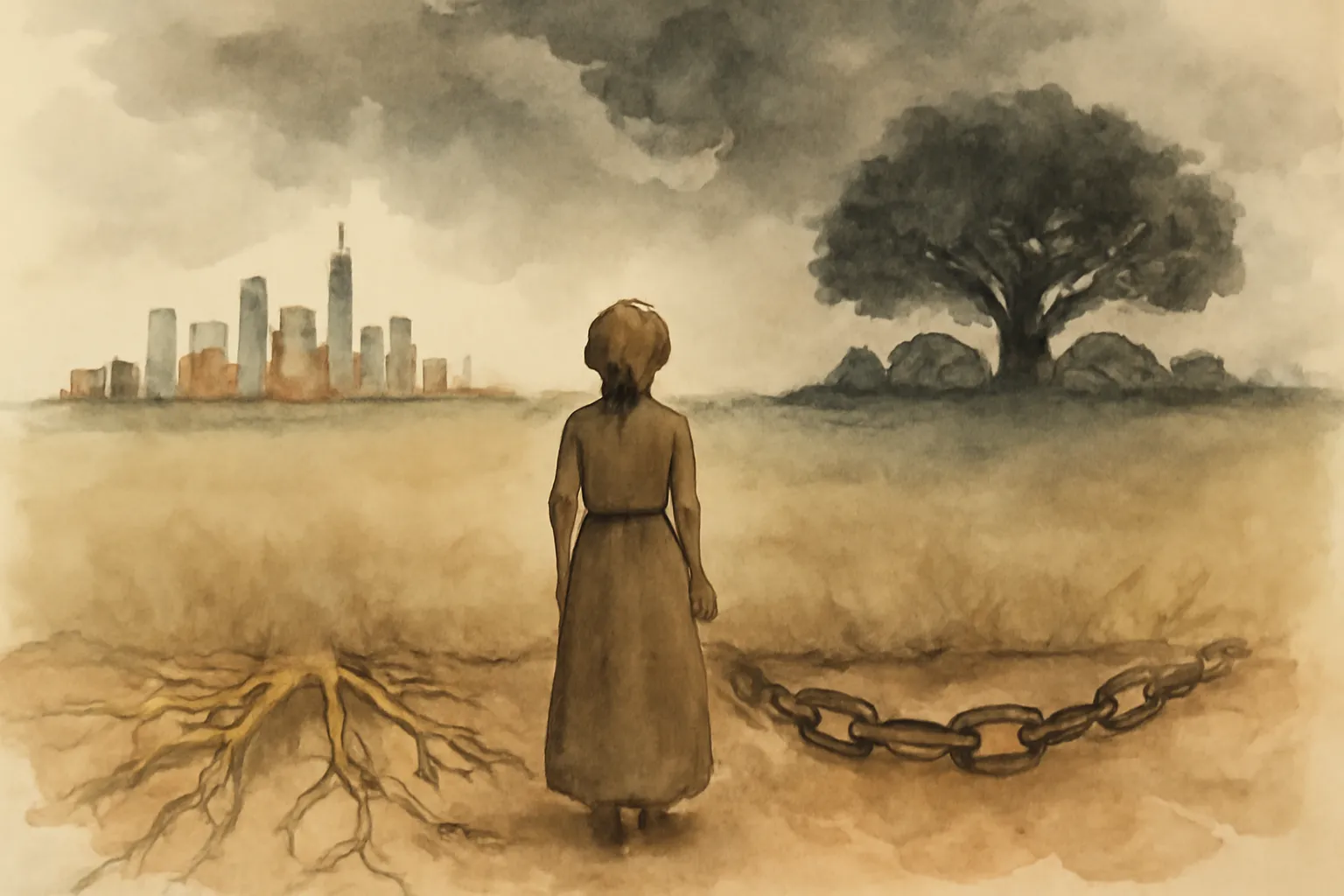
Kindred forces its protagonist, Dana, and by extension the reader, to move beyond abstract knowledge of slavery into direct, visceral experience. The time travel device is not a gimmick, but a way to collapse the distance between past and present, making the horrors of slavery immediate and personal. Dana’s repeated journeys highlight how easy it is to intellectualize history until one is forced to live it, challenging readers to consider their own relationship to the past.
2.Power, Survival, and Complicity
The novel examines the complex power dynamics of slavery, not only between enslaved people and slaveholders, but also among the enslaved themselves and between Dana and Rufus. Dana must navigate impossible choices to survive, sometimes participating in systems she abhors. Butler shows how survival under oppression can require moral compromises, blurring the lines between victim and collaborator, and forcing readers to question easy judgments about historical actors.
3.Race, Identity, and Ancestry
Dana’s connection to Rufus is rooted in ancestry—she must ensure his survival to secure her own existence. This literal link to her lineage compels her to confront the complicated, often violent intersections of Black and white identities in American history. Butler uses Dana’s modern sensibilities to highlight the ongoing impact of slavery on personal and collective identity, raising questions about heritage, trauma, and what we inherit from the past.
4.The Limits of Agency
Despite her knowledge and skills from the twentieth century, Dana is repeatedly stripped of agency in the antebellum South. Kindred explores how social structures and violence can limit even the most resourceful individuals, emphasizing the overwhelming power of systemic oppression. The novel asks what resistance looks like when choices are constrained, and how people preserve their sense of self under dehumanizing conditions.
5.Interracial Relationships and Empathy
Through Dana’s marriage to Kevin, a white man who also travels back in time, Butler interrogates the complexities of interracial relationships, both past and present. Their experiences in the past test their bond and highlight the ways in which empathy can be challenged by privilege, fear, and historical realities. The novel uses their relationship as a lens to examine how love, understanding, and solidarity are negotiated across racial lines.
6.Memory, Trauma, and the Present
Kindred suggests that the legacy of slavery is not confined to the past but continues to shape the present. Dana’s physical and psychological scars are a metaphor for generational trauma, and the novel insists on the necessity of remembering and confronting history, no matter how painful. Butler’s narrative warns against forgetting, arguing that true understanding—and healing—require facing the past honestly.