Fiction · Slaves · African American women
Kindred by Octavia E. Butler — Summary, Key Ideas & Quotes
1979287 pages✦ 3-min Big ideas★ 4.4 (48)
Rate it
Dana, a modern black woman, is celebrating her twenty-sixth birthday with her new husband when she is snatched abruptly from her home in California and transported to the antebellum South. Rufus, the white son of a plantation owner, is drowning, and Dana has been summoned to save him. Dana is drawn back repeatedly through time to the slave quarters, and each time the stay grows longer, more arduous, and more dangerous until it is uncertain whether or not Dana’s life will end, long before it has a chance to begin.
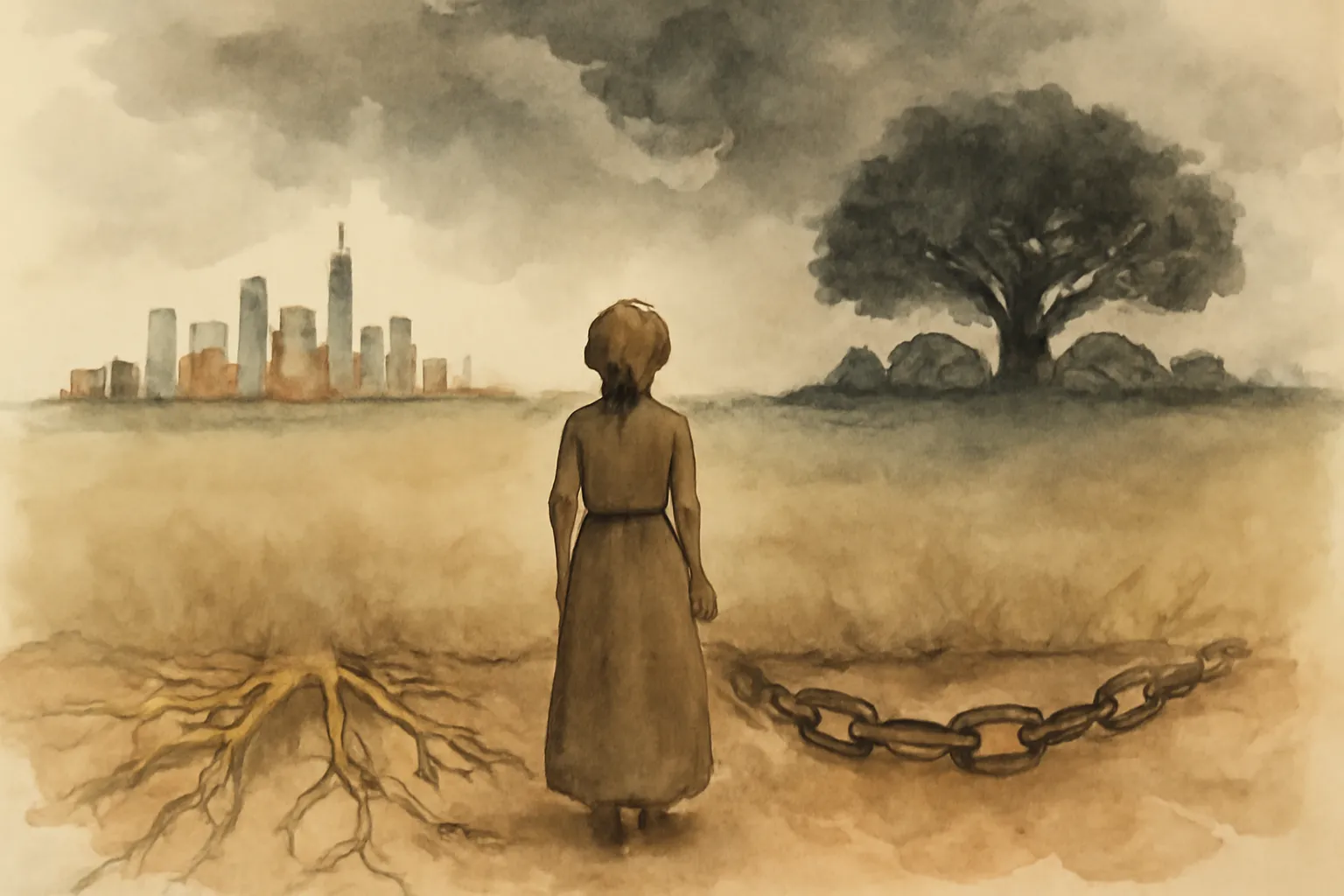
Kindred forces its protagonist, Dana, and by extension the reader, to move beyond abstract knowledge of slavery into direct, visceral experience. The time travel device is not a gimmick, but a way to collapse the distance between past and present, making the horrors of slavery immediate and personal. Dana’s repeated journeys highlight how easy it is to intellectualize history until one is forced to live it, challenging readers to consider their own relationship to the past.
The novel examines the complex power dynamics of slavery, not only between enslaved people and slaveholders, but also among the enslaved themselves and between Dana and Rufus. Dana must navigate impossible choices to survive, sometimes participating in systems she abhors. Butler shows how survival under oppression can require moral compromises, blurring the lines between victim and collaborator, and forcing readers to question easy judgments about historical actors.
“I never realized how easily people could be trained to accept slavery.”
“Rufus’s time was a sharper, stronger reality.”
“The ease. Us, the children… I never realized how easily people could be trained to accept slavery.”