1.The Struggle for Authenticity
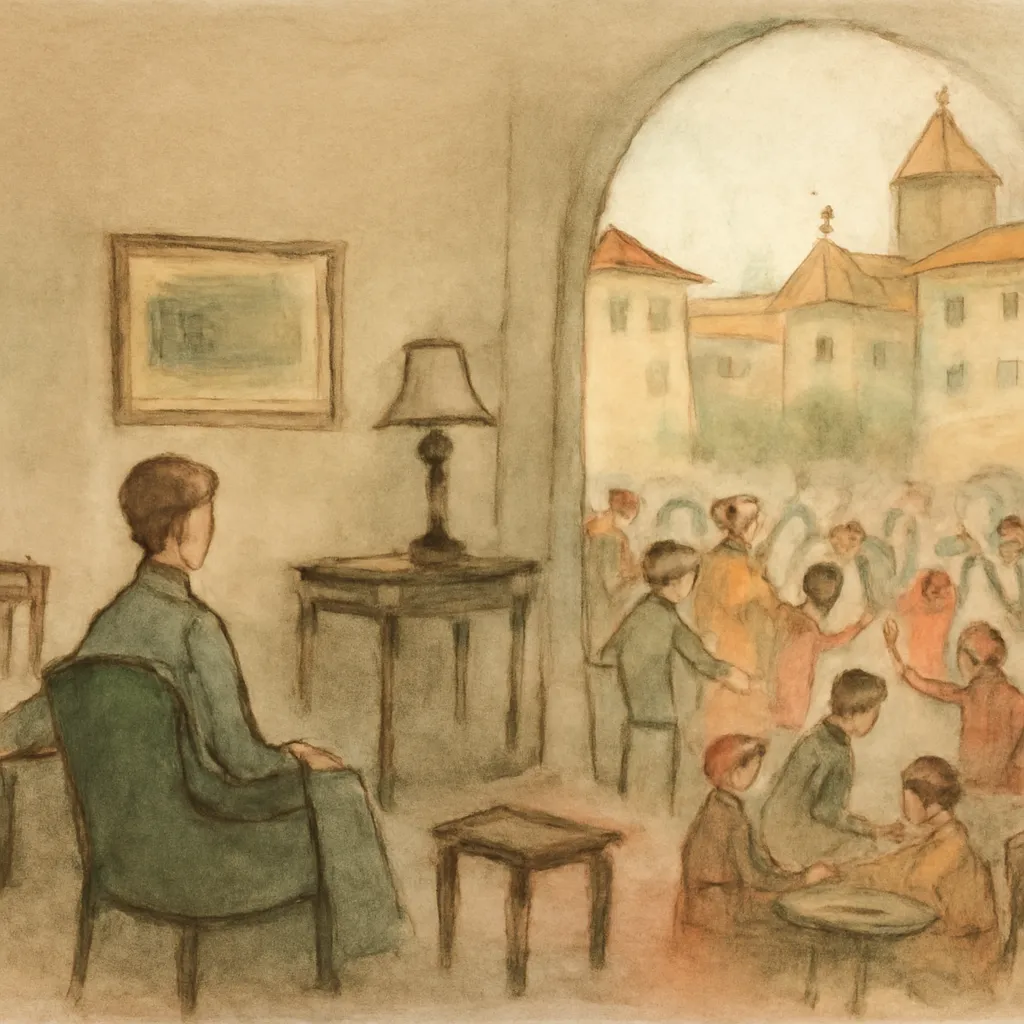
At the heart of Lucy Honeychurch's journey is her struggle for authenticity in a world that demands conformity. From the outset, Lucy is portrayed as a young woman caught between her desires and societal expectations. The oppressive presence of her cousin, Miss Bartlett, symbolizes the weight of social conventions that restrict Lucy's freedom to explore her own identity. The contrast between the oppressive English society and the liberating Italian landscape serves as a backdrop for Lucy's awakening. In Italy, she begins to question the roles that have been imposed upon her and yearns for a life filled with passion and spontaneity. This conflict highlights the broader theme of the individual's quest for self-discovery amidst societal constraints.
2.The Italian Escape
Forster uses the setting of Florence as a catalyst for Lucy's transformation. The vibrant culture, stunning landscapes, and the allure of the Arno River serve to awaken her senses and desires. In the Pension Bertolini, where Lucy and Miss Bartlett stay, the initial disappointment over their accommodation quickly gives way to a sense of possibility. The differences between the English travelers and the locals underscore the theme of cultural contrast. While the English characters cling to their social hierarchies and propriety, the Italians embody a more relaxed and passionate approach to life. This juxtaposition allows Lucy to experience moments of genuine connection and joy, setting the stage for her internal conflict when she returns to England.
3.Romantic Awakening and Repression
Lucy's romantic awakening is intricately tied to her encounters with George Emerson, a character who embodies the freedom and authenticity that Lucy craves. Their initial meeting is charged with tension, as George represents a departure from the conventional expectations of her engagement to Cecil Vyse. Forster masterfully portrays the contrasting dynamics of Lucy's relationships; with George, she experiences a sense of liberation that contrasts sharply with the suffocating nature of her engagement to Cecil. The pivotal moment by the river, where George kisses Lucy, symbolizes her awakening to her true desires. However, this moment also ignites her fears of societal judgment and familial disapproval. The struggle between her heart and her mind becomes a central theme, illustrating the complexities of love and the weight of social expectations.
4.The Role of Miss Bartlett
Miss Bartlett serves as both a protector and a hindrance to Lucy's journey. While she is ostensibly there to support Lucy, her controlling nature often stifles Lucy's freedom. Miss Bartlett's insistence on propriety and social decorum reflects the values of their social class, creating a tension that Lucy must navigate. Her character represents the societal pressures that women faced during the Edwardian era, as she embodies the ideals of a 'proper lady.' However, her well-intentioned guidance often leads to confusion and frustration for Lucy, who yearns for a different path. Forster uses Miss Bartlett's character to explore the complexities of female relationships and the ways in which societal expectations can distort genuine connections.
5.The Power of Music
Music emerges as a powerful motif in the novel, symbolizing the emotional depth and complexity of Lucy's character. Forster illustrates how music serves as an escape from the constraints of her daily life, providing Lucy with moments of clarity and inspiration. When she plays the piano, she transcends the limitations imposed by her social environment, tapping into a realm of pure emotion and creativity. This connection to music reflects her inner turmoil and desires, allowing her to express feelings that words cannot convey. The scenes where Lucy plays evoke a sense of longing and aspiration, highlighting the profound impact that art can have on one's identity and emotional landscape.
6.Contrasting Societal Norms
The novel effectively contrasts the rigid societal norms of England with the more liberal attitudes found in Italy. Forster paints a vivid picture of Edwardian society, where social standing and propriety dictate behavior and relationships. Characters like Cecil Vyse epitomize the upper class's obsession with appearances and social acceptance. In contrast, the Italian setting is characterized by a sense of freedom and openness, where individuals are encouraged to pursue their passions without the weight of societal judgment. This contrast serves to illuminate Lucy's internal conflict, as she grapples with the expectations of her family and society while yearning for the authentic experiences that Italy offers. Forster's critique of social conventions invites readers to reflect on the limitations imposed by societal norms and the courage required to break free from them.
7.The Journey Back to England
Lucy's return to England marks a pivotal moment in her journey, as she must confront the realities of her life and the choices she has made. The transition from the liberating atmosphere of Italy to the stifling confines of English society forces Lucy to reevaluate her desires and aspirations. The societal pressures she faces upon her return are palpable, as she navigates her engagement to Cecil and the expectations of her family. Forster skillfully depicts Lucy's internal struggle as she grapples with her feelings for George and the weight of her commitments. This journey back serves as a metaphor for the broader theme of self-discovery, as Lucy must reconcile her experiences in Italy with the expectations of her life in England.
8.The Symbolism of the Room with a View
The titular 'room with a view' symbolizes the aspirations and desires that Lucy grapples with throughout the novel. Initially, the room represents Lucy's confinement within the expectations of her society, as she is unable to see beyond the walls of her prescribed life. However, as she begins to awaken to her desires, the room transforms into a metaphor for possibility and new perspectives. The view over the Arno becomes a symbol of the life Lucy longs for—a life filled with love, freedom, and authenticity. Forster uses this symbolism to illustrate the contrast between the constraints of societal expectations and the expansive possibilities that come with embracing one's true self. By the end of the novel, Lucy's journey leads her to a new understanding of what it means to have a 'room with a view'—not just in a physical sense, but as a representation of her inner freedom and self-acceptance.
9.The Impact of Family Expectations
Family expectations play a crucial role in shaping Lucy's decisions and experiences throughout the novel. The pressure to conform to her family's ideals often compels Lucy to suppress her true desires in favor of social acceptance. Her mother, Mrs. Honeychurch, embodies the traditional values of their class, emphasizing the importance of propriety and social standing. Lucy's struggle to balance her own aspirations with her family's expectations highlights the broader theme of generational conflict and the limitations placed on women in Edwardian society. Forster poignantly illustrates how family dynamics can influence personal choices, often leading to internal conflict and the suppression of one's true self. Ultimately, Lucy's journey is as much about breaking free from familial constraints as it is about pursuing romantic love.
10.The Resolution of Love and Identity
By the novel's conclusion, Lucy's journey culminates in a resolution that reflects her growth and newfound understanding of love and identity. Her decision to embrace her feelings for George and reject the constraints of her engagement to Cecil signifies a profound transformation. Forster emphasizes that true love is not merely a societal construct but a deeply personal experience that requires courage and authenticity. Lucy's choice to pursue a relationship with George signifies her commitment to living a life true to herself, rather than one dictated by societal expectations. This resolution underscores the novel's central theme: the importance of self-discovery and the courage to pursue one's desires in the face of societal pressures. Forster's exploration of love, identity, and the human experience resonates deeply, inviting readers to reflect on their own journeys toward authenticity.