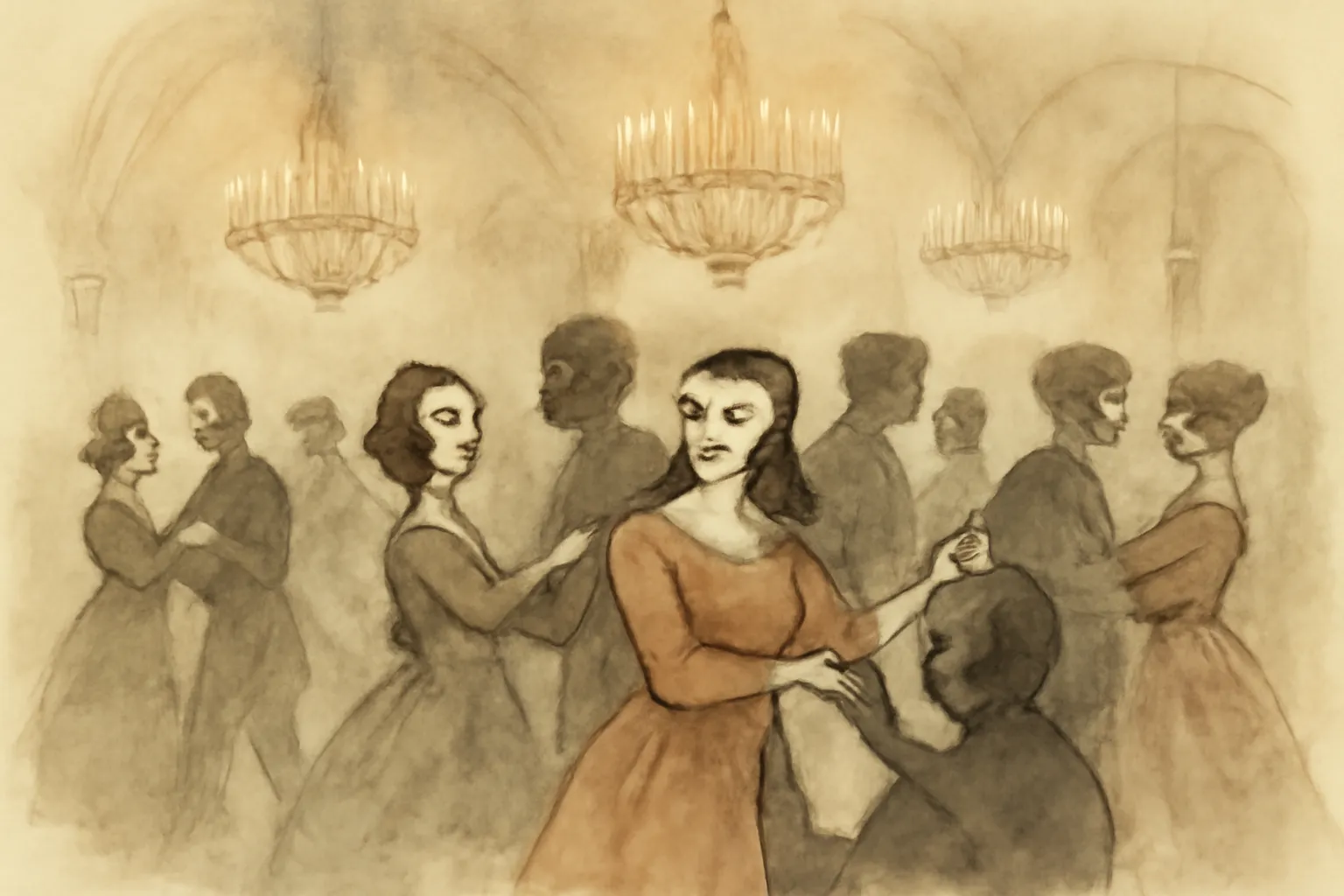
1.The Facade of Society
At the heart of Vanity Fair lies the notion that society is a grand performance, where individuals wear masks to navigate the complexities of social interactions. Thackeray introduces readers to the idea that much of what is presented as reality is merely a facade. The bustling scenes at the fair, filled with 'eating and drinking, making love and jilting,' illustrate the chaos and superficiality that define the social milieu. Characters like Rebecca Sharp expertly manipulate this environment, using charm and cunning to achieve their goals. This theme of performance resonates throughout the narrative, as characters constantly vie for attention and approval while concealing their true selves behind layers of artifice.
2.The Duality of Rebecca Sharp
Rebecca Sharp stands out as one of the most compelling characters in Vanity Fair, embodying both ambition and moral ambiguity. Orphaned and determined to ascend the social ladder, Rebecca employs her wit and beauty to manipulate those around her. Her interactions with Amelia Sedley reveal a complex friendship tinged with jealousy and rivalry. While Amelia represents innocence and kindness, Rebecca's ruthless ambition often places her at odds with societal norms. Thackeray intricately portrays Rebecca's internal struggles, showcasing how her desire for status conflicts with her need for genuine human connection. This duality makes her a fascinating character, prompting readers to question the morality of her actions even as they root for her success.
3.The Illusion of Love
In Vanity Fair, love is frequently depicted as an illusion, often entangled with social ambition and material desires. The relationships between characters like George Osborne and Amelia Sedley are fraught with complexity, revealing how societal expectations shape their interactions. George's initial affection for Amelia is clouded by his desire for status, leading to a tumultuous courtship marked by betrayal and misunderstanding. Similarly, Rebecca's manipulation of her relationships, particularly with the wealthy Rawdon Crawley, underscores the transactional nature of love in this society. Thackeray's exploration of love as a commodified experience challenges traditional romantic notions, highlighting how characters often prioritize social advancement over genuine emotional connections.
4.Social Class and Ambition
Thackeray's portrayal of social class in Vanity Fair serves as a critical lens through which the characters' motivations and actions are examined. The novel illustrates the rigid class structures of 19th-century England, where one's birth and wealth dictate social standing. Characters like Jos Sedley, who comes from a merchant background, struggle to gain acceptance among the aristocracy, while those like Sir Pitt Crawley exploit their titles for personal gain. The relentless pursuit of wealth and status drives characters to engage in morally questionable behavior, revealing the lengths individuals will go to secure their place in society. Thackeray deftly critiques this ambition, suggesting that the desire for social validation often leads to superficiality and emptiness.
5.The Role of Women
Vanity Fair offers a nuanced exploration of women's roles in a patriarchal society, highlighting their limited agency and the societal pressures they face. Characters like Amelia Sedley embody the ideal of feminine virtue, yet their lives are largely defined by the men around them. In contrast, Rebecca Sharp challenges these norms through her cunning and ambition, seeking to carve out her own identity in a world that often marginalizes women. Thackeray's portrayal of female relationships, particularly the friendship between Amelia and Rebecca, underscores the complexities of female competition and solidarity. The novel ultimately raises questions about women's empowerment and the constraints imposed by societal expectations, making it a progressive commentary for its time.
6.Friendship and Betrayal
The themes of friendship and betrayal run deep in Vanity Fair, as Thackeray illustrates how personal relationships are often tainted by ambition and jealousy. The dynamic between Rebecca and Amelia serves as a poignant example of this tension. While they initially bond over their shared experiences, Rebecca's ambition leads her to betray Amelia in pursuit of her own goals. This betrayal not only damages their friendship but also underscores the precarious nature of relationships in a competitive society. Thackeray's exploration of these themes reflects the broader human experience, illustrating how personal connections can be both a source of strength and a catalyst for conflict.
7.The Consequences of Deception
Deception is a recurring motif in Vanity Fair, with characters frequently engaging in lies and manipulation to achieve their desires. Thackeray examines the consequences of these deceptions, revealing how they ultimately lead to personal and social ruin. For example, George Osborne's dishonesty regarding his feelings for both Amelia and Rebecca results in a web of misunderstandings and heartache. Similarly, Rebecca's manipulative tactics create a façade of success that crumbles under scrutiny, exposing her vulnerabilities. Thackeray's message is clear: the pursuit of personal gain through deception often leads to isolation and despair, emphasizing the importance of authenticity in human relationships.
8.The Satirical Lens
Thackeray employs a satirical lens throughout Vanity Fair, using humor and irony to critique the moral failings of society. His sharp observations illuminate the absurdities of social conventions and the shallow pursuits of wealth and status. The author's use of a narrator who frequently breaks the fourth wall serves to engage readers directly, inviting them to reflect on the characters' actions and the broader societal implications. This satirical approach not only entertains but also challenges readers to confront their own values and the societal norms that govern behavior. Thackeray's wit and insight make Vanity Fair a compelling commentary on the human condition, showcasing the enduring relevance of its themes.
9.The Cycle of Wealth and Ruin
The narrative of Vanity Fair illustrates the cyclical nature of wealth and ruin, as characters rise and fall in their social standings throughout the story. Thackeray adeptly portrays the fleeting nature of fortune, showcasing how characters like Jos Sedley experience both the heights of wealth and the depths of financial despair. The novel suggests that in the pursuit of material success, individuals often overlook the value of integrity and genuine human connection, leading to their eventual downfall. This theme resonates with the reader, emphasizing the idea that true happiness cannot be found in wealth alone. Thackeray's exploration of this cycle serves as a cautionary tale, reminding readers of the fragility of fortune and the importance of maintaining one's principles.