

The scheming, irresistible Becky Sharp claws her way up English society — a sweeping, satirical “novel without a hero.”
Read full overviewShow less›
In Vanity Fair, William Makepeace Thackeray presents a satirical panorama of early 19th-century British society, exploring themes of ambition, hypocrisy, and the quest for social standing. Through the lives of characters like the cunning Rebecca Sharp and the naive Amelia Sedley, the novel delves into the complexities of human relationships, the nature of friendship, and the often ruthless pursuit of wealth. Readers will encounter a rich tapestry of social commentary that critiques the superficiality of the upper classes while revealing the deeper human emotions that drive ambition and desire. Thackeray's keen observations and biting wit provide an engaging exploration of the moral landscape of his time, making Vanity Fair a timeless reflection on the human condition.
Vanity Fair stands as a timeless exploration of the human experience, revealing the complexities of ambition, love, and societal expectations. Thackeray's incisive commentary on the moral ambiguities of his time resonates with contemporary readers, encouraging reflection on the nature of authenticity in personal relationships. The novel's rich tapestry of characters serves to illustrate the enduring struggles individuals face in their pursuit of happiness and status. Ultimately, Vanity Fair challenges us to examine our own values and the societal constructs that shape our lives, making it a vital work in the canon of English literature.
- 1The Facade of Society
- 2The Duality of Rebecca Sharp
- 3The Illusion of Love
- 4Social Class and Ambition
- 5The Role of Women
A glimpse inside

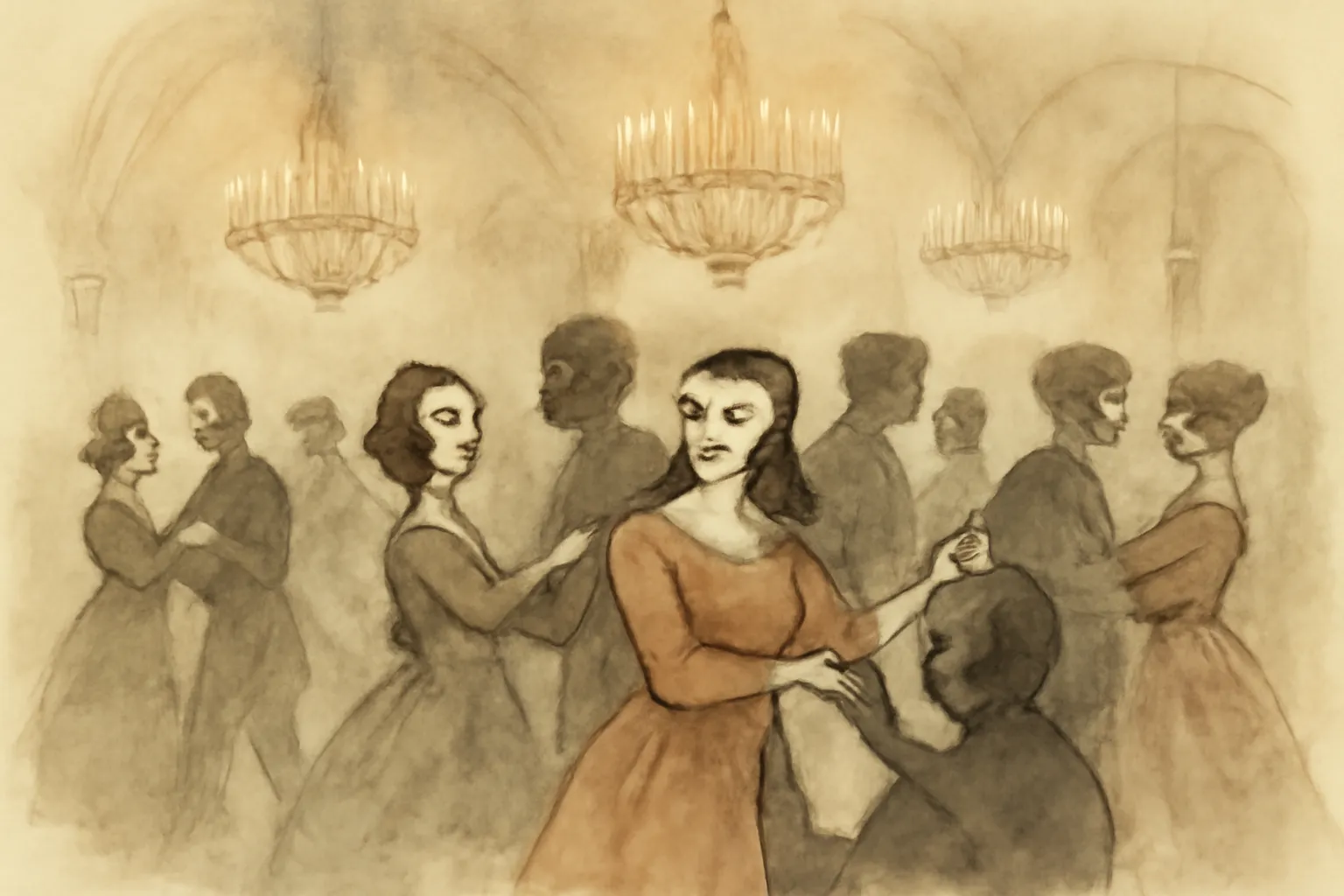
At the heart of Vanity Fair lies the notion that society is a grand performance, where individuals wear masks to navigate the complexities of social interactions. Read moreAt the heart of Vanity Fair lies the notion that society is a grand performance, where individuals wear masks to navigate the complexities of social interactions. Thackeray introduces readers to the idea that much of what is presented as reality is merely a facade. The bustling scenes at the fair, filled with 'eating and drinking, making love and jilting,' illustrate the chaos and superficiality that define the social milieu. Characters like Rebecca Sharp expertly manipulate this environment, using charm and cunning to achieve their goals. This theme of performance resonates throughout the narrative, as characters constantly vie for attention and approval while concealing their true selves behind layers of artifice. Show less
Rebecca Sharp stands out as one of the most compelling characters in Vanity Fair, embodying both ambition and moral ambiguity. Read moreRebecca Sharp stands out as one of the most compelling characters in Vanity Fair, embodying both ambition and moral ambiguity. Orphaned and determined to ascend the social ladder, Rebecca employs her wit and beauty to manipulate those around her. Her interactions with Amelia Sedley reveal a complex friendship tinged with jealousy and rivalry. While Amelia represents innocence and kindness, Rebecca's ruthless ambition often places her at odds with societal norms. Thackeray intricately portrays Rebecca's internal struggles, showcasing how her desire for status conflicts with her need for genuine human connection. This duality makes her a fascinating character, prompting readers to question the morality of her actions even as they root for her success. Show less
Read the full text — free
About the author
Read William Makepeace Thackeray's work free on Lumina — the complete text plus an 8-minute summary and key ideas, no account needed.
Frequently asked
Worlds to get lost in
Take Lumina everywhere
Read offline, listen to AI summaries, speed-read, and sync your progress across devices — free on iPhone.
Download for iPhone