
A poignant exploration of love and loss against the backdrop of war, revealing the fragility of human connection amidst chaos
Read full overviewShow less›
Ernest Hemingway's 'A Farewell to Arms' captures the harrowing experiences of a soldier during World War I, intertwining themes of love, suffering, and the search for meaning in a world torn apart by conflict. Through the eyes of Lieutenant Frederic Henry, readers are immersed in the stark realities of war, the camaraderie among soldiers, and the profound relationship he shares with Catherine Barkley, a British nurse. This narrative is not just a tale of battle; it is a deep dive into the emotional landscapes of its characters, showcasing their resilience and vulnerability. As the story unfolds, we witness the impact of war not only on the body but also on the spirit, making it a timeless reflection on the human condition in times of crisis.
'A Farewell to Arms' is a timeless exploration of love, war, and the human spirit. Hemingway's poignant narrative captures the complexities of human relationships amidst the chaos of conflict, revealing the fragility of life and the enduring search for meaning. Through the lens of Frederic Henry and Catherine Barkley, readers are invited to reflect on the impact of war on identity, the nature of love, and the inevitability of loss. Ultimately, the novel serves as a powerful reminder of the resilience of the human spirit, even in the face of overwhelming adversity, making it a poignant and relevant work for generations to come.
Ratings at a glance
- 1The Setting: War as a Character
- 2Camaraderie and Isolation
- 3The Love Story: A Refuge from War
- 4The Brutality of War
- 5Loss and Grief: The Personal Cost of War
Notable quotes
“In the late summer of that year we lived in a house in a village that looked across the river and the plain to the mountains.”
“The next year there were many victories.”
“The battery in the next garden woke me in the morning and I saw the sun coming through the window and got out of the bed.”
A glimpse inside

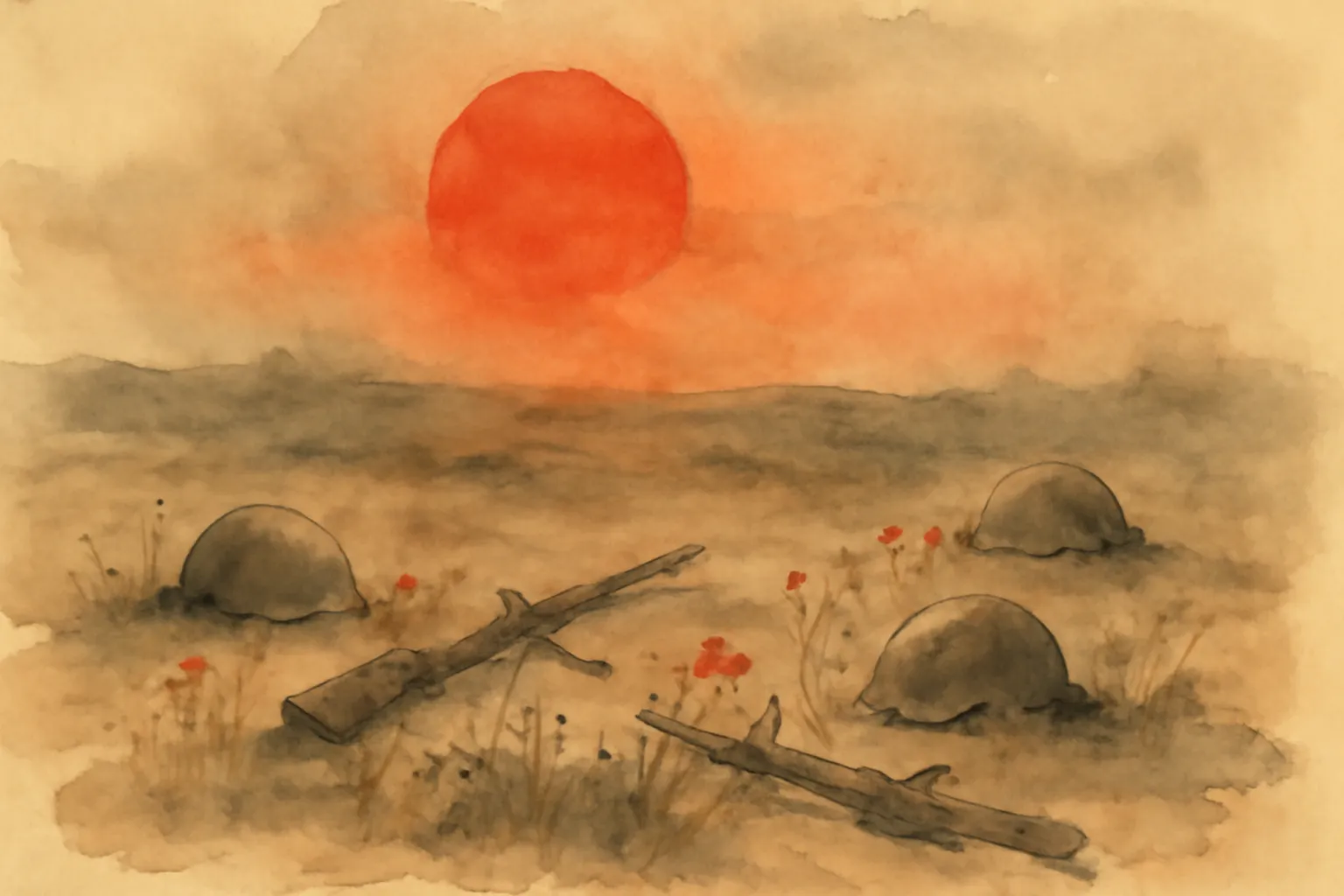
The backdrop of World War I is not merely a setting but an active participant in the narrative. The descriptions of the Italian landscape, with its rich crops and majesti… Read moreThe backdrop of World War I is not merely a setting but an active participant in the narrative. The descriptions of the Italian landscape, with its rich crops and majestic mountains, contrast sharply with the devastation brought by war. This duality is emphasized through vivid imagery, as Hemingway describes the 'clear and swiftly moving' river juxtaposed against the 'dust' raised by troop movements. The sounds of marching troops and the sight of artillery flashes illuminate the omnipresence of war. This environment shapes the characters' experiences, influencing their thoughts and actions. The beauty of nature exists alongside the brutality of conflict, symbolizing the tension between peace and chaos. The landscape, rich with life, becomes a haunting reminder of what is at stake, making the war's impact feel more immediate and personal. Through this lens, readers are invited to reflect on how war transforms not just the physical world but also the emotional landscape of human lives, breeding despair and hope in equal measure. Show less
Frederic Henry's relationships with fellow soldiers reveal the complexities of camaraderie during wartime. These relationships are layered with the tension between kinshi… Read moreFrederic Henry's relationships with fellow soldiers reveal the complexities of camaraderie during wartime. These relationships are layered with the tension between kinship and alienation. In the trenches, soldiers forge bonds through shared suffering, forming a brotherhood that transcends the chaos around them. Frederic's interactions with characters like Rinaldi and the men in his unit highlight the loyalty and support that emerge in the face of adversity. However, this camaraderie is often juxtaposed with feelings of isolation, as Frederic grapples with the emotional toll of war. As he witnesses the horrors of battle and the deaths of friends, he finds it increasingly difficult to connect with those who have not shared the same experiences. This isolation becomes a burden, illustrating how trauma can fracture connections and create a sense of alienation even among those who are physically close. Hemingway masterfully captures this duality, showing that while war can foster deep connections, it also has the potential to breed profound loneliness. Show less
Read the full text — free
About the author
Read Ernest Hemingway's work free on Lumina — the complete text plus an 8-minute summary and key ideas, no account needed