Fiction · Short Reads
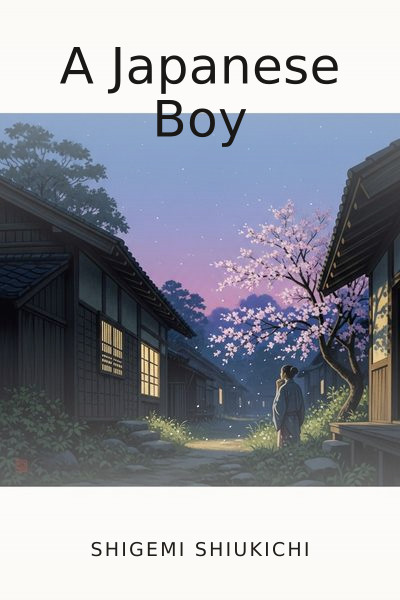
A Japanese Boy by Shigemi Shiukichi — Summary, Key Ideas & Full Text
105 pages14 chapters2h 7m read1h 30m speed read✦ 8-min Big ideasFree · no account
Rate it
Discover the intricate tapestry of childhood in Japan through the eyes of a boy growing up in a small coastal town
A Japanese Boy offers a vivid glimpse into the life of a young boy in Imabari, Japan, capturing the essence of childhood in a culture steeped in tradition and simplicity. Through a series of heartfelt recollections, the reader is transported to a time when education was informal, family ties were strong, and the rhythms of life were closely tied to the natural world. The book intricately weaves together the experiences of school, play, and family life, providing a rich context for understanding Japanese customs and the values that shaped the author's formative years. It invites readers to reflect on their own childhoods while appreciating the unique cultural landscape of Japan. The narrative is both personal and universal, resonating with anyone who has ever navigated the complexities of growing up.
A Japanese Boy presents a heartfelt exploration of childhood through the lens of Japanese culture, offering insights into the values, traditions, and experiences that shape identity. The narrative's vivid imagery and rich details bring to life the simple joys and challenges of growing up in Imabari, allowing readers to connect with their own childhoods. By weaving together themes of education, family, play, and spirituality, the author creates a tapestry of memories that resonates across cultures and generations. Ultimately, this journey through the past serves as a reminder of the universal nature of childhood, inviting us all to reflect on the experiences that have shaped our lives.
“I remember seeing a young man of my acquaintance perform algebraic calculations, of which we had some knowledge before the influx of Western learning.”
“When just from school our faces and hands were as black as demons' with ink.”
“The water when brought in from the well is emptied into a deep heavy earthen reservoir of reddish hue standing near the sink.”
Read Shigemi Shiukichi's work free on Lumina — the complete text plus an 8-minute summary and key ideas, no account needed