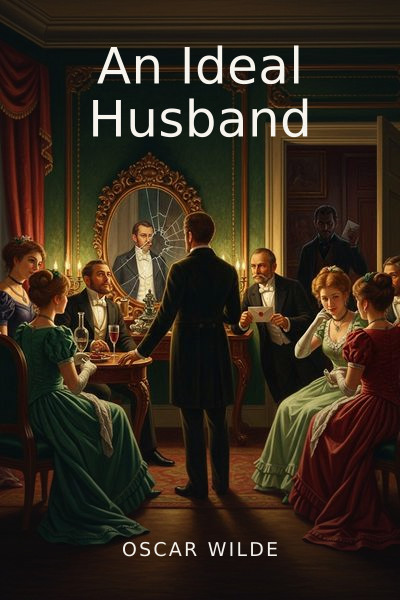

Oscar Wilde's 'An Ideal Husband' unravels the intricate dance of love, morality, and societal expectations in Victorian England
Read full overviewShow less›
Set against the lavish backdrop of London society, 'An Ideal Husband' is a masterful comedy that explores the ethical dilemmas faced by its characters as they navigate a world rife with hypocrisy and scandal. At the center of the drama is Sir Robert Chiltern, a prominent politician whose rise to success is threatened by a dark secret from his past, brought to light by the cunning Mrs. Cheveley. Wilde’s sharp wit and incisive commentary on social norms expose the fragility of reputation and the complexities of human relationships. Through a series of witty exchanges and profound revelations, the characters grapple with their identities, the expectations placed upon them, and the consequences of their actions. Readers will gain insights into the moral ambiguity of human nature, the evolving roles of women, and the pervasive influence of wealth and power in shaping one's destiny.
Oscar Wilde's 'An Ideal Husband' is a compelling exploration of love, morality, and the societal expectations that shape human behavior. Through its intricate characters and witty dialogue, the play challenges us to confront the masks we wear in public and the ethical compromises we make in pursuit of success. Wilde's examination of friendship, loyalty, and the influence of scandal resonates with audiences, revealing the complexities of relationships in a world filled with hypocrisy. Ultimately, the play serves as a poignant reminder that true integrity is not defined by perfection, but by the courage to confront our flaws and strive for authenticity in a society that often prioritizes appearances over truth.
- 1Public Persona vs. Private Reality
- 2Women’s Agency and Societal Expectations
- 3The Nature of Friendship and Loyalty
- 4The Consequences of Scandal
- 5Moral Compromise and Redemption
Notable quotes
“Ah! I hate being educated!”
“How very trivial of him!”
“My poor Olivia! We have married perfect husbands, and we are well punished for it.”
A glimpse inside

The central conflict of 'An Ideal Husband' revolves around the dichotomy between public image and private truth. Sir Robert Chiltern embodies the ideal image of a success… Read moreThe central conflict of 'An Ideal Husband' revolves around the dichotomy between public image and private truth. Sir Robert Chiltern embodies the ideal image of a successful politician, respected for his integrity and accomplishments. However, his ascent is built on a morally questionable act from his past—accepting a bribe from a foreign baron. This hidden truth exemplifies the societal expectation that individuals must maintain a flawless facade in public life. Lady Chiltern, his wife, idolizes him as the perfect husband, unaware of the secret that jeopardizes their happiness. Wilde uses this juxtaposition to illustrate how societal pressures compel individuals to conceal their flaws and maintain an idealized image. The play raises crucial questions regarding authenticity and the sacrifices made to uphold one’s reputation, prompting audiences to reflect on the cost of societal acceptance and the extent to which they too might hide their truths. Show less
Wilde provides a nuanced exploration of women's roles through the characters of Lady Chiltern and Mrs. Cheveley. Lady Chiltern represents the Victorian ideal of the devot… Read moreWilde provides a nuanced exploration of women's roles through the characters of Lady Chiltern and Mrs. Cheveley. Lady Chiltern represents the Victorian ideal of the devoted spouse, embodying loyalty and moral rectitude. She believes in her husband's unwavering integrity and expects him to reflect the same standards. However, her rigid adherence to these ideals leads to conflict when confronted with the reality of his past. In contrast, Mrs. Cheveley serves as a foil to Lady Chiltern, exhibiting a more modern approach to femininity. She is unapologetically ambitious and manipulative, leveraging her knowledge of Sir Robert's secret to gain power and influence. Through these two characters, Wilde critiques the limitations placed on women in Victorian society while showcasing their ability to wield power, albeit through unconventional means. This dynamic invites audiences to consider the evolving roles of women, the complexity of their ambitions, and the moral compromises they face in a patriarchal society. Show less
Read the full text — free
About the author
Oscar Wilde has 5 works free to read on Lumina, including De Profundis, Lady Windermere's Fan, The Importance of Being Earnest
All 5 books by Oscar Wilde →