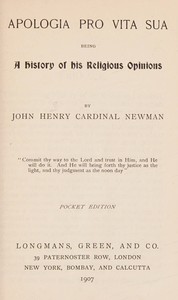

In a profound exploration of faith, John Henry Newman articulates his tumultuous journey from Anglicanism to Catholicism, revealing the personal and theological struggles that shaped his beliefs
Read full overviewShow less›
John Henry Newman's *Apologia pro vita sua* serves as a deeply personal reflection on the nature of belief, the challenges of faith, and his tumultuous journey from Anglicanism to Catholicism. Written in a time of personal and public scrutiny, Newman seeks to clarify the motivations behind his conversion, addressing the misunderstandings and criticisms he faced along the way. Through a detailed examination of his spiritual evolution, the text offers readers insights into the realities of reconciling personal conviction with societal expectations. Newman's narrative is not merely a personal testament but a broader commentary on religious truth and the quest for authentic belief. This exploration invites readers to reflect on their own paths of faith and the often tumultuous journey that accompanies profound spiritual change.
John Henry Newman's *Apologia pro vita sua* is a profound exploration of faith, identity, and the complexities of belief. Through his detailed narrative, Newman not only clarifies his own spiritual journey but also invites readers to reflect on their own paths. His struggles with doubt, the transformative power of conversion, and the quest for authentic belief resonate deeply in a world where faith is often challenged. Newman's insights into the nature of religious truth encourage a more nuanced understanding of belief, one that embraces complexity rather than shying away from it. Ultimately, his story serves as a reminder of the importance of personal conviction and the courage required to navigate the often tumultuous waters of faith.
Ratings at a glance
- 1The Burden of Personal Reflection
- 2The Role of Early Influences
- 3The Anglican Church and Its Challenges
- 4The Process of Conversion
- 5Intellectual and Emotional Struggles
Notable quotes
“Commit thy way to the Lord and trust in Him, and He will do it.”
“A death-bed has scarcely a history; it is a tedious decline, with seasons of rallying and seasons of falling back.”
“I have been in perfect peace and contentment; I never have had one doubt.”
A glimpse inside

Newman acknowledges the challenge of writing about his own life and beliefs, stating, 'the words, "Secretum meum mihi," keep ringing in my ears.' This highlights the tens… Read moreNewman acknowledges the challenge of writing about his own life and beliefs, stating, 'the words, "Secretum meum mihi," keep ringing in my ears.' This highlights the tension between the desire for privacy and the necessity of public explanation, especially when faced with accusations and misunderstandings. He grapples with the implications of sharing his inner thoughts, recognizing that the act of self-disclosure can be both a burden and a means of clarifying his journey. The process of reflection becomes a way for him to articulate the complexities of faith and the personal struggles he encountered, ultimately serving as a cathartic release. By confronting his past and the motivations behind his beliefs, Newman opens up a dialogue about the role of personal experience in shaping one's spiritual path. This interplay of public and private life reveals the intricacies of faith, as Newman's personal reflections illuminate the broader implications of his conversion. Show less
Newman reflects on his childhood and early religious experiences, illustrating how they shaped his later convictions. He describes his delight in reading the Bible and th… Read moreNewman reflects on his childhood and early religious experiences, illustrating how they shaped his later convictions. He describes his delight in reading the Bible and the formative impact of his studies, stating, 'I had no formed religious convictions till I was fifteen.' This admission underscores the gradual nature of his spiritual development and the importance of formative experiences in cultivating faith. He recalls moments of imaginative exploration, expressing a desire for deeper understanding and connection with the divine, as evidenced by his wish that 'the Arabian Tales were true.' Such reflections reveal how early influences, both literary and educational, played a crucial role in nurturing his spiritual curiosity and setting the stage for his eventual conversion. The formative nature of his upbringing illustrates the significance of guidance and education in one's faith journey, showing how early impressions can leave lasting marks on our beliefs and values. Show less
Read the full text — free
About the author
Read John Henry Newman's work free on Lumina — the complete text plus an 8-minute summary and key ideas, no account needed