

Explore the rich tapestry of book culture in the Middle Ages, where monks became the unsung heroes of literary preservation
Read full overviewShow less›
In 'Bibliomania in the Middle Ages', F. Somner Merryweather unveils the often-overlooked world of book collecting and literary passion that thrived within monastic communities from the 7th to the 15th centuries. This work challenges the long-held perception of the Middle Ages as a period of ignorance, revealing instead a vibrant culture of bibliophiles whose dedication to literature ensured the survival of countless texts. Through a blend of historical anecdotes and detailed examinations of monastic libraries, Merryweather illustrates how monks not only preserved the literary treasures of ancient civilizations but also fostered a unique bibliomania that would influence future generations. Readers will gain insight into the lives of these devoted scribes and collectors, discovering how their passions shaped the very foundations of Western literary heritage.
In 'Bibliomania in the Middle Ages', F. Somner Merryweather illuminates the rich and often unrecognized world of medieval bibliophilia, revealing the profound impact that monastic communities had on the preservation of literature. By challenging traditional narratives of ignorance during this period, Merryweather highlights the dedication of monks who devoted their lives to the collection and transcription of texts. Their efforts not only safeguarded the literary treasures of the past but also fostered a culture of learning that would shape the future of Western scholarship. Understanding this legacy invites readers to reflect on the importance of books in our own lives and the enduring power of literature to connect us across time and space.
- 1The Origins of Bibliomania
- 2Redefining the Dark Ages
- 3The Role of Monastic Libraries
- 4The Monastic Scriptorium
- 5Book Collecting as a Spiritual Pursuit
Notable quotes
“It matters little, however, since there is no attempt at chronological arrangement.”
“I have endeavored to bring these facts together—to connect and string them into a continuous narrative.”
“The pride and glory of a monastery was a well-stored library, which was committed to the care of the armarian.”
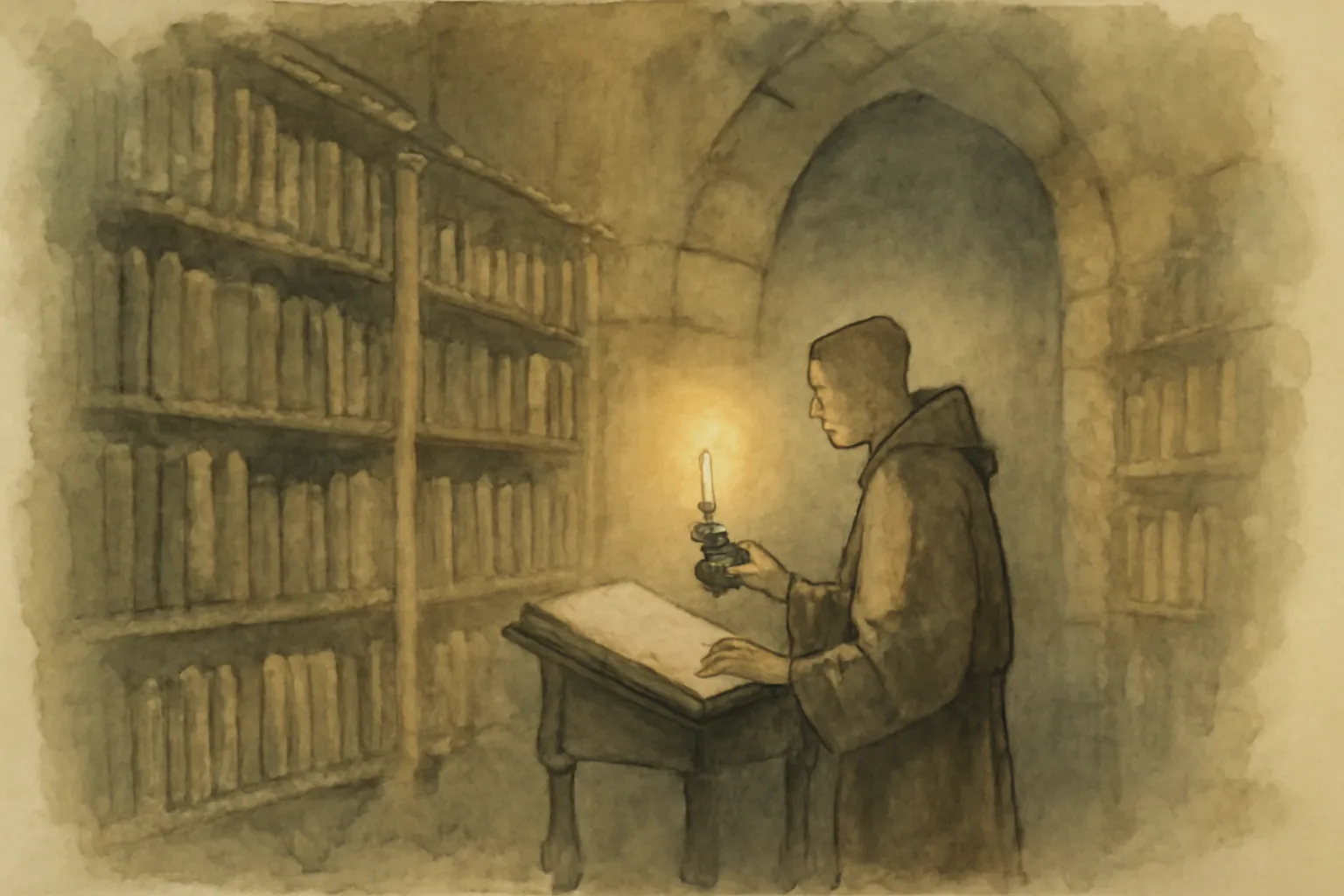
A glimpse inside

Bibliomania, or the passion for collecting books, can trace its roots back to ancient civilizations, with notable examples emerging in Rome and Athens where book collecti… Read moreBibliomania, or the passion for collecting books, can trace its roots back to ancient civilizations, with notable examples emerging in Rome and Athens where book collecting was a fashionable pursuit. Merryweather highlights that even in the first century of the Christian era, bibliophiles were already making their mark. The shift of literary culture from Athens to Alexandria and later to Rome set the stage for the monastic book culture that flourished in the Middle Ages. During this time, monasteries became the centers of learning and preservation, showcasing the evolution of bibliomania as it adapted to the spiritual and scholarly pursuits of monks. Merryweather further cites specific instances of Roman patrons who commissioned texts, illustrating how the appetite for books was not merely about possession but also about status and intellectual engagement among the elite. This historical perspective establishes a foundation for understanding how the love of books transcended time and culture, laying the groundwork for the bibliophilic traditions that would continue into modernity. Show less
Merryweather argues against the traditional characterization of the Middle Ages as the 'Dark Ages,' a term often used to imply a lack of learning and culture. Read moreMerryweather argues against the traditional characterization of the Middle Ages as the 'Dark Ages,' a term often used to imply a lack of learning and culture. Instead, he presents a nuanced view that acknowledges the significant contributions of monastic communities to the preservation and dissemination of knowledge. He points out that while many historians have dismissed this era as devoid of intellectual activity, evidence suggests a vibrant literary culture existed, sustained by dedicated monks who collected and copied texts. The author references historical figures who were pivotal in establishing educational institutions, demonstrating that learning was both a communal and individual pursuit. This redefinition not only challenges long-held stereotypes but also invites readers to appreciate the complexities of medieval scholarship, revealing the monks as critical players in the narrative of Western literature. By shedding light on their efforts, Merryweather elevates the historical significance of this period, encouraging a reevaluation of its contributions to the intellectual landscape. Show less
Read the full text — free
About the author
Read F. Somner Merryweather's work free on Lumina — the complete text plus an 8-minute summary and key ideas, no account needed