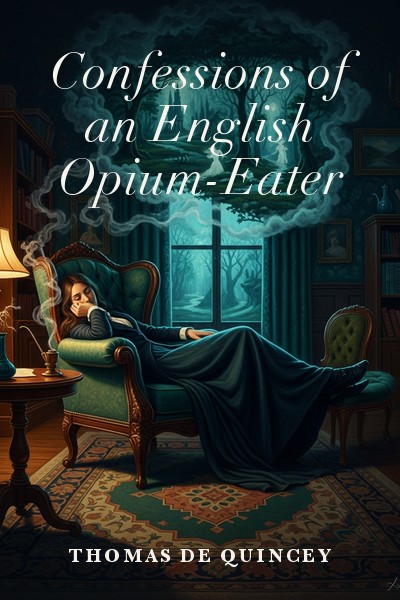

A haunting exploration of addiction, consciousness, and the duality of pleasure and suffering through the lens of opium's grip
Read full overviewShow less›
In 'Confessions of an English Opium-Eater,' Thomas De Quincey presents a deeply personal account of his tumultuous relationship with opium, revealing not only the allure of this powerful substance but also the profound psychological and emotional turmoil it induces. This narrative serves as both a cautionary tale and an introspective journey, inviting readers to consider the broader implications of addiction and the human psyche. De Quincey's eloquent prose blends philosophical musings with vivid dreamscapes, offering insights into the nature of pleasure, suffering, and the quest for understanding one's own mind. As he navigates the complexities of his experiences, readers will find themselves reflecting on their own encounters with vice, the struggle for self-control, and the thin line between ecstasy and despair.
Thomas De Quincey’s 'Confessions of an English Opium-Eater' is a profound exploration of addiction, consciousness, and the complexities of the human experience. Through his candid reflections on the duality of pleasure and suffering, De Quincey invites readers to confront the darker aspects of addiction while also recognizing the potential for understanding and empathy. His narrative transcends personal confession, becoming a philosophical discourse that resonates deeply with the struggles of individuals facing addiction in any form. By examining the intricate interplay between memory, perception, and the search for meaning, De Quincey’s work serves as both a cautionary tale and an invitation to engage with the complexities of human nature. Ultimately, his insights remind us of the importance of compassion and understanding in navigating the challenges of addiction and the human condition.
- 1The Allure and Trap of Opium
- 2Dreams as a Reflection of Reality
- 3The Unbearable Weight of Memory
- 4The Philosophical Underpinnings of Addiction
- 5The Physiological Effects of Opium
Notable quotes
“Guilt and misery shrink, by a natural instinct, from public notice: they court privacy and solitude.”
“It is well, upon the whole, and for the interest of us all, that it should be so.”
“I have often been asked how I first came to be a regular opium-eater, and have suffered, very unjustly, in the opinion of my acquaintance from being reputed to have brought upon myself all the sufferings which I shall have to record.”
A glimpse inside

De Quincey begins by addressing the question that looms over his confessions: why would a rational being willingly submit to such a debilitating addiction? Read moreDe Quincey begins by addressing the question that looms over his confessions: why would a rational being willingly submit to such a debilitating addiction? Initially, his use of opium was not driven by a desire for reckless pleasure but was a response to profound suffering. He sought solace in opium to alleviate the physical and emotional pain that plagued him, believing that it would provide a temporary escape. However, as he reflects on his descent into addiction, it becomes clear that what began as a means of coping transformed into a relentless cycle of dependency. The seductive nature of opium is illustrated through De Quincey's vivid descriptions of its effects, where the initial euphoria gives way to a darker, more consuming experience. This duality encapsulates the central tension of his narrative: the pursuit of pleasure can easily morph into a trap of despair. The initial relief opium offers is deceptive, masking deeper issues that resurface once the high dissipates, emphasizing that the roots of addiction often lie in unresolved pain rather than mere hedonism. Show less
Throughout his account, De Quincey emphasizes the intricate relationship between opium and his dreams, suggesting that the substance profoundly alters his perception of r… Read moreThroughout his account, De Quincey emphasizes the intricate relationship between opium and his dreams, suggesting that the substance profoundly alters his perception of reality. He describes a phenomenon where his waking thoughts seamlessly blend into his dreamscapes, creating a surreal interplay between consciousness and subconsciousness. This merging leads to dreams that are not only vivid but also imbued with a sense of anxiety and melancholy, reflecting his internal struggles. The opium-induced dreams serve as a canvas for his deepest fears and desires, showcasing a mind grappling with the weight of its own experiences. In this way, De Quincey elevates the act of dreaming to a philosophical exploration of human nature, as he contemplates how our innermost thoughts can manifest in the most unexpected ways. He navigates the territory between waking life and dream, describing how specific thoughts can trigger elaborate dream sequences that amplify his emotional state. This interplay between consciousness and dreams suggests that perhaps our waking experiences shape our subconscious explorations, illustrating a profound connection between the two realms. Show less
Read the full text — free
About the author
Read Thomas De Quincey's work free on Lumina — the complete text plus an 8-minute summary and key ideas, no account needed