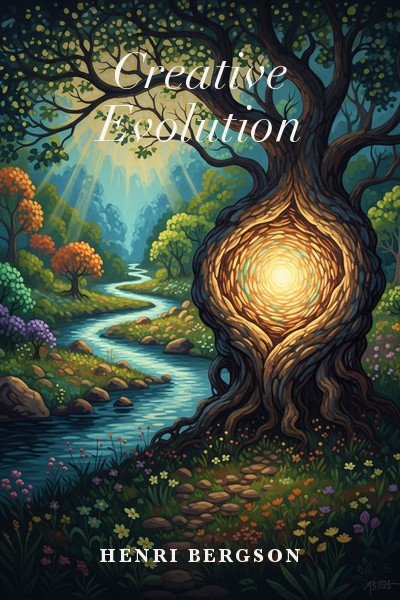

Embrace the dynamic interplay of life, consciousness, and evolution to understand the essence of existence
Read full overviewShow less›
Henri Bergson's 'Creative Evolution' challenges conventional mechanistic views of life and proposes a more fluid understanding of existence through the lens of creativity and duration. By dissecting the evolution of life, Bergson reveals the intricate relationship between instinct, intelligence, and the organic world. This profound exploration invites readers to reconsider their perceptions of consciousness, the nature of reality, and the very process of evolution itself. Engaging with Bergson's ideas provides a fresh perspective on how we relate to our environment and the significance of our evolving intellect. Ultimately, this work inspires a deeper appreciation for life's complexity and the continuous unfolding of existence.
Henri Bergson's 'Creative Evolution' offers a transformative perspective on the nature of life, emphasizing the interplay between instinct, intelligence, and the creative forces that drive evolution. By challenging mechanistic views and highlighting the significance of duration, Bergson invites readers to appreciate the richness of existence as a dynamic and evolving process. This work not only deepens our understanding of the evolutionary journey of life but also encourages a more profound engagement with our own consciousness and creative potential. In a world that often prioritizes static outcomes, Bergson's insights remind us of the beauty and complexity inherent in the ongoing evolution of life, urging us to embrace change and creativity as essential components of our existence.
- 1The Nature of Duration
- 2Life Beyond Mechanism
- 3The Divergence of Evolutionary Paths
- 4Instinct and Intelligence: Two Sides of the Same Coin
- 5The Interplay of Matter and Life
Notable quotes
“I pass from state to state.”
“Life seems to have succeeded in this by dint of humility.”
“The same opposition is found again between instinct and intelligence.”
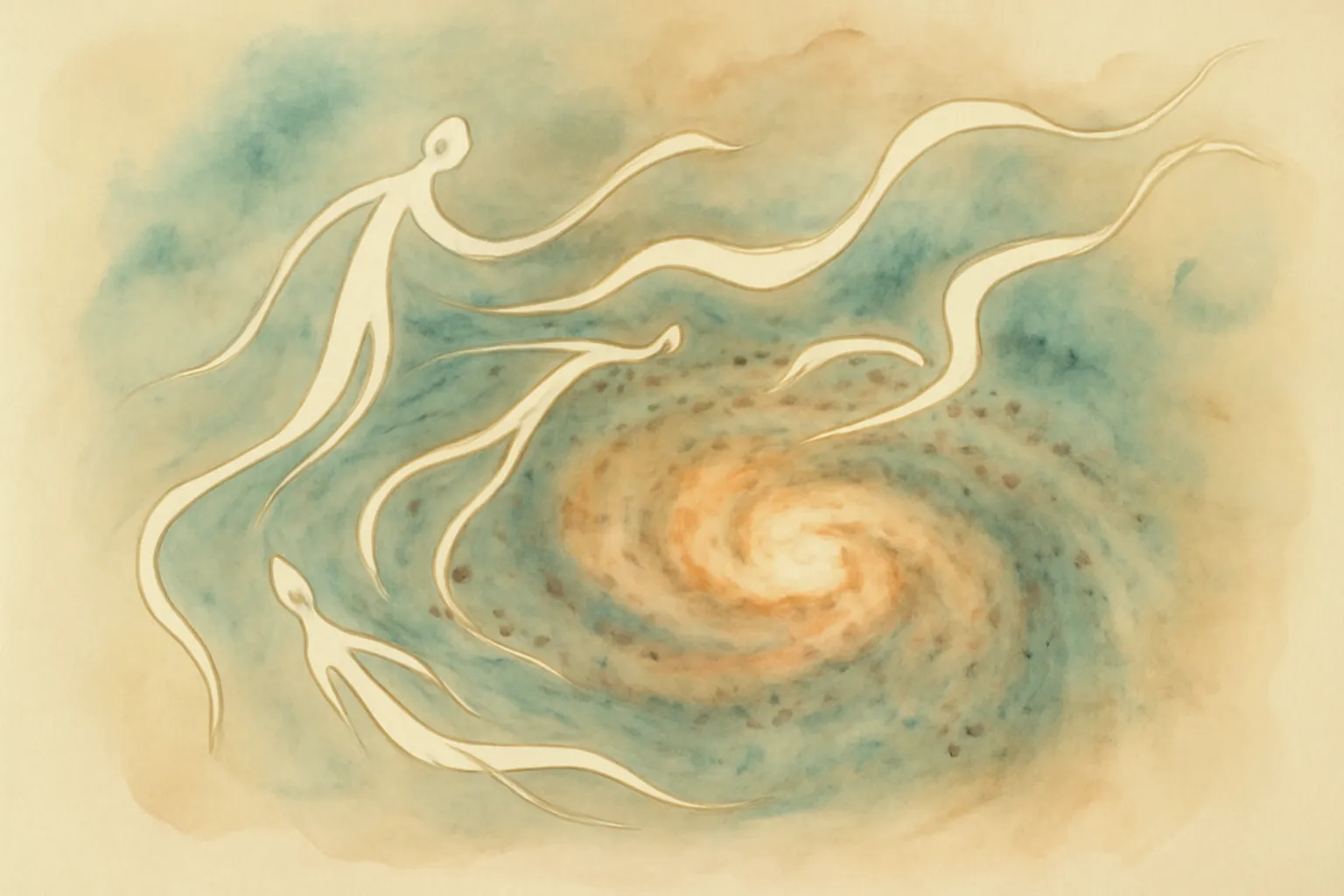
A glimpse inside

Bergson introduces the concept of 'duration' to explain the qualitative experience of time that differs fundamentally from the quantitative measurement of clock time. Read moreBergson introduces the concept of 'duration' to explain the qualitative experience of time that differs fundamentally from the quantitative measurement of clock time. Duration reflects the internal, subjective experience of life, where every moment is a continuous flow rather than a series of discrete, static points. This understanding challenges the mechanistic view that reduces life to mere physical processes governed by external laws. Instead, duration emphasizes the richness of lived experiences, where past experiences shape present consciousness and influence future actions, making life a dynamic and evolving process. For example, the way a person reflects on a significant event changes over time as their understanding deepens, revealing how duration transforms memory and perception. This perspective allows for a more nuanced understanding of individuality and personal growth, as each person navigates their unique duration, colored by emotions, memories, and aspirations. Show less
Bergson critiques the mechanistic interpretation of evolution, which views life as a series of mechanical processes governed by physical laws. Read moreBergson critiques the mechanistic interpretation of evolution, which views life as a series of mechanical processes governed by physical laws. He argues that this perspective overlooks the creative and dynamic aspects of life. Instead, he posits that evolution is driven by an internal vital impetus that propels organisms toward complexity and adaptation, a force that cannot be reduced to mere mechanics. This vital force is characterized by creativity and spontaneity, suggesting that living beings are not just passive entities shaped by their environments but active participants in their evolution. For example, the emergence of novel traits in a species is not solely a result of environmental pressure but stems from the inherent drive to reach greater complexity. By examining the limitations of a purely mechanistic approach, Bergson invites readers to appreciate the spontaneity and unpredictability of evolution, where life emerges not from rigid laws but from an intrinsic desire to evolve and adapt. Show less
Read the full text — free
About the author
Read Henri Bergson's work free on Lumina — the complete text plus an 8-minute summary and key ideas, no account needed