Fiction · Romance · Short Reads
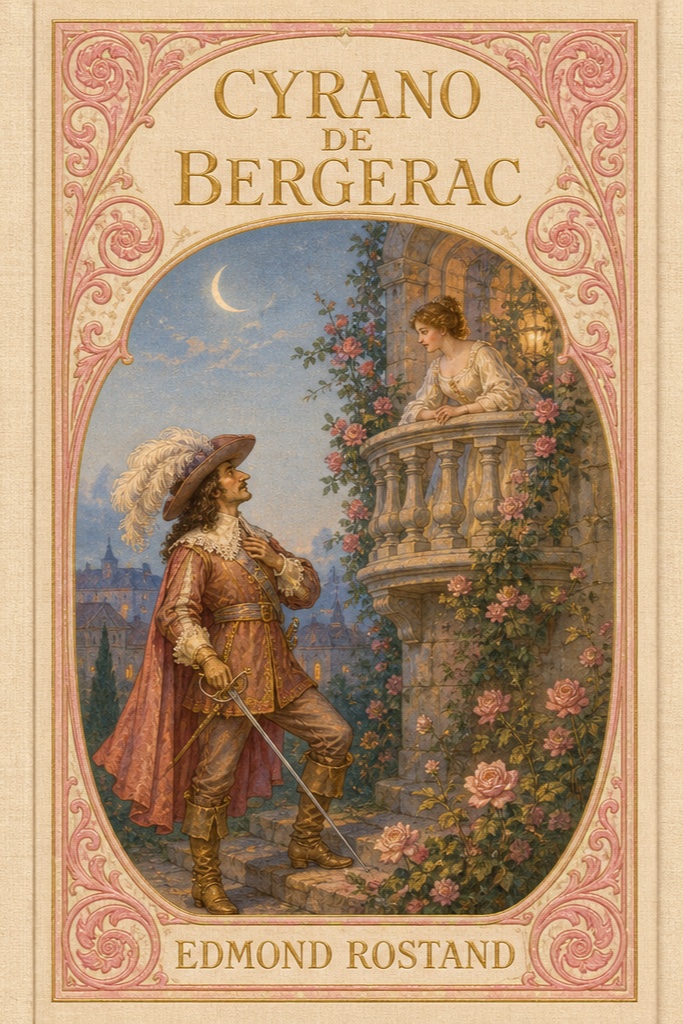
Cyrano de Bergerac by Edmond Rostand — Summary, Key Ideas & Full Text
119 pages5 chapters2h 23m read1h 42m speed read✦ 8-min Big ideas★ 4.3 (25)Free · no account
Rate it
In 'Cyrano de Bergerac,' Edmond Rostand weaves a poignant tale of unrequited love, valor, and the complexity of human emotion, centered around a man with a remarkable soul trapped in a body he believes is unlovable
Set against the backdrop of 17th-century France, 'Cyrano de Bergerac' is a timeless exploration of love, identity, and the struggle to be true to oneself. The play follows the life of Cyrano, a brilliant poet and swordsman, who is hindered by his large nose and profound insecurities. Despite his undeniable intellect and charm, Cyrano's fear of rejection leads him to mask his feelings for Roxane, the woman he loves. Instead, he helps the handsome but inarticulate Christian woo her, leading to a complex love triangle filled with deception and sacrifice. Readers will discover how Rostand's characters grapple with the dualities of appearance versus reality and the power of words to both uplift and deceive.
In 'Cyrano de Bergerac,' Edmond Rostand masterfully intertwines themes of love, identity, and the human experience, creating a narrative that resonates across time and culture. The play's exploration of the complexities of unrequited love, the power of language, and the struggle for authenticity invites readers to reflect on their own lives and relationships. Cyrano's journey serves as a poignant reminder of the importance of embracing one's true self and the courage it takes to confront societal expectations. As the characters navigate the intricacies of love and friendship, they reveal the universal truths about the human condition, making 'Cyrano de Bergerac' a timeless classic that continues to inspire and provoke thought in today's world.
“Ah! Let the world go burn! She knows I live!”
“To work without one thought of gain or fame, to realize that journey to the moon!”
“What! Learn to swallow toads?—With frame aweary climbing stairs?”
Read Edmond Rostand's work free on Lumina — the complete text plus an 8-minute summary and key ideas, no account needed