Romance · Fiction · Short Reads
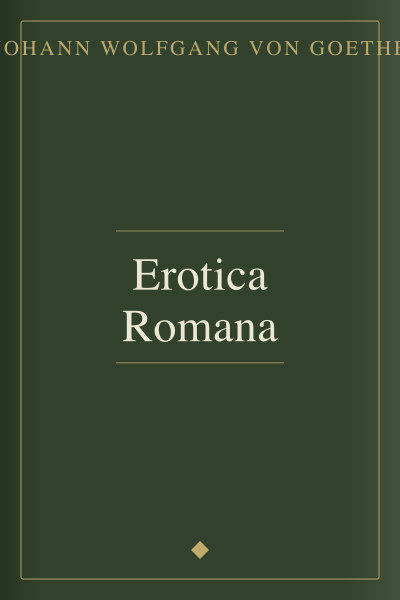
Erotica Romana by Johann Wolfgang von Goethe — Summary, Key Ideas & Full Text
22 pages23 chapters27 min read19 min speed read✦ 10-min Big ideasFree · no account
Rate it
In 'Erotica Romana,' Goethe intricately weaves love, desire, and the art of seduction against the backdrop of ancient Rome, revealing the timeless nature of human passion
Johann Wolfgang von Goethe's 'Erotica Romana' is a masterful collection of twenty-four poems that delve into the themes of love, lust, and the beauty of human desire, all set within the culturally rich framework of ancient Rome. This work captures the essence of romantic and erotic encounters, reflecting on the complex interplay between pleasure and pain, longing and fulfillment. Through vivid imagery, classical references, and rich metaphor, Goethe invites readers to explore the depths of passion and the nuances of intimacy, making each elegy resonate with contemporary themes of love and longing. Each poem serves as a window into the poet's soul, revealing his musings on the nature of desire, fidelity, and the divine influence of Cupid. 'Erotica Romana' not only celebrates the physicality of love but also invites contemplation on the emotional and spiritual dimensions that accompany such experiences, making it a timeless exploration of human connection.
Goethe's 'Erotica Romana' serves as a timeless exploration of love, desire, and the multifaceted nature of human relationships. Through rich imagery and profound reflections, the poet captures the essence of passion against the backdrop of ancient Rome, inviting readers to contemplate their own experiences of love. The themes of seduction, fidelity, and the interplay between pleasure and pain resonate across time, making the work relevant to contemporary audiences. Ultimately, Goethe's elegies remind us of the beauty and complexity of human desire, encouraging a deeper understanding of the emotional landscapes that accompany our romantic pursuits. By engaging with Goethe's profound insights, readers are invited to navigate their own journeys of love with awareness and appreciation, reveling in the emotional richness that defines the human experience.
“Freely pluck, whosoever would eat.”
“Rome, thou art a whole world, it is true, and yet without love this world would not be the world, Rome would cease to be Rome.”
“Isn't that heaven on earth?”
Johann Wolfgang von Goethe has 3 works free to read on Lumina, including Faust, The Sorrows of Young Werther
All 3 books by Johann Wolfgang von Goethe →