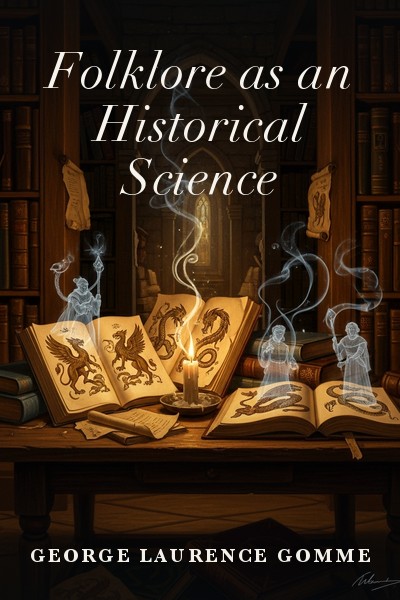

Folklore unveils the intricate connections between history and human experience, enriching our understanding of culture
Read full overviewShow less›
In 'Folklore as an Historical Science,' George Laurence Gomme investigates the symbiotic relationship between folklore and history, arguing that traditional tales, customs, and beliefs serve as crucial records of human experience that historians often overlook. He asserts that while historians tend to dismiss folklore as unreliable, it holds essential insights into societal dynamics, cultural evolution, and historical gaps. Through a multidisciplinary lens, Gomme examines how folklore encapsulates psychological, anthropological, sociological, and ethnological dimensions, revealing a deeper understanding of the cultural narratives that shape human identity. Readers will discover that folklore not only enhances historical understanding but also challenges established narratives by highlighting the voices and experiences of ordinary people across time.
Gomme's exploration of folklore as an historical science reveals the integral role that cultural narratives play in understanding human history. By bridging the gaps between folklore and historical records, he invites scholars and readers alike to appreciate the richness of traditional tales, customs, and beliefs. This comprehensive approach not only enhances our comprehension of cultural evolution but also underscores the relevance of folklore in contemporary society. Recognizing folklore's role in shaping our collective identity fosters a deeper connection to the past, encouraging a more informed and empathetic engagement with the diverse tapestry of human experience. In understanding and preserving folklore, we honor the shared histories that unite us across time and cultures.
- 1The Friction Between History and Folklore
- 2Understanding Folklore Materials
- 3Psychological Influences on Tradition
- 4Anthropological Perspectives in Folklore
- 5The Sociological Dimension of Folklore
A glimpse inside

Gomme begins by addressing a longstanding conflict between historians and folklorists, noting that historians often regard folklore as mere fiction devoid of historical v… Read moreGomme begins by addressing a longstanding conflict between historians and folklorists, noting that historians often regard folklore as mere fiction devoid of historical validity. Folklorists, on the other hand, may overlook the historical context that informs folklore. He cites the works of notable scholars like Dr. Frazer and Prof. Ridgeway, who have attempted to reconcile these two fields. Gomme asserts that both disciplines can enrich each other if approached carefully, emphasizing that history often presents incomplete narratives, particularly regarding early British history, where documented records are sparse. Folklore, with its rich stories and traditions, can bridge these gaps, offering insights that more formal historical accounts may neglect. This relationship establishes folklore as an essential component of historical scholarship, urging us to view it as a legitimate source of knowledge about human societies. By recognizing the interplay between historical facts and folkloric narratives, scholars can construct a more nuanced understanding of the past that incorporates the lived experiences of individuals. Show less
Gomme explores the diverse materials that comprise folklore, including traditional tales, customs, and superstitions that have been passed down through generations. Read moreGomme explores the diverse materials that comprise folklore, including traditional tales, customs, and superstitions that have been passed down through generations. He highlights that these elements were recorded through tradition, often long after their creation, and thus reflect the lived experiences of communities rather than artistic endeavors. Gomme underscores the importance of distinguishing folklore from literary art; while folk narratives may possess artistic qualities, their primary function lies in documenting cultural truths rather than entertaining. He provides examples of how certain customs might seem trivial or superstitious at first glance but hold significant meaning within their cultural contexts. For instance, folk tales that narrate the origins of local landmarks often encode historical events or societal values that might not be recorded elsewhere. Gomme emphasizes that understanding folklore requires a comprehensive approach that considers its origins, purposes, and the socio-cultural contexts from which it arises. This insight is vital for scholars seeking to appreciate folklore's role in historical understanding. Folklore is not a static entity, but rather a dynamic and evolving reflection of societies, rich with cultural significance that deserves scholarly attention. Show less
Read the full text — free
About the author
Read George Laurence Gomme's work free on Lumina — the complete text plus an 8-minute summary and key ideas, no account needed