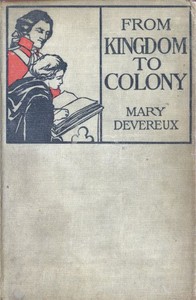

From Kingdom to Colony explores the transformative journey of a family from feudal England to colonial America, navigating the complexities of identity, loyalty, and freedom amidst the backdrop of revolution
Read full overviewShow less›
In 'From Kingdom to Colony', Mary Devereux intricately weaves a narrative that spans centuries, beginning with the Norman Conquest in 1066 and culminating in the American Revolution. Through the lens of the Devereux family, the book reveals how the shifting tides of power and allegiance shape individual destinies. Readers will witness the evolution of a lineage, tracing their roots from a feudal society to the burgeoning aspirations of a new world. The characters grapple with their identities and loyalties, torn between the old and the new, tradition and rebellion. This rich tapestry of history, family dynamics, and personal growth provides profound insights into the human spirit's resilience in the face of change.
'From Kingdom to Colony' is a profound exploration of the transformative journey from feudal loyalty to the quest for personal freedom amidst revolution. Through the Devereux family's experiences, the narrative captures the complexities of identity, community, and the human spirit's resilience in facing change. The characters' struggles resonate with contemporary readers, prompting reflection on the nature of loyalty, the role of women in history, and the quest for autonomy. The rich tapestry of history and personal narratives invites us to engage with the past, recognizing its impact on our present and future. Ultimately, the book serves as a reminder that the pursuit of freedom is a deeply personal journey, shaped by the choices we make and the communities we inhabit.
- 1The Legacy of Feudalism
- 2A Familial Connection to History
- 3The Impact of War on Personal Identity
- 4Revolutionary Ideals and Personal Sacrifice
- 5Women’s Roles in Revolutionary Change
A glimpse inside

The story begins with William, Duke of Normandy, who invaded England in 1066, establishing a new order that reverberated through centuries. Read moreThe story begins with William, Duke of Normandy, who invaded England in 1066, establishing a new order that reverberated through centuries. The character of Robert D'Evreux symbolizes the feudal aristocracy, showcasing the privileges and responsibilities of nobility. The feudal system dictated social hierarchies, where land ownership equated to power and influence. For the Devereux family, this means navigating a world where their status grants them certain rights but also ties them to responsibilities and expectations. As the narrative unfolds, the Devereux lineage grapples with this legacy, questioning their roles in a world that is rapidly transforming. The contrast between the rigid structures of feudalism and the emerging ideas of individual freedom lays the groundwork for later conflicts and personal struggles, especially as the family transitions to colonial America. The impact of feudal loyalty is evident in how characters relate to their lands and titles, highlighting the emotional and social ramifications of their heritage. Show less
The Devereux family serves as a microcosm of the broader historical changes occurring in England and America. As descendants of Robert D'Evreux, they carry the weight of… Read moreThe Devereux family serves as a microcosm of the broader historical changes occurring in England and America. As descendants of Robert D'Evreux, they carry the weight of their lineage, which influences their actions and decisions. From the battlefields of Hastings to the tumultuous streets of colonial America, the family's history shapes their identity. Their deep-rooted connections to noble blood serve as both a point of pride and a burden, compelling them to live up to the expectations of their ancestors. The characters find themselves in a world where old allegiances are challenged by new ideals, making their lineage a double-edged sword. This duality reflects the struggle many families faced during the revolutionary period—balancing tradition with the desire for autonomy. The narrative illustrates how history is not merely a backdrop but an active participant in their lives, with characters using their past to navigate the present. The family’s engagement with history serves as a reminder of the importance of understanding one's roots in the face of change. Show less
Read the full text — free
About the author
Read Mary Devereux's work free on Lumina — the complete text plus an 8-minute summary and key ideas, no account needed