
A grand epic of folly, wisdom, and human nature, 'Gargantua and Pantagruel' invites readers to explore the absurdity of life through the lens of two larger-than-life giants
Read full overviewShow less›
In the realm of Renaissance literature, François Rabelais' 'Gargantua and Pantagruel' stands as a monumental work that intertwines humor, philosophy, and social commentary. This sprawling narrative follows the lives of two giants, Gargantua and his son Pantagruel, as they navigate a world filled with absurdities, conflicts, and the follies of humanity. Through their adventures, Rabelais critiques the societal norms of his time, questioning religion, education, and the nature of knowledge itself. Readers will find themselves immersed in a rich tapestry of characters and ideas, each more outrageous than the last, while also being challenged to reflect on the deeper truths about existence and the human condition. This summary distills the essence of Rabelais' work, revealing the timeless themes and insights that continue to resonate today.
Rabelais' 'Gargantua and Pantagruel' is more than just a whimsical tale of giants; it is a profound exploration of the human experience. Through humor and exaggeration, Rabelais invites readers to reflect on the complexities of life, the nature of knowledge, and the importance of community and friendship. His critiques of society, education, and religion resonate with contemporary issues, making his work timeless and relevant. Ultimately, Rabelais champions a vision of life that embraces joy, individuality, and the pursuit of wisdom, encouraging readers to engage with the world around them with both laughter and critical thought.
- 1The Absurdity of Gargantua's Birth
- 2Gargantua's Education and the Satire of Academia
- 3The Role of Food and Drink in Rabelais' Universe
- 4Pantagruel's Quest for Knowledge
- 5The Critique of Religious Institutions
Notable quotes
“Que grand tu as et souple le gousier!”
“Do what thou wilt.”
“He drinks in vain that feels not the pleasure of it.”
A glimpse inside

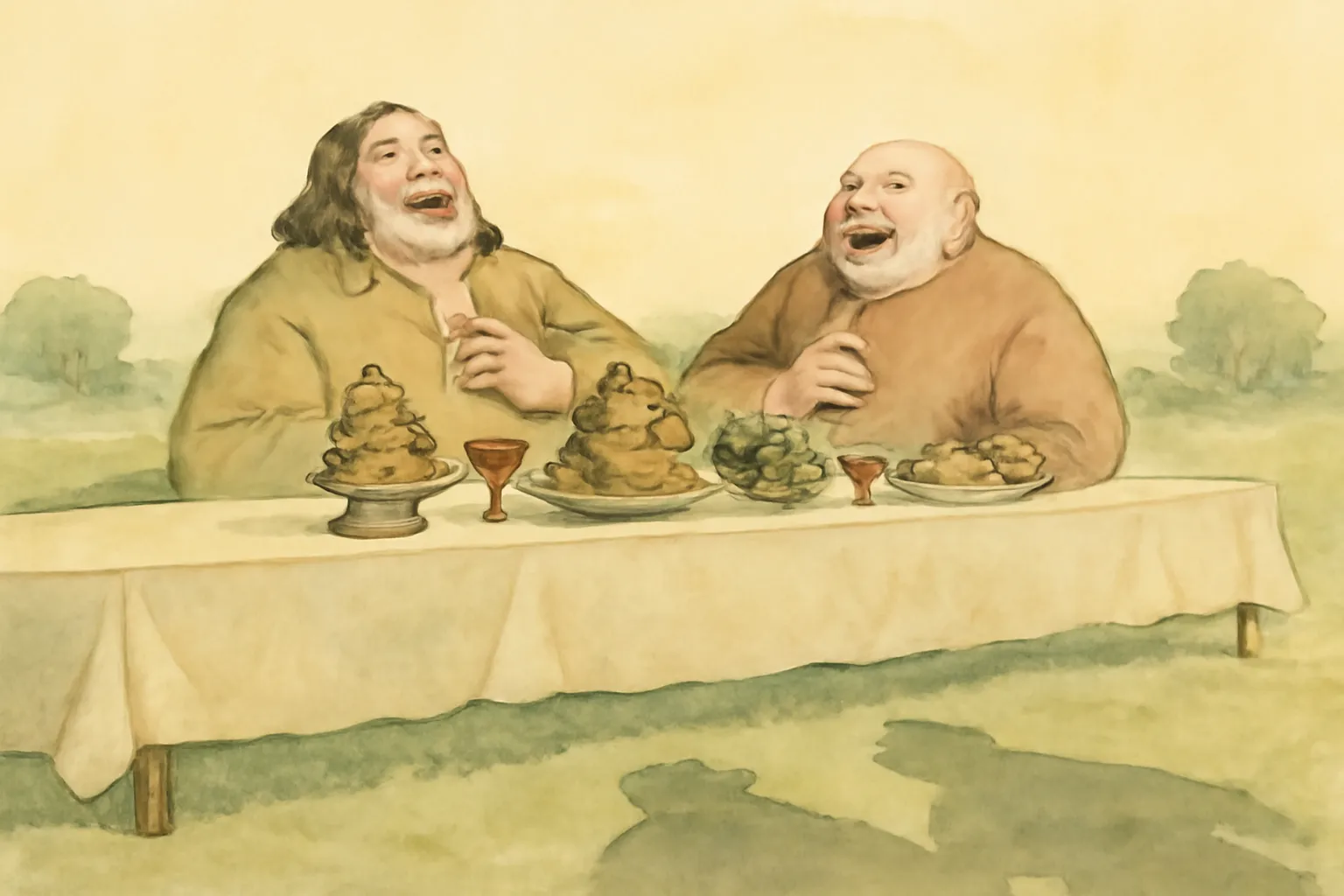
Gargantua's entrance into the world is as unconventional as his character. Born after an eleven-month gestation period, his mother Gargamelle indulges in a feast of tripe… Read moreGargantua's entrance into the world is as unconventional as his character. Born after an eleven-month gestation period, his mother Gargamelle indulges in a feast of tripes, leading to a chaotic delivery. This absurdity sets the tone for the novel, where the extraordinary is commonplace and the ridiculous is celebrated. Gargantua’s birth is a commentary on the nature of existence itself, highlighting the randomness and unpredictability of life. Rabelais uses humor to emphasize that life begins with chaos, suggesting that the journey of existence is often as messy and complicated as the circumstances of our beginnings. Moreover, Gargantua's birth serves as an allegory for the Renaissance spirit, symbolizing rebirth and the defiance of conventional norms in favor of freedom and personal expression. Show less
As Gargantua grows, his education becomes a central theme. His father, Grangousier, seeks the best for him, hiring the most learned men of the time. Read moreAs Gargantua grows, his education becomes a central theme. His father, Grangousier, seeks the best for him, hiring the most learned men of the time. However, Rabelais critiques the education system through Gargantua's experiences with various teachers, highlighting the often absurd and outdated methods employed. For instance, Gargantua's early schooling involves memorizing texts that lack practical value, reflecting Rabelais' disdain for rote learning. The novel critiques the juxtaposition between the rigorous, sometimes nonsensical curriculum and the genuine thirst for knowledge that Gargantua possesses. This critique serves as a broader commentary on the Renaissance educational reforms, emphasizing the tension between traditional scholarship and the pursuit of knowledge that is useful and relevant to life. Gargantua's eventual enlightenment represents the ideal of learning that is dynamic and engaging, rather than stagnant and pedantic, urging for a reformation in the approach to education. Show less
Read the full text — free
About the author
Read François Rabelais's work free on Lumina — the complete text plus an 8-minute summary and key ideas, no account needed