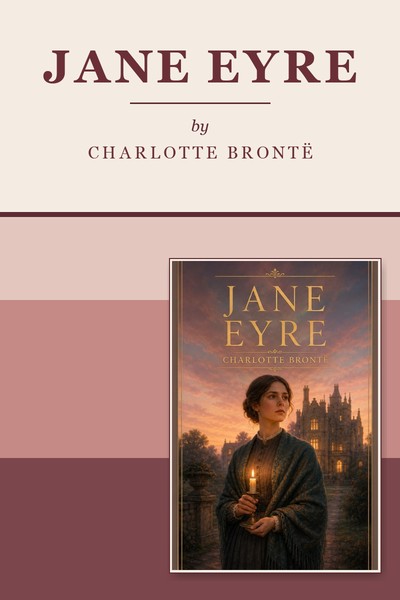

An orphaned governess finds love and independence — Gothic passion and moral courage.
Read full overviewShow less›
Delve into the captivating world of 'Jane Eyre,' where a resilient orphan rises from the depths of despair to assert her independence and seek true love. This iconic novel explores themes of social class, gender roles, and the quest for personal integrity against the backdrop of Victorian England. As Jane navigates her challenging relationships, from her cruel aunt to the enigmatic Mr. Rochester, readers will witness her unwavering spirit and moral fortitude. Brontë's rich prose and complex characters offer profound insights into the human condition, making 'Jane Eyre' not just a story of romance, but a timeless exploration of self-discovery and empowerment.
Charlotte Brontë’s 'Jane Eyre' transcends the boundaries of a simple love story, offering readers a profound exploration of identity, morality, and the quest for independence. Through Jane's journey, Brontë delves into the complexities of social class, gender roles, and the transformative power of education. The novel's rich symbolism and gothic elements enhance its emotional depth, creating a narrative that resonates with themes of resilience and self-discovery. Ultimately, 'Jane Eyre' serves as a timeless reminder of the strength of the human spirit in the face of adversity and the enduring quest for love and belonging.
- 1The Struggle for Identity
- 2Critique of Social Class
- 3The Role of Women
- 4The Quest for Love
- 5Moral Integrity and Conscience
A glimpse inside

From the very beginning, Jane Eyre grapples with her identity as an orphan. Raised by the unloving Reed family, she is made painfully aware of her social status and lack… Read moreFrom the very beginning, Jane Eyre grapples with her identity as an orphan. Raised by the unloving Reed family, she is made painfully aware of her social status and lack of familial connection. Her childhood is marked by isolation and mistreatment, which forge her strong sense of self. Jane's repeated assertions of her worth, particularly in her confrontations with her aunt and cousin, illustrate her struggle to define herself outside the constraints imposed by others. This quest for identity becomes a central theme as she seeks to assert her autonomy and find a place where she truly belongs. Show less
Brontë intricately weaves a critique of the rigid class structure of Victorian England throughout Jane's journey. Jane's experiences at Gateshead, and later at Lowood Sch… Read moreBrontë intricately weaves a critique of the rigid class structure of Victorian England throughout Jane's journey. Jane's experiences at Gateshead, and later at Lowood School, highlight the injustices faced by the lower classes, particularly women. The squalor and neglect at Lowood expose the failings of those in power, like Mr. Brocklehurst, who prioritize reputation over the well-being of children. Jane's rise to a governess position at Thornfield Hall places her in a peculiar social limbo—she is educated and employed, yet still an outsider. Through Jane's eyes, readers witness the hypocrisy of social norms that dictate one's value based on wealth and status. Show less
Read the full text — free
About the author
Read Charlotte Brontë's work free on Lumina — the complete text plus an 8-minute summary and key ideas, no account needed.
Frequently asked
Worlds to get lost in
Take Lumina everywhere
Read offline, listen to AI summaries, speed-read, and sync your progress across devices — free on iPhone.
Download for iPhone