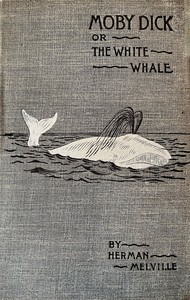

Obsession and the white whale — an epic of the sea, fate, and American literature.
Read full overviewShow less›
Herman Melville's Moby-Dick is not merely a tale of whaling; it is a profound exploration of humanity's relationship with nature, obsession, and the quest for meaning. Through the journey of Ishmael and Captain Ahab, readers are invited into a world where the struggles of men at sea reflect the tumult of the human spirit. The narrative is rich with symbolism, philosophical musings, and a cast of diverse characters, each representing different facets of society and human experience. As Ishmael grapples with his own existential questions, the story unfolds into a complex tapestry of themes that resonate deeply with readers, making it a timeless classic that continues to captivate and provoke thought.
Moby-Dick stands as a monumental work that transcends its narrative of whaling to explore profound themes of obsession, nature, and the human condition. Through Ishmael's journey and Ahab's tragic pursuit, Melville invites readers to reflect on their own lives and the complexities of existence. The novel challenges societal norms and questions the moral implications of ambition and revenge, urging a deeper understanding of humanity's relationship with nature and each other. Its rich symbolism and philosophical depth ensure that Moby-Dick remains relevant and thought-provoking, resonating with readers across generations. Ultimately, Melville's masterpiece serves as a timeless reminder of the struggles and triumphs inherent in the human experience.
- 1The Call of the Sea
- 2Queequeg: The Cannibal and the Friend
- 3Captain Ahab: The Obsession with Revenge
- 4Symbolism of the Whale
- 5The Role of Fate and Free Will
A glimpse inside

Ishmael, the novel's narrator, embodies a universal longing for adventure and escape from the mundanity of life. His decision to go to sea serves as a metaphor for seekin… Read moreIshmael, the novel's narrator, embodies a universal longing for adventure and escape from the mundanity of life. His decision to go to sea serves as a metaphor for seeking freedom and a deeper understanding of existence. The ocean represents both a physical and spiritual journey, where Ishmael hopes to confront his own inner turmoil. The allure of the sea is not just about adventure; it is a means to explore one's identity and purpose. Ishmael's reflections on the city of Manhattan, surrounded by water, highlight the tension between urban life and the call of the natural world. His notion that many share this yearning underscores a fundamental aspect of human nature: the desire to break free from societal constraints and discover what lies beyond the horizon. Show less
Queequeg, Ishmael's harpooner and companion, challenges societal norms and prejudices. His background as a tattooed cannibal from the South Sea Islands contrasts sharply… Read moreQueequeg, Ishmael's harpooner and companion, challenges societal norms and prejudices. His background as a tattooed cannibal from the South Sea Islands contrasts sharply with the expectations of a whaler's life. However, Queequeg's character transcends stereotypes, revealing the potential for deep friendship across cultural boundaries. Their bond exemplifies themes of acceptance and understanding, as Ishmael learns to appreciate Queequeg's unique perspective and virtues. The juxtaposition of their backgrounds serves to critique the colonial mindset of the 19th century, highlighting the absurdity of judging individuals based on their appearance or heritage. Through Queequeg, Melville emphasizes that true kinship can arise in the most unexpected places, challenging readers to reconsider their own biases. Show less
Read the full text — free
About the author
Read Herman Melville's work free on Lumina — the complete text plus an 8-minute summary and key ideas, no account needed.
Frequently asked
Worlds to get lost in
Take Lumina everywhere
Read offline, listen to AI summaries, speed-read, and sync your progress across devices — free on iPhone.
Download for iPhone