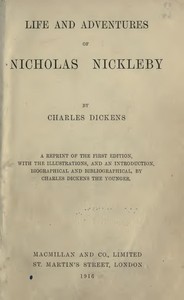

In a world rife with corruption and neglect, Nicholas Nickleby embarks on a quest for justice and dignity amidst the harsh realities of Victorian England
Read full overviewShow less›
Nicholas Nickleby, a novel by Charles Dickens, weaves a rich tapestry of human experience, touching on themes of education, social injustice, and the resilience of the human spirit. Set against the backdrop of a society that often disregards the welfare of its vulnerable citizens, the story follows young Nicholas as he navigates the treacherous waters of familial obligation and societal expectation. Through his encounters with a cast of memorable characters, he seeks to protect his family and fight against the oppressive forces that threaten their happiness. Readers will find themselves immersed in a narrative that not only entertains but also challenges them to reflect on the moral dilemmas faced by individuals in a complex world.
Nicholas Nickleby stands as a powerful exploration of human resilience in the face of societal neglect and personal hardship. Through the experiences of Nicholas and his family, Dickens sheds light on the pressing issues of education, social injustice, and the importance of compassion. The novel's rich characterizations and intricate plot weave together themes that resonate deeply, encouraging readers to reflect on their own responsibilities towards others. Ultimately, it is a story that champions the idea that hope, friendship, and love can prevail even in the most challenging of circumstances, leaving a lasting impact on the hearts and minds of its audience.
- 1The Cruelty of Educational Neglect
- 2Family and Responsibility
- 3The Struggle Against Oppression
- 4The Role of the Arts
- 5Social Class and Inequality
A glimpse inside

The novel opens with a profound critique of the educational system in England, focusing particularly on the deplorable state of private schools in Yorkshire. Read moreThe novel opens with a profound critique of the educational system in England, focusing particularly on the deplorable state of private schools in Yorkshire. Dickens highlights the absurdity of a system that allows anyone, regardless of qualifications, to establish themselves as schoolmasters, with the children as their unwitting victims. Through the character of Wackford Squeers, headmaster of Dotheboys Hall, Dickens presents a vivid portrait of neglect and cruelty within these institutions. The school, rather than being a place of learning, becomes a factory for misery, showcasing how the unqualified and greedy exploit vulnerable children. Squeers and his wife represent the worst of this system, embodying ignorance and an utter lack of compassion, which results in a profound dehumanization of the children. Dickens vividly depicts the harsh treatment of students, including physical abuse and emotional neglect, as Squeers prioritizes profit over education. This systemic failure to ensure quality education is not merely a backdrop; it is a call to action, urging readers to recognize the importance of nurturing young minds to cultivate a better society. Show less
Nicholas Nickleby's journey is deeply shaped by his sense of family duty, particularly towards his mother and sister, Kate. Read moreNicholas Nickleby's journey is deeply shaped by his sense of family duty, particularly towards his mother and sister, Kate. Following the death of his father, Nicholas feels an immense pressure to step into the role of protector and provider, a theme that resonates throughout the narrative. His commitment to his family serves as a driving force, illustrating the weight of familial responsibility in a harsh world. As Nicholas prepares to leave for Yorkshire in search of work, he experiences an emotional farewell filled with unspoken fears and hopes. This poignant moment highlights the sacrifices he must make for the well-being of his family, as he grapples with the expectations placed upon him. The love and loyalty within the Nickleby family highlight the complexity of their circumstances, raising questions about the balance between personal ambition and family obligation. As Nicholas faces various challenges, the narrative underscores the profound bond between family members, and the lengths to which individuals will go to protect those they love, emphasizing that responsibility is often intertwined with love and sacrifice. Show less
Read the full text — free
About the author
Charles Dickens has 9 works free to read on Lumina, including A Christmas Carol, A Tale of Two Cities, Barnaby Rudge: A Tale of the Riots of 'Eighty