Philosophy · Fiction
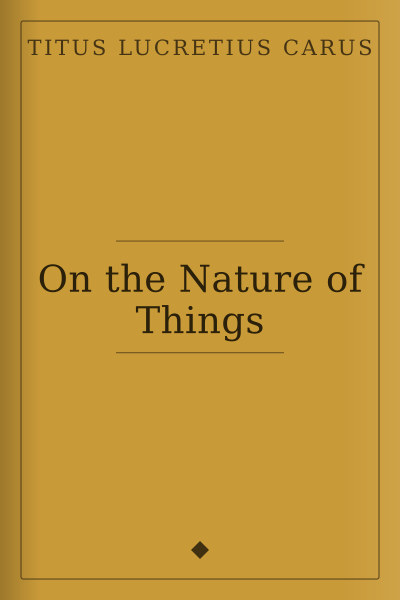
On the Nature of Things by Titus Lucretius Carus — Summary, Key Ideas & Full Text
245 pages6 chapters4h 55m read3h 29m speed read✦ 9-min Big ideasFree · no account
Rate it
Unveil the truths of existence and the universe through Epicurean philosophy in Lucretius's timeless work
On the Nature of Things is a profound exploration of the principles governing the universe and the human experience, written by the Roman poet Lucretius. This epic poem serves as a comprehensive introduction to Epicurean philosophy, advocating for a life guided by reason and the pursuit of knowledge rather than fear and superstition. Through eloquent language and vivid imagery, Lucretius invites readers to consider the nature of reality, the structure of the universe, and the processes that govern life and death. His insights challenge conventional beliefs and propose a framework for achieving peace and happiness in a world filled with uncertainty. The work ultimately empowers individuals to embrace their existence with clarity and understanding, fostering a deeper connection to nature and to one another.
On the Nature of Things is not just a poetic exploration; it is a philosophical manifesto that urges readers to rethink their understanding of existence, knowledge, and happiness. Lucretius's insights into the nature of the universe, the workings of the mind, and the fleeting moments of joy provide a roadmap for navigating a world filled with uncertainty. By challenging conventional beliefs and advocating for a rational approach to life, he empowers individuals to embrace their existence and seek fulfillment through understanding. This work remains relevant across the ages, reminding us to prioritize knowledge, cultivate compassion, and cherish the beauty of the natural world. Ultimately, Lucretius's message is one of hope and liberation, encouraging us to live fully and authentically, grounded in the truths of nature.
“For thou alone hast power with public peace To aid mortality; since he who rules The savage works of battle, puissant Mars, How often to thy bosom flings his strength O'ermastered by the eternal wound of love.”
“O wretched minds of men! O blinded hearts! In how great perils, in what darks of life Are spent the human years, however brief!”
“For as physicians, when they seek to give Young boys the nauseous wormwood, first do touch The brim around the cup with the sweet juice And yellow of the honey.”
Read Titus Lucretius Carus's work free on Lumina — the complete text plus an 8-minute summary and key ideas, no account needed