

Fiction · Hugo Award Winner · Science fiction
Starship Troopers by Robert A. Heinlein — Summary, Key Ideas & Quotes
1959233 pages✦ 3-min Big ideas★ 3.8 (62)
Rate it
Starship Troopers takes place in the midst of an interstellar war between the Terran Federation of Earth and the Arachnids (referred to as "The Bugs") of Klendathu. It is narrated as a series of flashbacks by Juan Rico, and is one of only a few Heinlein novels set out in this fashion. The novel opens with Rico aboard the corvette Rodger Young, about to embark on a raid against the planet of the "Skinnies," who are allies of the Arachnids. We learn that he is a cap(sule) trooper in the Terran Federation's Mobile Infantry. The raid itself, one of the few instances of actual combat in the novel, is relatively brief: the Mobile Infantry land on the planet, destroy their targets, and retreat, suffering a single casualty in the process. The story then flashes back to Rico's graduation from high school, and his decision to sign up for Federal Service over the objections of his father. This is the only chapter that describes Rico's civilian life, and most of it is spent on the monologues of two people: retired Lt. Col. Jean V. Dubois, Rico's school instructor in "History and Moral Philosophy," and Fleet Sergeant Ho, a recruiter for the armed forces of the Terran Federation. Dubois serves as a stand-in for Heinlein throughout the novel, and delivers what is probably the book's most famous soliloquy on violence, and how it "has settled more issues in history than has any other factor." Fleet Sergeant Ho's monologues examine the nature of military service, and his anti-military tirades appear in the book primarily as a contrast with Dubois. (It is later revealed that his rants are calculated to scare off the weaker applicants). Interspersed throughout the book are other flashbacks to Rico's high school History and Moral Philosophy course, which describe how in the Terran Federation of Rico's day, the rights of a full Citizen (to vote, and hold public office) must be earned through some form of volunteer Federal service. Those residents who have not exercised their right to perform this Federal Service retain the other rights generally associated with a modern democracy (free speech, assembly, etc.), but they cannot vote or hold public office. This structure arose ad hoc after the collapse of the 20th century Western democracies, brought on by both social failures at home and military defeat by the Chinese Hegemony overseas (assumed looking forward into the late 20th century from the time the novel was written in the late 1950s). In the next section of the novel Rico goes to boot camp at Camp Arthur Currie, on the northern prairies. Five chapters are spent exploring Rico's experience entering the service under the training of his instructor, Career Ship's Sergeant Charles Zim. Camp Currie is so rigorous that less than ten percent of the recruits finish basic training; the rest either resign, are expelled, or die in training. One of the chapters deals with Ted Hendrick, a fellow recruit and constant complainer who is flogged and expelled for striking a superior officer. Another recruit, a deserter who committed a heinous crime while AWOL, is hanged by his battalion. Rico himself is flogged for poor handling of (simulated) nuclear weapons during a drill; despite these experiences he eventually graduates and is assigned to a unit. At some point during Rico's training, the 'Bug War' has begun to brew, and Rico finds himself taking part in combat operations. The war "officially" starts with an Arachnid attack that annihilates the city of Buenos Aires, although Rico makes it clear that prior to the attack there were plenty of "'incidents,' 'patrols,' or 'police actions.'" Rico briefly describes the Terran Federation's loss at the Battle of Klendathu where his unit is decimated and his ship destroyed. Following Klendathu, the Terran Federation is reduced to making hit-and-run raids similar to the one described at the beginning of the novel (which, chronologically would be placed between Chapters 10 and 11). Rico meanwhile finds himself posted to Rasczak's Roughnecks, named after Lieutenant Rasczak (his first name is never given). This part of the book focuses on the daily routine of military life, as well as the relationship between officers and non-commissioned officers, personified in this case by Rasczak and Sergeant Jelal. Eventually, Rico decides to become a career soldier and attends Officer Candidate School, which turns out to be just like boot camp, only "squared and cubed with books added."[15] Rico is commissioned a temporary Third Lieutenant as a field-test final exam and commands his own unit during Operation Royalty; eventually he graduates as a Second Lieutenant and full-fledged officer. The final chapter serves as more of a coda, depicting Rico aboard the Rodger Young as the lieutenant in command of Rico's Roughnecks, preparing to drop to Klendathu as part of a major strike, with his father (having joined the Service earlier in the novel) as his senior sergeant and a Third Lieutenant-in-training of his own under his wing.
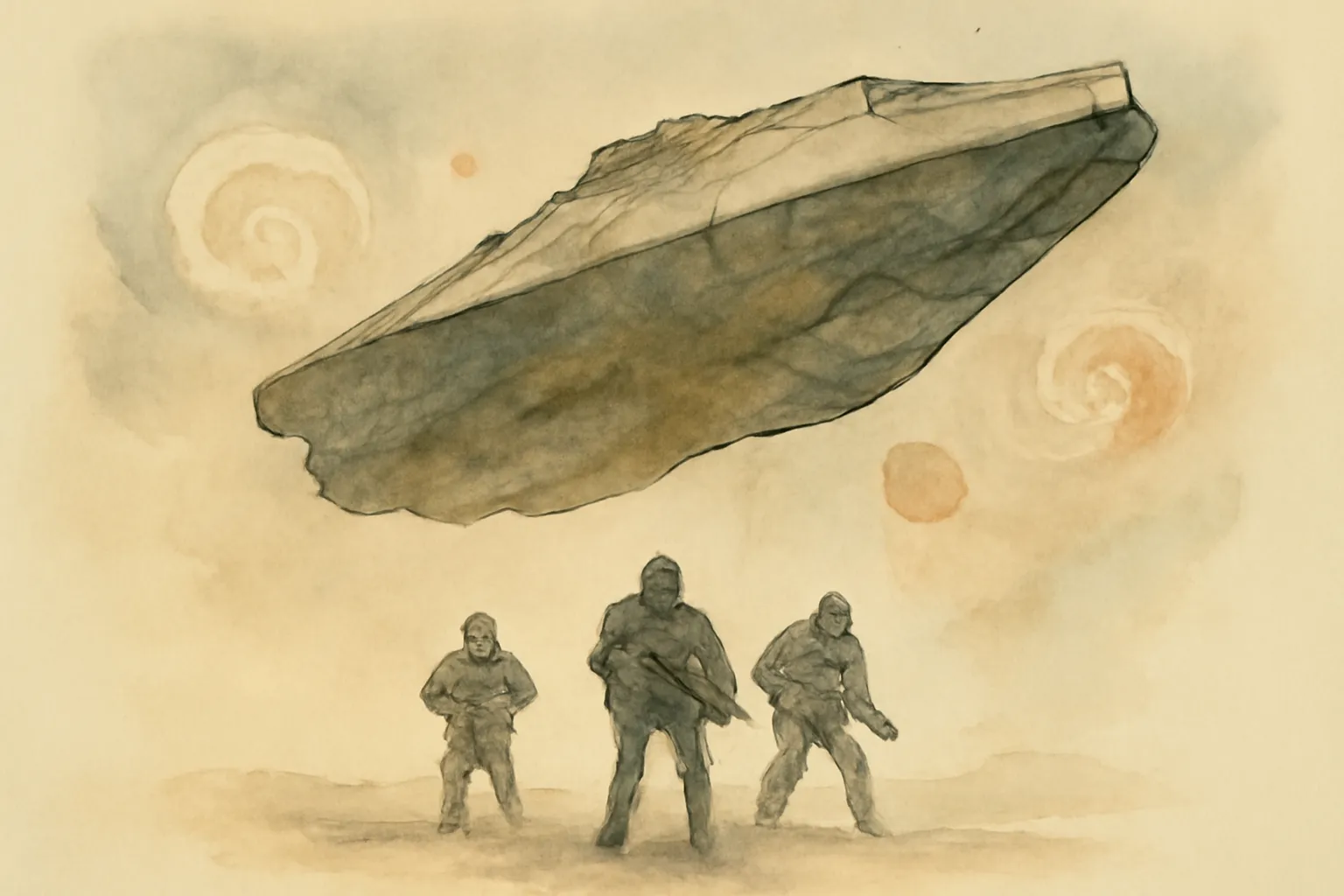
Heinlein’s future society distinguishes sharply between civilians and citizens, with the latter earning full rights only through voluntary federal service, often military. This system is presented as a safeguard against the complacency and entitlement that can undermine democracy. The book explores the idea that rights must be earned through sacrifice and responsibility, not simply granted by birth, sparking ongoing debates about civic duty and the meaning of participation in society.
A recurring motif is the classroom lectures of Mr. Dubois, who challenges students to think critically about violence, authority, and the moral justification for force. The narrative uses these lessons to probe the ethics of war and governance, suggesting that violence, when regulated and purposeful, can be a legitimate tool for maintaining order and justice. Heinlein invites readers to question whether authority should be based on willingness to serve and risk, rather than on abstract ideals.
“Violence, naked force, has settled more issues in history than has any other factor.”
“Come on, you sons of bitches! Do you want to live forever?”
“The noblest fate that a man can endure is to place his own mortal body between his loved home and the war's desolation.”

