Fiction
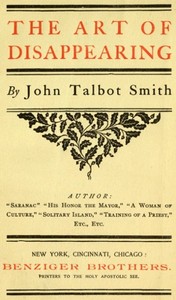
The Art of Disappearing by John Talbot Smith — Summary, Key Ideas & Full Text
449 pages39 chapters9h 1m read6h 24m speed read✦ 9-min Big ideasFree · no account
Rate it
The Art of Disappearing explores the complexities of identity, love, and self-discovery through the lens of personal transformation
In John Talbot Smith's 'The Art of Disappearing', readers are drawn into an intricate narrative that delves into the labyrinth of human emotion and identity. The story follows Horace Endicott, whose seemingly perfect life is turned upside down, prompting an exploration of love, betrayal, and the quest for a new self. Set against a backdrop of personal loss and societal expectations, the novel reveals how profound experiences shape our understanding of happiness and authenticity. As Horace reinvents himself as Arthur Dillon, the narrative challenges the notion of self, illuminating the tension between one's past and the desire for rebirth. Readers will find themselves reflecting on their own identities and the choices that define their lives, ultimately uncovering the intricate balance between personal history and future aspirations.
The Art of Disappearing presents a profound exploration of identity, love, and the intricacies of human relationships. Through Horace's transformation into Arthur Dillon, the narrative deftly examines the delicate balance between personal history and the desire for rebirth. The novel's rich themes—ranging from the nature of happiness to the interplay between community and individuality—resonate deeply, prompting introspection about the essence of authenticity and the search for redemption. Ultimately, the story serves as a reminder that while our pasts may shape us, they do not define our futures, and that the quest for meaning and connection is a universal human endeavor. Readers are left to ponder their own identities and the choices that will shape their lives, finding solace in the understanding that transformation is always possible.
“You're no worse than the rest of us.”
“The anguish of death is very bitter, which you are too young to know.”
“Canst thou not minister to a mind diseased, Pluck from the memory a rooted sorrow?”
Read John Talbot Smith's work free on Lumina — the complete text plus an 8-minute summary and key ideas, no account needed