

Cosmochronology · Cosmology · Cosmogony
The Birth of Time by John Gribbin — Summary, Key Ideas & Quotes
1999256 pages✦ 3-min Big ideas
Rate it
"Gribbin takes us through the history of cosmological discoveries, focusing in particular on the seventy years since the Big Bang model of the origin of the universe. He explains how conflicting views of the age of the universe and stars converged in the 1990s because scientists (including Gribbin) were able to use data from the Hubble Space Telescope that measured distances across the universe."--BOOK JACKET.Title Summary field provided by Blackwell North America, Inc. All Rights Reserved
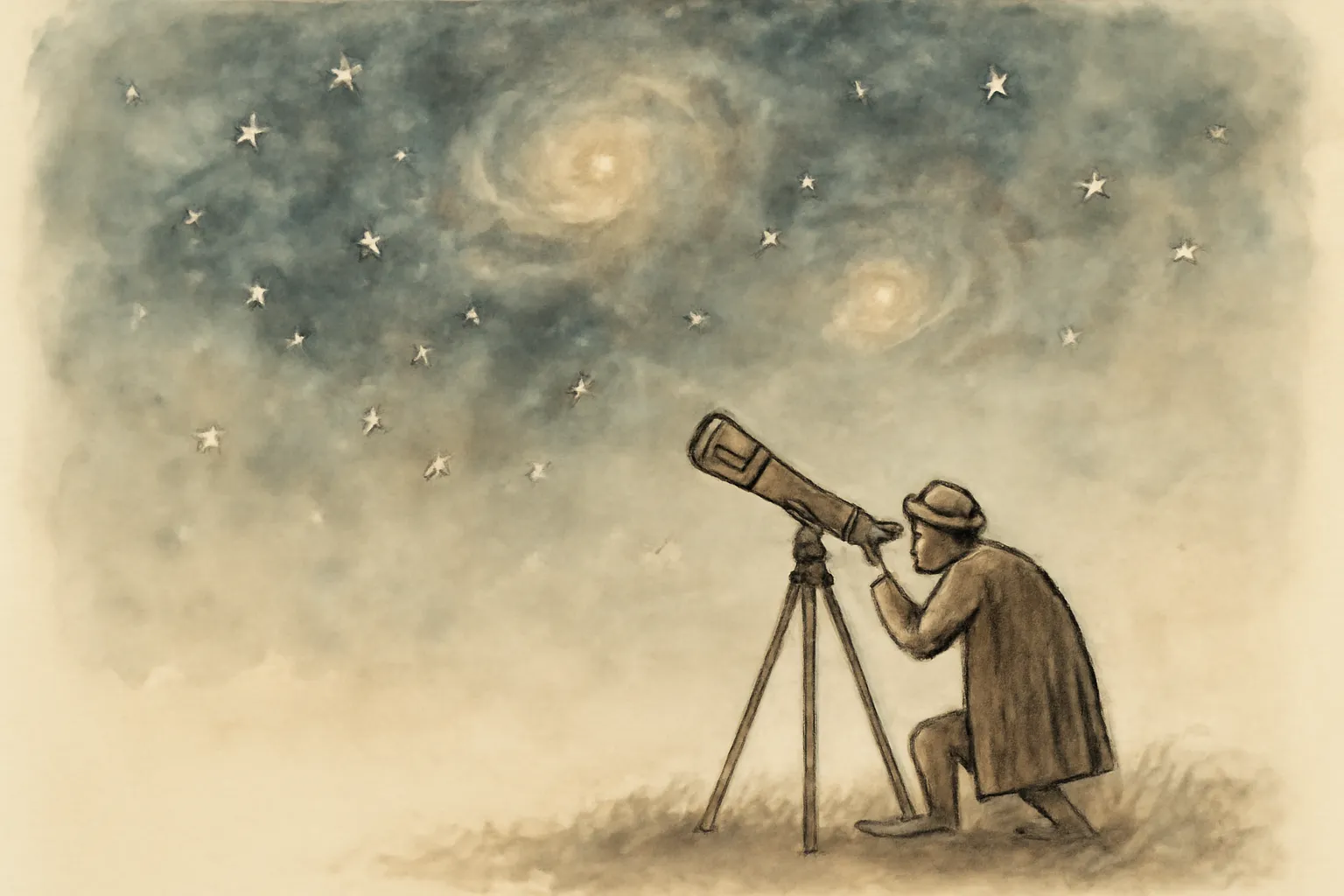
For much of the 20th century, astronomers faced a paradox: calculations for the age of the universe, based on its expansion, often yielded results younger than the oldest known stars. Gribbin unpacks this conundrum, showing how it became a central challenge for cosmology. The book explores the tension between different methods—stellar evolution models, radioactive dating, and Hubble’s law—each yielding conflicting ages, and how this forced scientists to refine both their theories and their instruments.
A turning point in resolving the universe’s age came with the Hubble Space Telescope, which allowed astronomers to measure distances to far-off galaxies with unprecedented precision. Gribbin explains how these improved measurements of Cepheid variable stars led to a more accurate value for the Hubble constant, the key to calculating the universe’s age. This technological leap didn’t just provide better data—it also exemplified how advances in instrumentation can reshape scientific consensus.
