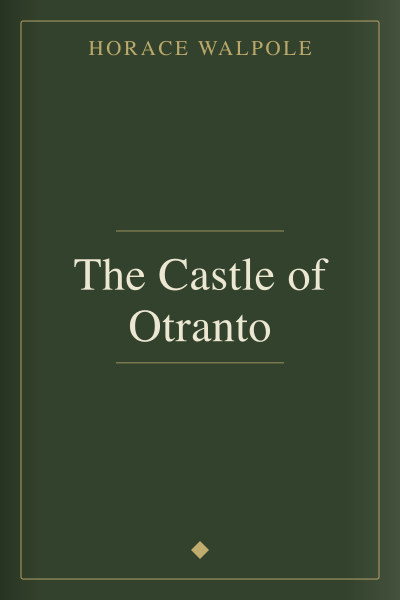

In 'The Castle of Otranto,' ambition, prophecy, and the supernatural intertwine to create a haunting tale of power and fate
Read full overviewShow less›
Horace Walpole's 'The Castle of Otranto' is celebrated as one of the first Gothic novels, setting the stage for a genre that explores the dark corners of human ambition, paranoia, and the supernatural. Through the story of Manfred, the Prince of Otranto, and his family, Walpole weaves a compelling narrative filled with intrigue, horror, and moral complexity. As characters grapple with ancient prophecies and their own desires, readers are drawn into a world where the boundaries between reality and the supernatural blur. The tale raises essential questions about duty, power, and the consequences of one's actions. As the characters navigate their tragic fates, the underlying themes of legacy, gender dynamics, and the nature of tyranny reveal themselves, inviting profound reflection on the human condition.
In 'The Castle of Otranto,' Horace Walpole crafts a rich narrative that delves into the complexities of ambition, power, and the supernatural. Through the lens of a Gothic tale, he explores the consequences of tyranny, the struggles for agency among women, and the haunting legacies of the past. The interplay of prophecy and fate adds a layer of intrigue, inviting readers to ponder their own lives in relation to the forces that shape them. Walpole's novel remains a significant work in the Gothic genre, influencing countless narratives that followed. Its exploration of human desires, fears, and the inexorable nature of fate continues to resonate, reminding us of the timeless struggles that define the human experience.
Ratings at a glance
- 1The Burden of Ambition
- 2Prophecy and Fate
- 3The Role of Women
- 4The Supernatural as a Reflection of Inner Turmoil
- 5Conflict and Resolution
Notable quotes
“Should pass from the present family, whenever the real owner should be grown too large to inhabit it.”
“Heaven is no doubt displeased with your mockery of its servants.”
“Unhappy Prince that I am,” cried Manfred.”
A glimpse inside

At the heart of 'The Castle of Otranto' lies the character of Manfred, the Prince whose ambition drives the narrative forward. Read moreAt the heart of 'The Castle of Otranto' lies the character of Manfred, the Prince whose ambition drives the narrative forward. Manfred's desire to secure his lineage through the marriage of his son Conrad to Isabella reveals his obsession with power and legacy. This ambition is not rooted in love or familial bonds but in a desperate attempt to thwart an ominous prophecy that haunts him, claiming that his line shall end when the rightful heir grows too large to inhabit the castle. The irony here is that his ambition, rather than safeguarding his family, ultimately leads to its destruction. Manfred's disregard for his daughter's feelings and his relentless pursuit of power blind him to the dangers posed by his own actions. His ambition is a double-edged sword, highlighting how the desire for control can corrupt one's morals and lead to catastrophic consequences. Through Manfred, Walpole critiques the dangers inherent in unchecked ambition, illustrating how it can distort familial ties and lead to ruin. Show less
The prophecy that looms over the castle serves as a catalyst for the unfolding drama, creating an atmosphere thick with tension and foreboding. Read moreThe prophecy that looms over the castle serves as a catalyst for the unfolding drama, creating an atmosphere thick with tension and foreboding. It foretells that the castle and lordship will pass from Manfred's family when the rightful heir grows too large to inhabit it. This prophecy instills a sense of urgency and paranoia in Manfred, driving him to act with haste and desperation. The characters' actions seem dictated by their attempts to evade this fate, with Manfred's increasingly tyrannical behavior stemming from his fear of losing power. The prophecy serves as a reminder that despite their efforts to control their destinies, the characters are ensnared by forces beyond their comprehension. Walpole deftly intertwines themes of prophecy and fate, suggesting that individuals can strive to alter their paths, yet they may ultimately be bound by the very forces they seek to escape. The tension between free will and predestined outcomes is a central theme of the novel, prompting readers to reflect on how much of their lives is dictated by fate and how much is determined by their own choices. Show less
Read the full text — free
About the author
Read Horace Walpole's work free on Lumina — the complete text plus an 8-minute summary and key ideas, no account needed