
The Crack of Doom by Robert Cromie delves into the mind of Herbert Brande, a man whose radical scientific ideas challenge the very fabric of existence.
Read full overviewShow less›
The Crack of Doom by Robert Cromie delves into the mind of Herbert Brande, a man whose radical scientific ideas challenge the very fabric of existence. As he grapples with the implications of his groundbreaking theories, the protagonist finds himself entangled in a web of intrigue, moral dilemmas, and the supernatural. This gripping narrative explores themes of life, death, and the consequences of human ambition, ultimately questioning the very nature of reality. Readers will be taken on a journey that intertwines romance, philosophy, and the dark corners of scientific exploration, compelling them to ponder the limits of human understanding and the price of knowledge. Cromie's work is not merely a tale of adventure; it is an exploration of the human psyche faced with the unfathomable mysteries of the universe.
The Crack of Doom serves as a profound exploration of the intersection between human ambition, scientific inquiry, and the moral dilemmas that arise from the pursuit of knowledge. Through the lens of Herbert Brande and the protagonist, Cromie invites readers to reflect on the complexities of existence and the potential consequences of unchecked ambition. The narrative ultimately challenges us to confront our own beliefs about life, death, and the ethical responsibilities that accompany the quest for understanding. In a world where the boundaries of science and morality often blur, Cromie's work remains a timeless reminder of the delicate balance between knowledge and the human experience. The story resonates with contemporary issues, urging readers to consider the implications of their choices in the face of life's uncertainties.
- 1The Universe as a Mistake
- 2The Allure of Scientific Societies
- 3The Role of Women in a Changing Society
- 4The Nature of Life and Death
- 5Telepathy and the Limits of Human Understanding
Notable quotes
“The Universe is a mistake!”
“Why limit oneself to a mere million of years for a dramatic illustration, when there is a star in space distant so far from us that if a telegram left the earth for it this very night, and maintained for ever its initial velocity, it would never reach that star?”
“It is good to be alive.”
A glimpse inside

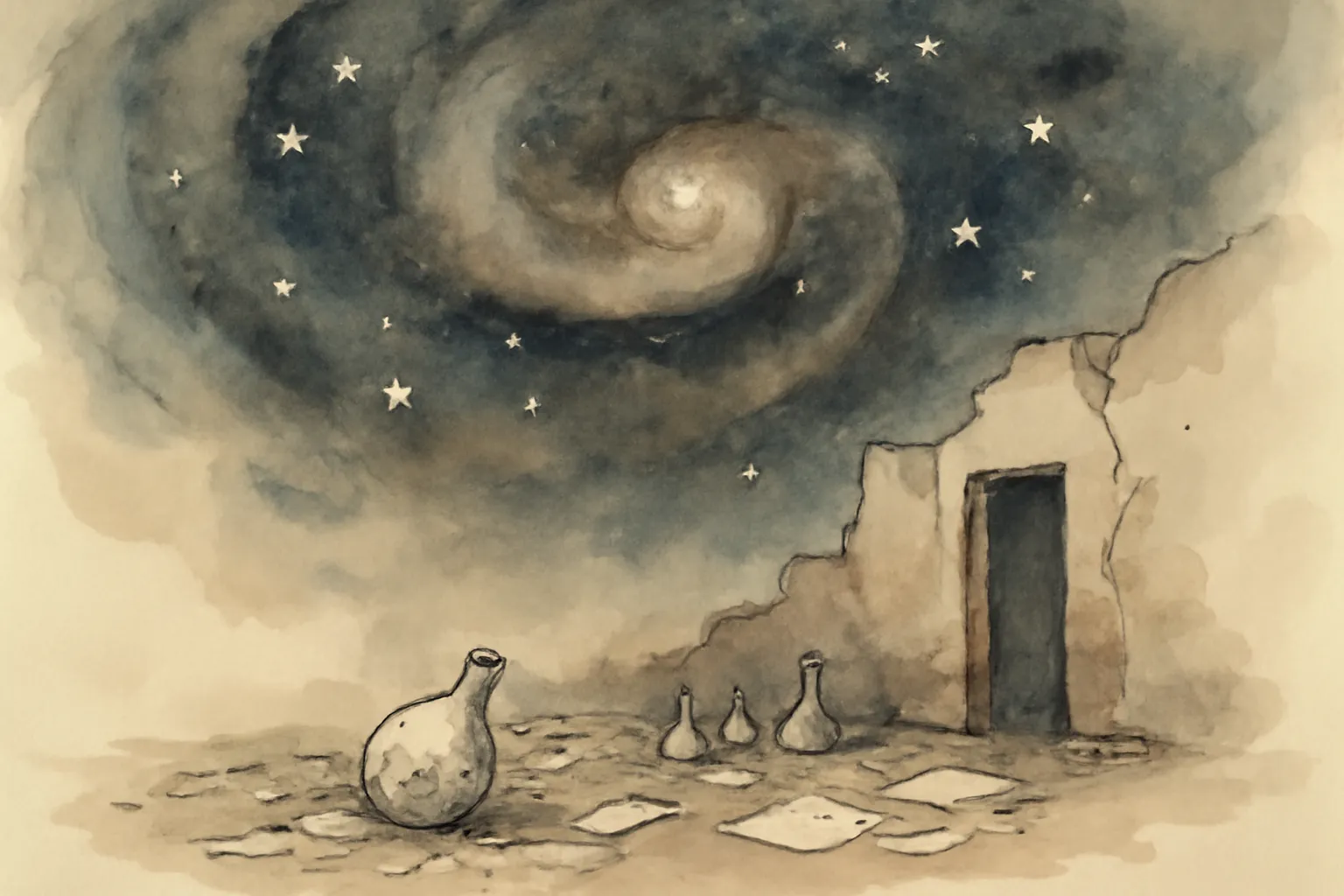
Herbert Brande provocatively asserts that 'The Universe is a mistake!' This bold declaration serves as the catalyst for the protagonist's journey into the depths of human… Read moreHerbert Brande provocatively asserts that 'The Universe is a mistake!' This bold declaration serves as the catalyst for the protagonist's journey into the depths of human understanding and scientific inquiry. The weight of such a statement is palpable; it challenges the very essence of existence and dismisses the notion that life has inherent meaning. Brande's assertion challenges the conventional wisdom of his time, suggesting that humanity's existence is insignificant in the grand scheme of the cosmos. This perspective not only reflects Brande's intellectual arrogance but also sets the stage for a deeper exploration of existential philosophy. The protagonist grapples with Brande's views, oscillating between admiration and skepticism, and this tension highlights the central conflict of the narrative: the struggle to find meaning in an indifferent universe. This philosophical backdrop serves as a mirror for the reader’s own contemplation about life's purpose and the extent to which humanity can impose meaning on a cosmos that may be indifferent to our struggles. Show less
Brande invites the protagonist to a meeting of his enigmatic Society, which raises questions about the nature of knowledge and the pursuit of truth. Read moreBrande invites the protagonist to a meeting of his enigmatic Society, which raises questions about the nature of knowledge and the pursuit of truth. The Society appears to blend legitimate scientific inquiry with darker, more sinister undertones, creating an atmosphere of intrigue and danger. As the protagonist attends the meeting, he becomes increasingly aware of the Society's secretive nature and the unsettling implications of their experiments. This duality reflects the broader theme of scientific exploration: the potential for knowledge to lead to both enlightenment and destruction. Cromie uses the Society as a narrative device to illustrate the seductive power of radical ideas and the moral responsibilities that accompany such pursuits. The protagonist’s initial curiosity is soon overshadowed by a growing sense of unease, mirroring the internal conflict faced by those who flirt with dangerous ideologies for the sake of ‘progress.’ This raises critical questions: do the ends justify the means in the pursuit of knowledge? How far should humanity go in its quest for scientific advancement? Show less
Read the full text — free
About the author
Read Robert Cromie's work free on Lumina — the complete text plus an 8-minute summary and key ideas, no account needed.
Frequently asked
Worlds to get lost in
Take Lumina everywhere
Read offline, listen to AI summaries, speed-read, and sync your progress across devices — free on iPhone.
Download for iPhone