Fiction
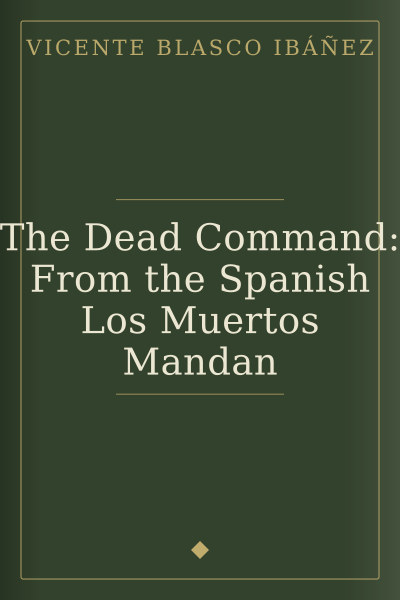
The Dead Command: From the Spanish Los Muertos Mandan by Vicente Blasco Ibáñez — Summary, Key Ideas & Full Text
338 pages12 chapters6h 47m read4h 49m speed read✦ 9-min Big ideasFree · no account
Rate it
A tale of love, legacy, and the haunting weight of history set against the backdrop of Majorca's rich landscapes
In 'The Dead Command: From the Spanish Los Muertos Mandan', Vicente Blasco Ibáñez weaves a rich tapestry of life in Majorca, where the past is inescapably intertwined with the present. The protagonist, Jaime Febrer, grapples with the legacy of his ancestors while navigating the complexities of love and societal expectations. As he seeks to marry into wealth to redeem his family's fortune, he faces societal prejudice, personal desires, and the haunting presence of history. Through vivid descriptions of the island's beauty and the psychological struggles of its characters, Ibáñez explores themes of identity, cultural conflict, and the eternal influence of the dead on the living.
Through its exploration of love, legacy, and societal norms, 'The Dead Command' invites readers to grapple with the complexities of identity and the inescapable influence of the past. Ibáñez crafts a vivid portrayal of Majorca, where the beauty of the landscape is matched only by the intricacies of human relationships. The characters' struggles reflect universal themes of ambition, desire, and the enduring impact of history on the present. Ultimately, the novel serves as a poignant reminder that while the dead may command our actions, it is our choices that shape our future. In this way, Ibáñez's work resonates deeply, encouraging reflection on the legacies we inherit and the paths we choose to forge.
“Ah poverty! His home was devoid of even the most essential conveniences despite its air of stately luxury, a stateliness which modern wealth can never emulate.”
“I am a Chueta, and what of that? A Jew of the Jews! All of my family come from 'the street.”
“These alliances might be made in the rest of the world, but Majorca... still possessed a living soul, the soul of former centuries, filled with odium and prejudice.”
Read Vicente Blasco Ibáñez's work free on Lumina — the complete text plus an 8-minute summary and key ideas, no account needed