
Dante's 'Inferno' unveils the harrowing journey through Hell, exploring the consequences of sin and the quest for redemption
Read full overviewShow less›
Dante Alighieri's 'Inferno' is a profound exploration of the afterlife, encapsulating the moral complexities of sin and virtue through a vivid narrative. As Dante journeys through the nine circles of Hell, he encounters a diverse array of souls, each facing eternal consequences for their earthly actions. This epic poem serves not only as a moral guide but also as a reflection on the human condition and the choices that define our lives. Readers will find a rich tapestry of allegory, philosophy, and theology that challenges them to contemplate their own moral compass. By traversing Dante's Hell, one gains insight into the nature of sin and the possibility of redemption, making 'Inferno' both a timeless classic and a deeply personal journey.
Dante's 'Inferno' transcends its narrative to become a profound exploration of morality, justice, and the human soul's journey toward redemption. Through vivid imagery and complex characters, Dante challenges readers to confront their own sins and the consequences of their choices. The structured circles of Hell serve as a moral framework that encourages self-reflection and a deeper understanding of the human condition. Ultimately, 'Inferno' is not just a cautionary tale about the perils of sin; it is a hopeful reminder that through understanding and repentance, one can strive toward a higher moral ground. In a world often clouded by confusion and moral ambiguity, Dante's work remains a timeless guide in the quest for truth and righteousness.
- 1The Journey Begins: A Midlife Crisis
- 2The Structure of Hell: A Reflection of Sin
- 3The Role of Virgil: Wisdom and Guidance
- 4The Consequences of Lust: The Second Circle
- 5The Avaricious and the Prodigal: A Lesson in Greed
Notable quotes
“Ah me! how hard to make it understood how rough that wood was, wild, and terrible.”
“Justice did my Glorious Maker move; I was created by the Power Divine, The Highest Wisdom, and the Primal Love.”
“O Simon Magus! ye his wretched crew!”
A glimpse inside

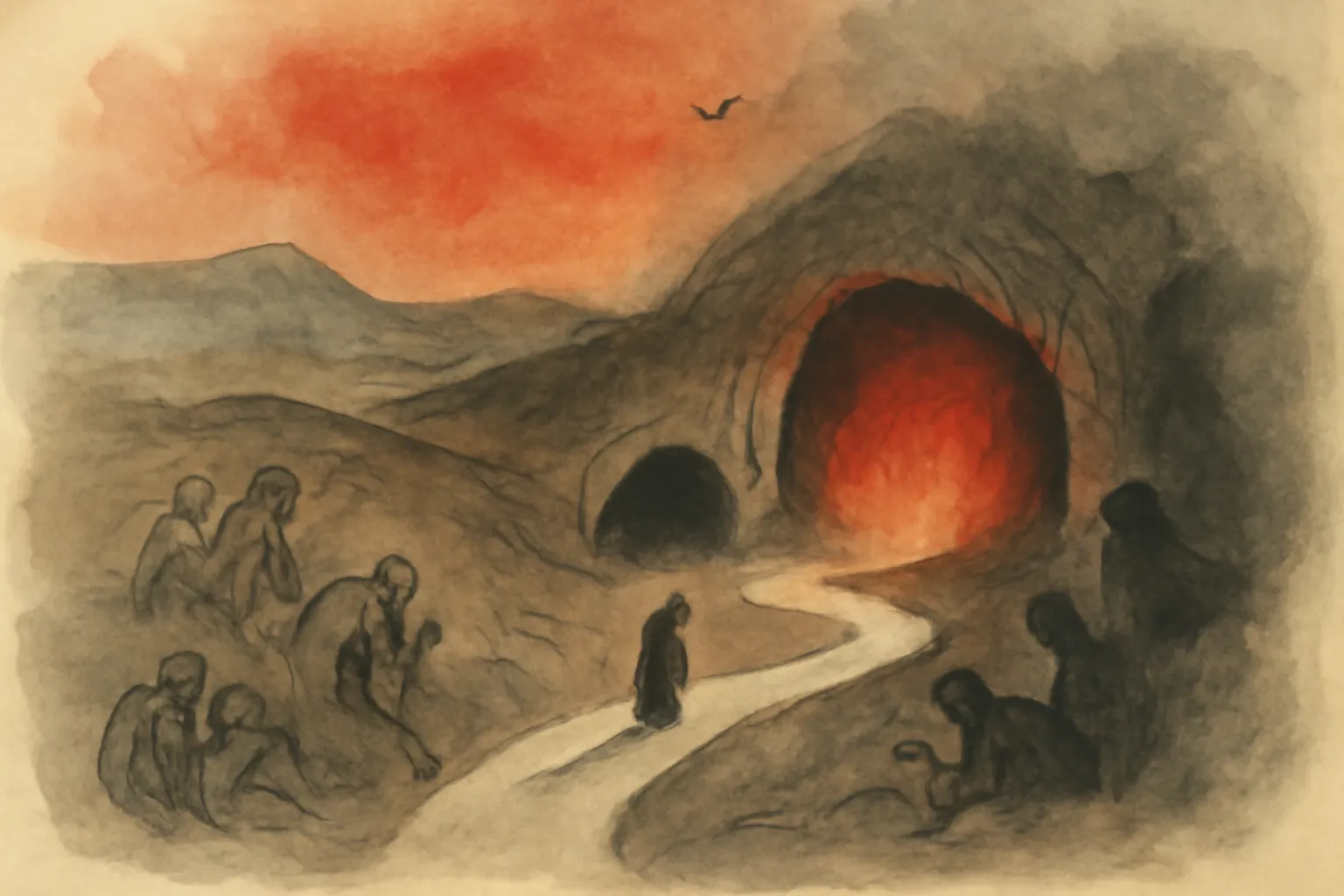
Dante's journey commences in a dark wood, symbolizing confusion and moral disarray. This setting reflects Dante's own midlife crisis, where he has lost his way both spiri… Read moreDante's journey commences in a dark wood, symbolizing confusion and moral disarray. This setting reflects Dante's own midlife crisis, where he has lost his way both spiritually and morally. The dark wood represents a universal human experience of straying from one's true path, evoking feelings of fear and despair. As Dante expresses, 'Ah me! how hard to make it understood how rough that wood was, wild, and terrible.' This moment serves as a catalyst for his journey through Hell, prompting readers to reflect on their own life choices and the importance of seeking redemption. The journey is not merely an external quest; it is also an internal struggle for understanding and clarity. Dante's admission of being 'drowned in slumber' illustrates the depth of his apathy and disconnection from his true self, emphasizing that the first step towards redemption begins with awareness of one's spiritual state. Show less
Dante meticulously structures Hell into nine circles, each representing different types of sin and their corresponding punishments. Read moreDante meticulously structures Hell into nine circles, each representing different types of sin and their corresponding punishments. This hierarchical arrangement serves as a moral framework, illustrating the severity of various transgressions. For instance, the first circle, Limbo, houses virtuous non-Christians who, despite their good deeds, lack the opportunity for salvation. This reflects Dante's belief in the necessity of faith for redemption. As he descends deeper, the sins become increasingly heinous, culminating in violent and treacherous acts in the lower circles. Each circle's punishment is poetically just, a manifestation of the sins committed in life, emphasizing the principle of contrapasso, where the punishment fits the crime. Sinners in the second circle are swept away in a whirlwind, symbolizing their inability to control their passions, while those in the third circle suffer under a perpetual downpour of rain and hail, representing the coldness of their gluttonous lives. This structure invites readers to contemplate their own moral standings and the potential consequences of their actions, reinforcing the idea that every choice we make leads us closer to our ultimate fate. Show less
Read the full text — free
About the author
Dante Alighieri has 3 works free to read on Lumina, including Divine Comedy, Longfellow's Translation, Hell, The Divine Comedy
All 3 books by Dante Alighieri →