1.The Journey Begins: A Midlife Crisis
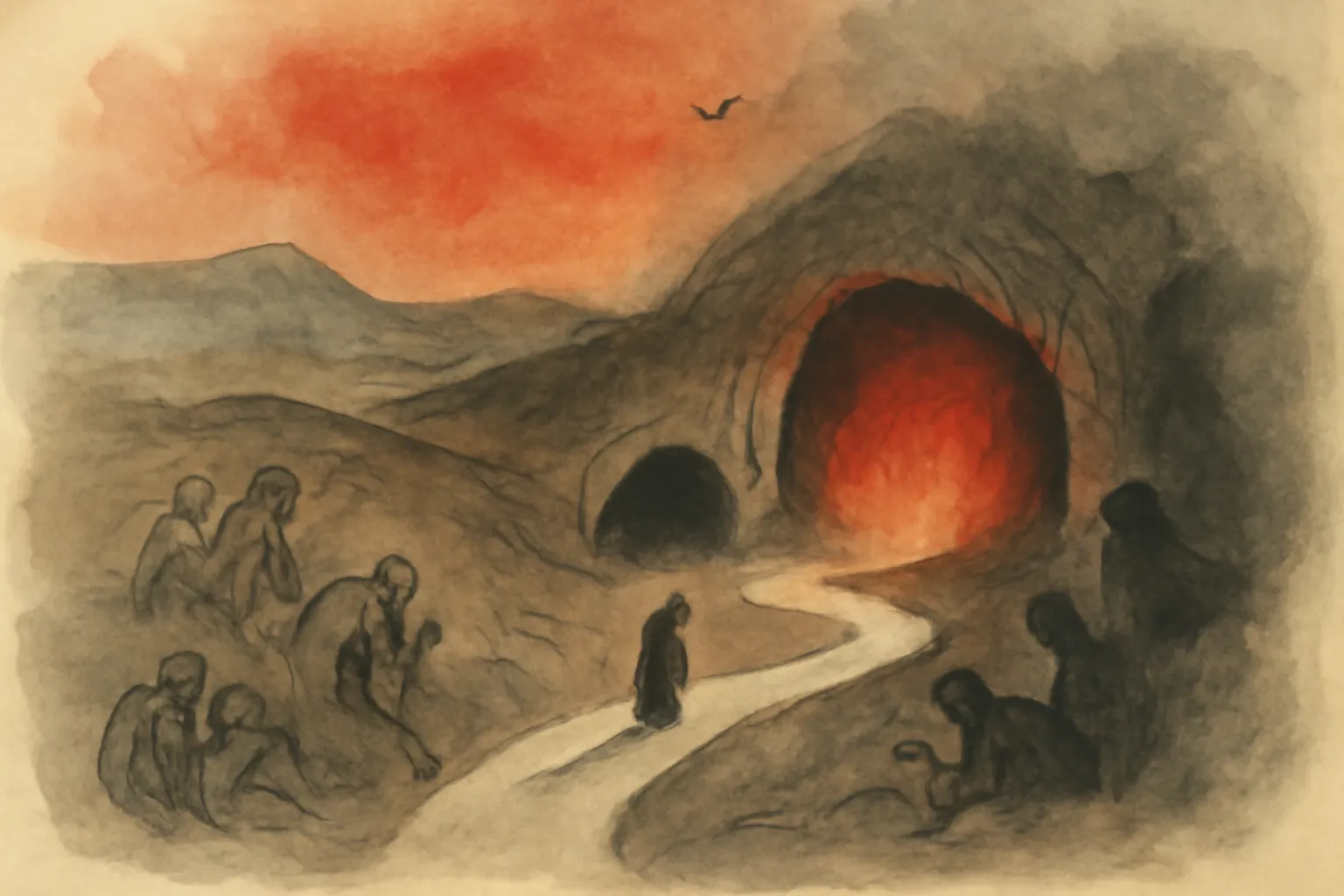
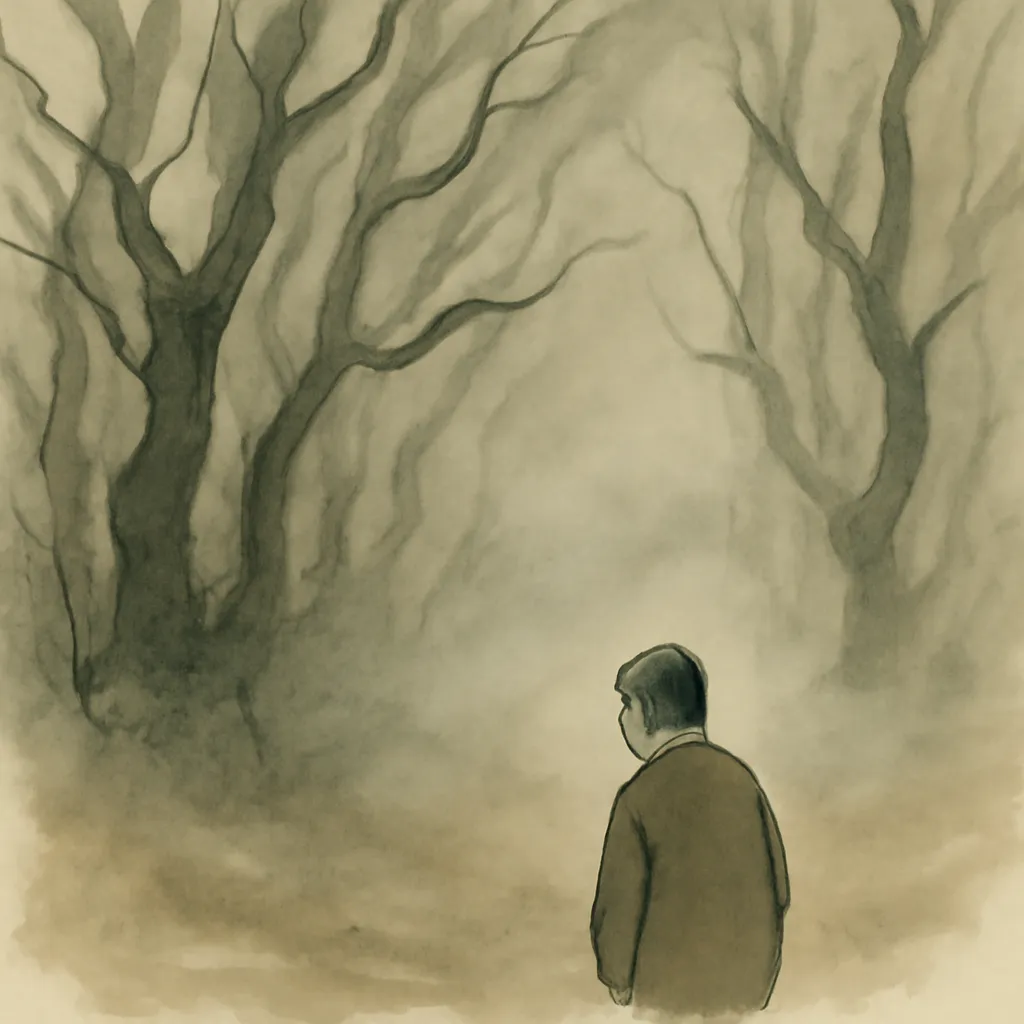
Dante's journey commences in a dark wood, symbolizing confusion and moral disarray. This setting reflects Dante's own midlife crisis, where he has lost his way both spiritually and morally. The dark wood represents a universal human experience of straying from one's true path, evoking feelings of fear and despair. As Dante expresses, 'Ah me! how hard to make it understood how rough that wood was, wild, and terrible.' This moment serves as a catalyst for his journey through Hell, prompting readers to reflect on their own life choices and the importance of seeking redemption. The journey is not merely an external quest; it is also an internal struggle for understanding and clarity. Dante's admission of being 'drowned in slumber' illustrates the depth of his apathy and disconnection from his true self, emphasizing that the first step towards redemption begins with awareness of one's spiritual state.
2.The Structure of Hell: A Reflection of Sin
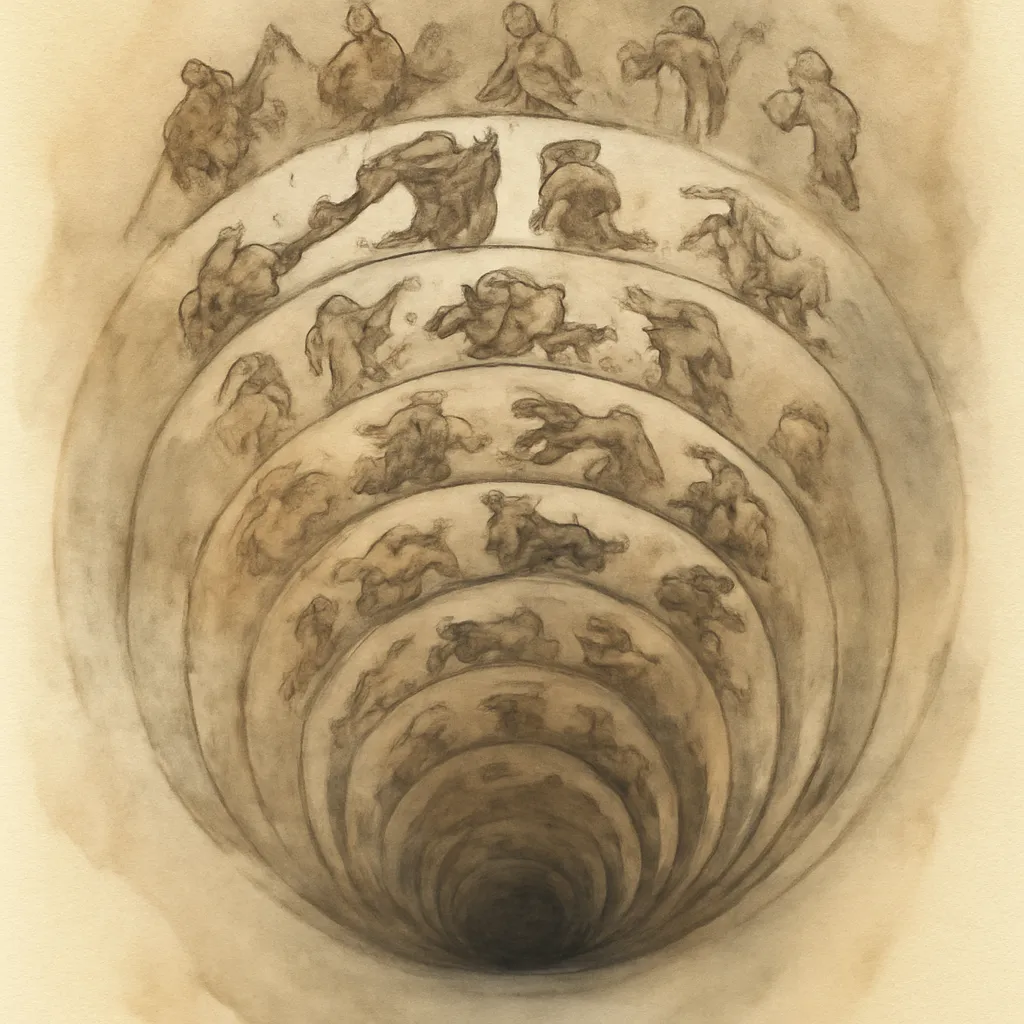
Dante meticulously structures Hell into nine circles, each representing different types of sin and their corresponding punishments. This hierarchical arrangement serves as a moral framework, illustrating the severity of various transgressions. For instance, the first circle, Limbo, houses virtuous non-Christians who, despite their good deeds, lack the opportunity for salvation. This reflects Dante's belief in the necessity of faith for redemption. As he descends deeper, the sins become increasingly heinous, culminating in violent and treacherous acts in the lower circles. Each circle's punishment is poetically just, a manifestation of the sins committed in life, emphasizing the principle of contrapasso, where the punishment fits the crime. Sinners in the second circle are swept away in a whirlwind, symbolizing their inability to control their passions, while those in the third circle suffer under a perpetual downpour of rain and hail, representing the coldness of their gluttonous lives. This structure invites readers to contemplate their own moral standings and the potential consequences of their actions, reinforcing the idea that every choice we make leads us closer to our ultimate fate.
3.The Role of Virgil: Wisdom and Guidance
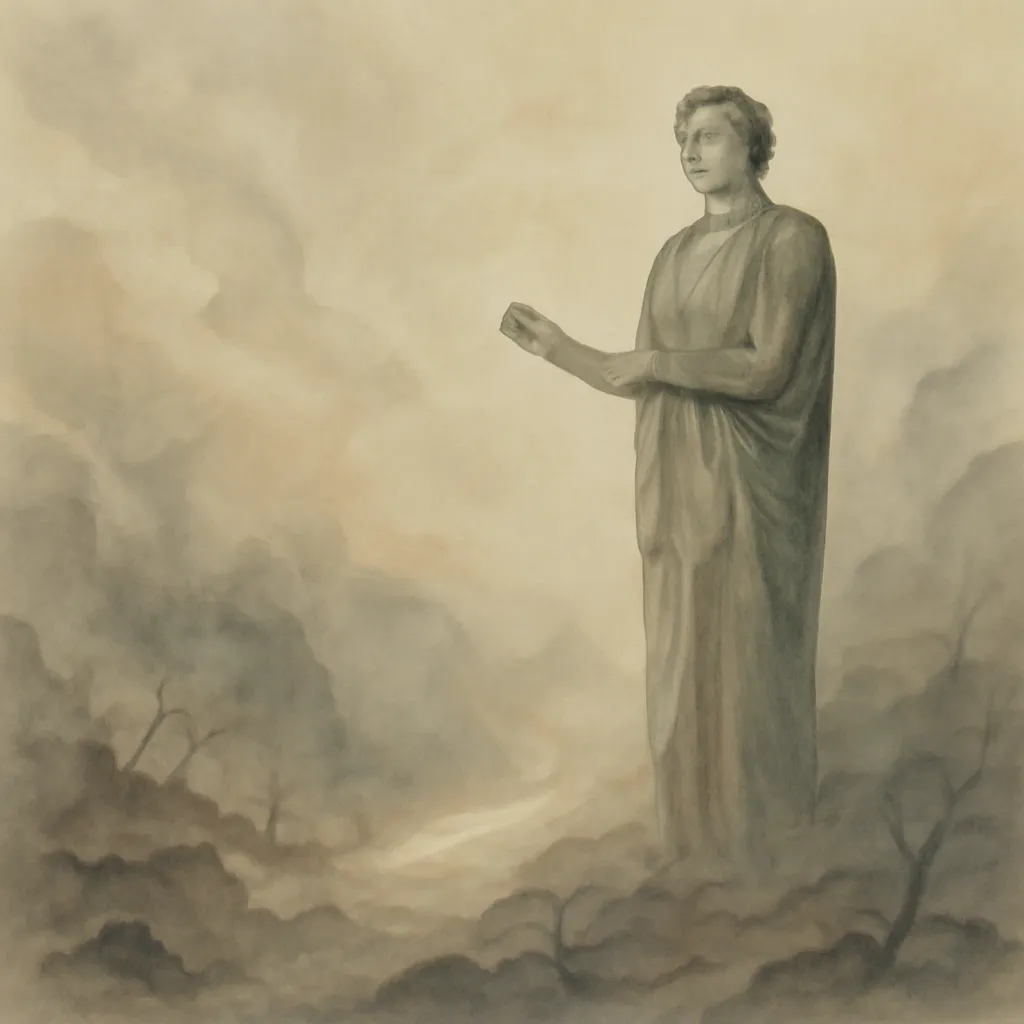
Virgil, the Roman poet, serves as Dante's guide through Hell, representing reason and classical wisdom. His presence underscores the importance of intellectual understanding in navigating moral complexities. Virgil's rationality contrasts with the emotional turmoil of Dante, providing a stabilizing influence as they traverse the horrors of Hell. He embodies the idea that human reason can help illuminate the path to redemption, even in the face of overwhelming despair. As Dante himself acknowledges, 'The anguish of the people... has painted on my face Pity, by thee for fear interpreted.' This dynamic between Dante and Virgil illustrates the balance between emotion and reason in the search for truth and salvation. Virgil's teachings are rooted in humanism, advocating for the power of knowledge and ethics over blind faith. His guidance serves as a reminder that while divine revelation is crucial, the insights of human reason are equally important in making moral decisions.
4.The Consequences of Lust: The Second Circle
In the second circle of Hell, Dante encounters the souls of the lustful, who are eternally swept in a tempest, symbolizing the chaos of their uncontrolled desires. This circle features notable figures such as Francesca da Rimini, whose tragic love story evokes deep sympathy. Through her tale, Dante highlights the destructive power of lust, illustrating how it leads to both personal and societal ruin. Francesca's lament, 'Love, that doth not know love,' reveals the complexity of human emotions and the consequences of succumbing to passions without restraint. The violent winds reflect the lack of control these souls had during their earthly lives, emphasizing that yielding to one's desires can lead to chaos and suffering. Dante's encounter with Francesca serves as a poignant reminder that while love can be beautiful, it can also lead to devastating consequences when it becomes an obsession. This circle serves as a study of desire and the necessity of temperance in love, urging readers to seek balance in their emotional lives.
5.The Avaricious and the Prodigal: A Lesson in Greed

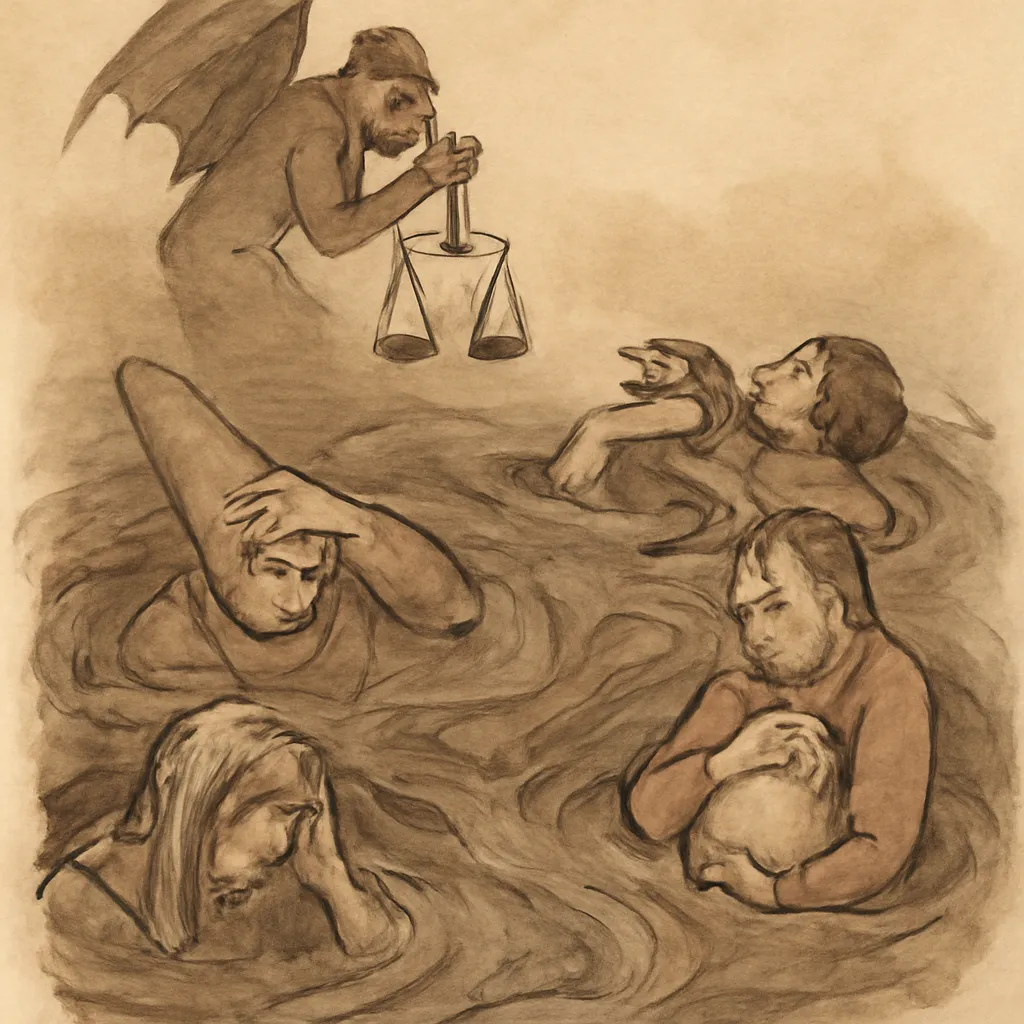
The fourth circle of Hell punishes the avaricious and the prodigal, who are condemned to push heavy weights against each other, eternally struggling with their greed. This vivid imagery encapsulates the futility of their lives, as they are trapped in a cycle of materialism and selfishness. Dante's portrayal of Plutus, the personification of wealth, emphasizes the corrupting influence of greed on the human soul. As he observes, 'Justice of God! which pilest more and more Pain as I saw, and travail manifold!' The punishment reflects the profound emptiness that greed brings, showing that the relentless pursuit of wealth ultimately leads to spiritual poverty. The avaricious and prodigal are depicted as blind to the true value of life, consumed by their material desires. This exploration prompts readers to evaluate their own relationships with money and possessions, reinforcing the idea that true wealth lies in spiritual fulfillment rather than material accumulation.
6.Violence and its Consequences: The Seventh Circle
Dante's exploration of violence takes him to the seventh circle, where the violent are punished in a gruesome manner. This circle is divided into three rings: those who commit violence against others, themselves, and God. The imagery of souls submerged in a river of boiling blood and others transformed into trees, eternally tormented by harpies, starkly illustrates the horrors of their sins. The message is clear: violence begets suffering, and the consequences of such actions reverberate throughout eternity. Dante's encounter with the suicides, who are denied their human form and forced to live as trees, underscores the tragedy of self-destruction. This exploration compels readers to consider the ramifications of violence and the importance of compassion and understanding in a world often plagued by conflict. The emphasis on the cyclical nature of violence serves as a warning against hatred and vengeance, calling for peace and empathy in human interactions.
7.The Deceptive Nature of Fraud: The Eighth Circle
The eighth circle of Hell, Malebolge, is dedicated to the fraudulent, showcasing the various forms of deception that lead souls to eternal damnation. Here, Dante encounters barrators, hypocrites, and other deceivers who suffer grotesque punishments tailored to their sins. The vivid descriptions of devils tormenting the sinners reveal the multifaceted nature of fraud and its impact on society. Dante's depiction of the fraudulent as the lowest tier of sinners emphasizes the gravity of deceit in undermining trust and integrity. The image of those who sold false goods or exploited others serves as a powerful commentary on the ethical implications of dishonesty in both personal and public life. As he observes, 'O Simon Magus! ye his wretched crew!' this circle serves as a cautionary tale about the corrosive effects of fraudulent behavior, underscoring the need for authenticity and accountability in human relationships.
8.The Finality of Judgment: The Ninth Circle
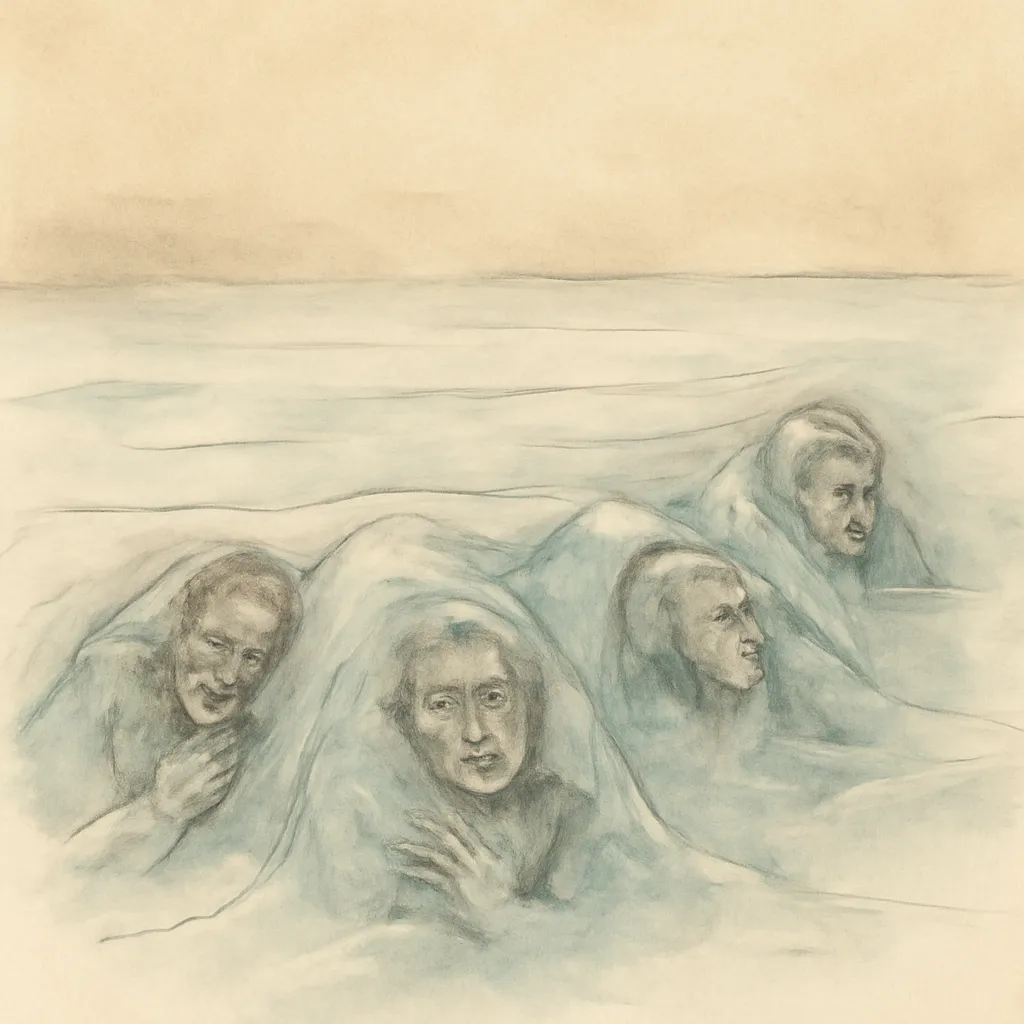
In the ninth circle of Hell, Dante confronts the ultimate betrayal, where souls frozen in ice endure eternal punishment. This chilling imagery reflects the coldness of treachery and the profound consequences of betrayal, particularly against loved ones or benefactors. Dante's encounters with figures such as Judas Iscariot and Brutus highlight the depths of human depravity and the irreversible nature of their actions. The stark contrast between the warmth of love and the coldness of betrayal serves as a powerful reminder of the importance of loyalty and integrity. As Dante writes, 'Speak we not of them: glance, and pass them by,' this circle encapsulates the finality of judgment, urging readers to consider their own allegiances and the weight of their choices. The portrayal of betrayal as the gravest sin invites contemplation on the bonds of trust that underpin human relationships, emphasizing that even the slightest act of disloyalty can lead to profound consequences.
9.Redemption and Hope: The Path Forward
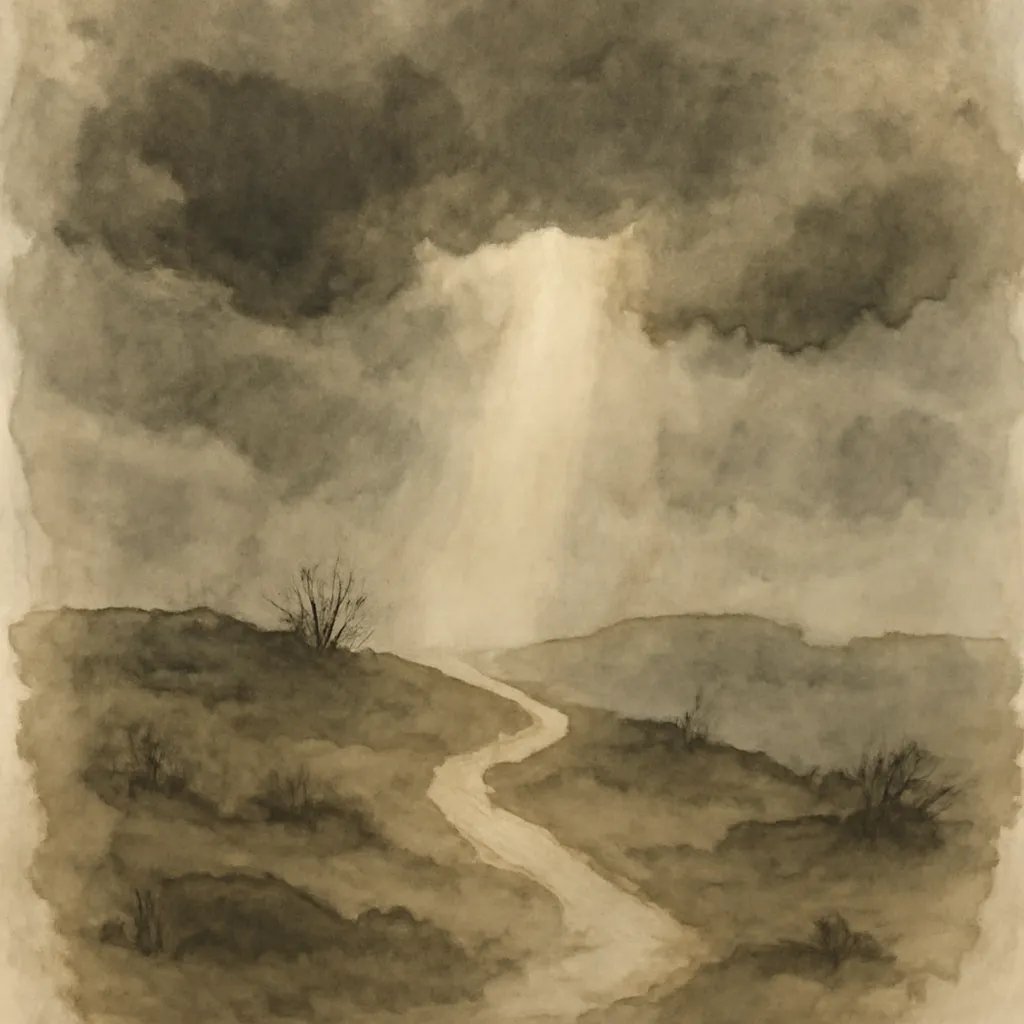
Despite the grim landscape of Hell, Dante's journey ultimately leads to the possibility of redemption. Throughout 'Inferno,' he emphasizes the idea that understanding one's sins is the first step toward repentance and change. The encounters with various souls serve as cautionary tales, illuminating the consequences of their actions while also offering a path to salvation. The overarching message is one of hope: that through self-awareness and moral courage, one can overcome the darkness and strive for redemption. Dante's journey through Hell is not merely a condemnation of sin; it is also a call to action, urging readers to reflect on their own lives and seek a righteous path. This theme of redemption resonates deeply, as it highlights the transformative power of acknowledgment and growth, making 'Inferno' a timeless narrative that inspires personal reflection and ethical living. Ultimately, the journey through Dante's Hell is not just about punishment but also about the potential for grace and renewal.