The Ghost in the White House: Some suggestions as to how a hundred million people (who are supposed in a vague, helpless way to haunt the white house) can make themselves felt with a president, how they can back him up, express themselves to him, be expressed by him, and get what they want by Gerald Stanley Lee — Summary, Key Ideas & Full Text
248 pages12 chapters4h 59m read3h 32m speed read✦ 10-min Big ideasFree · no account
What is The Ghost in the White House: Some suggestions as to how a hundred million people (who are supposed in a vague, helpless way to haunt the white house) can make themselves felt with a president, how they can back him up, express themselves to him, be expressed by him, and get what they want about?
Empowering the People: A Blueprint for Making Democracy Meaningful
Read full overviewShow less›
In 'The Ghost in the White House,' Gerald Stanley Lee explores the profound disconnect between the American people and their political leaders, urging citizens to reclaim their power in a democracy that often feels distant and unresponsive. This book serves as both a manifesto and a guide for how a hundred million voices can assert themselves, communicate effectively with their President, and ultimately shape the future of their nation. Lee's vision highlights the need for a more tangible connection between the electorate and their elected officials, emphasizing the importance of self-expression and collective action. By engaging with the ideas presented, readers will discover practical techniques for making their voices heard and influencing the political landscape, ensuring that democracy is not just a concept but a lived reality.
In 'The Ghost in the White House,' Gerald Stanley Lee presents a compelling vision for how citizens can reclaim their agency in a democracy that often feels distant and unresponsive. By emphasizing the importance of self-expression, collective action, and a robust communication system between the populace and their leaders, Lee outlines a path for making democracy more meaningful and impactful. This book serves as both a call to action and a practical guide for individuals seeking to engage with their government and influence the political landscape. Ultimately, Lee's work underscores the idea that democracy is not a static system but a dynamic process that thrives on the active participation of its citizens, reminding us all of the power we hold in shaping our collective future.
“We are all practically waiting in crowds to-day, all over this country—in held-in and held-back crowds, to act better than we look.”
A glimpse inside
The Ghost of the People: A Haunting Presence
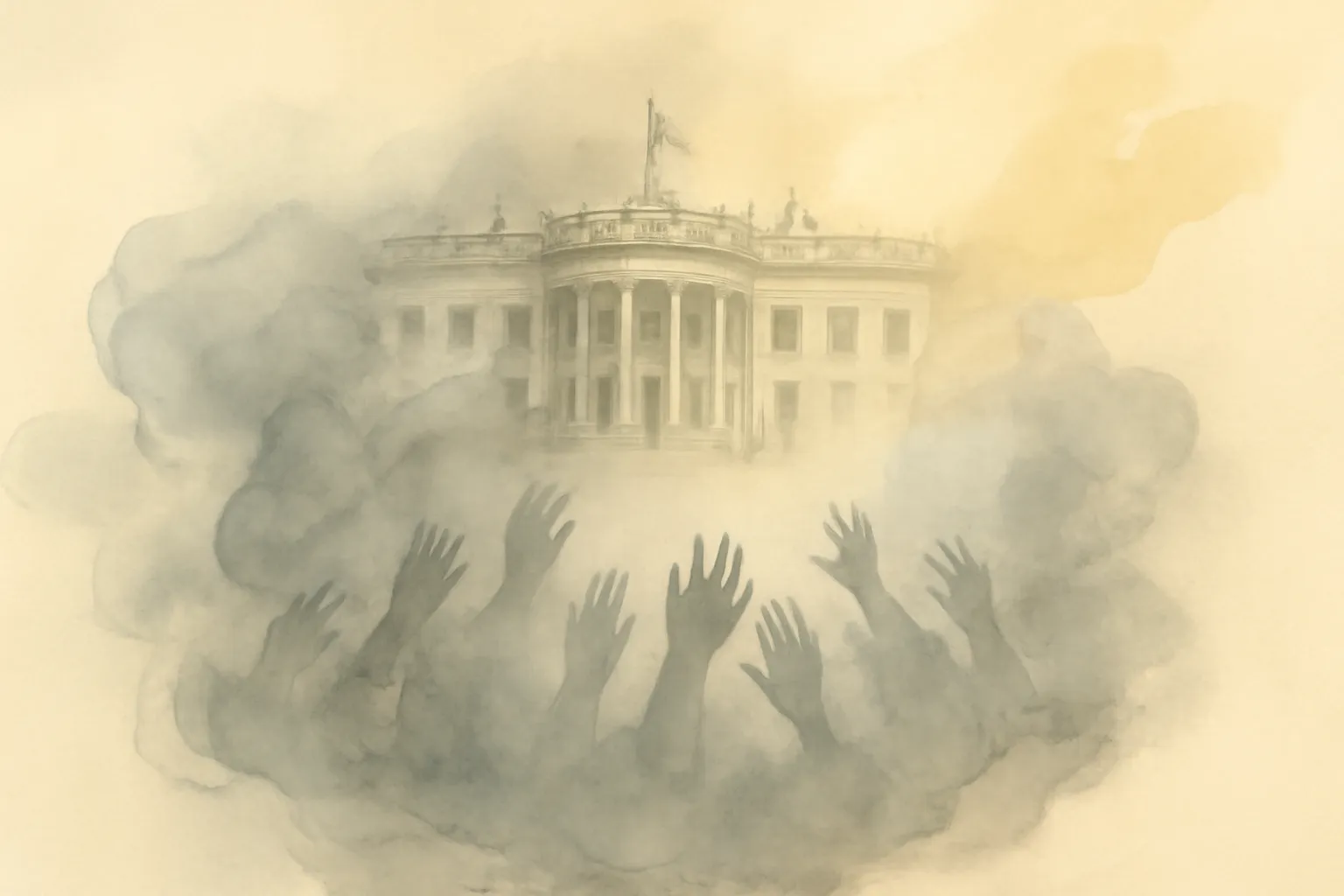
Lee starts by addressing the metaphor of the 'ghost' haunting the White House, representing the collective will of the people. Read moreLee starts by addressing the metaphor of the 'ghost' haunting the White House, representing the collective will of the people. This ghost is not a tangible entity but rather an abstract notion of democracy that often leaves the President feeling isolated and disconnected from the very citizens he is meant to represent. For Lee, the President must navigate the complexities of public opinion, which is frequently a vague and indistinct presence, rather than a clear and coherent voice. This disconnect leads to a sense of loneliness for the President, who must make decisions based on a generalized 'people' rather than the specific needs and desires of individual citizens. Lee argues that this situation creates a barrier to meaningful communication and action, emphasizing the need for a stronger, more articulated presence of the populace in the political process. He stresses that the ghostly nature of the public voice not only diminishes the President's effectiveness but also alienates citizens from the political process, making them feel as if their thoughts and desires are inconsequential. Show less
Reclaiming the Power of the People
One of the central themes of Lee's work is the idea that the people must reclaim their power in a democracy that has allowed itself to become dominated by politicians and… Read moreOne of the central themes of Lee's work is the idea that the people must reclaim their power in a democracy that has allowed itself to become dominated by politicians and bureaucratic systems. He suggests that citizens of America should feel as important as the political elite, proposing that a hundred million voices can make a substantial difference. Lee encourages readers to think of themselves as active participants in democracy rather than passive observers, emphasizing the importance of individual agency and collective action. The author articulates that by engaging in the political process, expressing their desires, and holding leaders accountable, citizens can transform the abstract concept of 'the people' into a living force that influences decision-making. This empowerment is crucial for a healthy democracy, as it fosters a sense of ownership and responsibility among the populace, enabling them to work collaboratively towards common goals. Lee's call for action resonates deeply in the context of a political landscape often perceived as unresponsive, reminding citizens of their intrinsic power to shape the direction of governance. Show less
Yes — the complete text of The Ghost in the White House: Some suggestions as to how a hundred million people (who are supposed in a vague, helpless way to haunt the white house) can make themselves felt with a president, how they can back him up, express themselves to him, be expressed by him, and get what they want is free to read online, with no account and no ads. The 8-minute Big-ideas summary and audio narration are unlocked too